Wednesday, April 30, 2014

Local author's biography of Michael Jordan digs deeper

Michael Jordan ended his playing career 11 years ago, but he is still one of the most famous people in the world of sports.
The former Chicago Bulls great has been the subject of a number of books, as well as countless magazine and newspaper articles.
But author Roland Lazenby felt there was still more to his story.
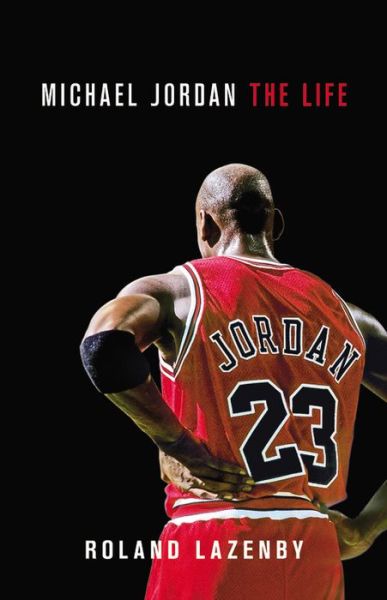
Lazenby, a Salem resident and Wytheville native, has written a new biography of Jordan that will be published by Little, Brown and Company. “Michael Jordan The Life” will be available in stores May 6.
“The Jordan story, some of it had been told, but a lot of it had not,” said Lazenby, 61. “You’ll get one story early in the game while he’s playing and then as people look back, you often get a very different story.
“I didn’t really feel the context had ever been there. I think family often provides context. There were a lot of things I wanted to look at there.
“I just wanted to explain him.”
The book not only delves into the 51-year-old Jordan’s time at the University of North Carolina and with the Bulls but also details his family history, his youth, his stint with the Washington Wizards and his ownership of the Charlotte Bobcats.
Lazenby’s last book was a 2010 biography about another former NBA star — “Jerry West: The Life and Legend of a Basketball Icon.”
“At the end of your career, to be able to do these kind of books, these in-depth biographies, it’s very special,” said Lazenby, a George Wythe High School and VMI graduate.
Writing the Jordan book was “very, very difficult,” said Lazenby. He spent 3 1⁄2 years conducting interviews, researching and writing the book, working himself to exhaustion. He originally wrote 1,000 pages before cutting it to about 680.
Lazenby had written several previous books about the Bulls, including the 1998 book “Blood on the Horns: The Long, Strange Ride of Michael Jordan’s Chicago Bulls,” about the end of the Bulls dynasty.
For the new book, Lazenby interviewed about 100 people, including former Bulls stars Scottie Pippen and Steve Kerr; former Bulls assistant Tex Winter; former Bulls executive Jerry Krause; and former Nike executive Sonny Vaccaro.
Jordan and Nike made each other plenty of money.
“Before he ever played a minute in the NBA, he got this fabulous Nike contract that paid him [a] 25 percent royalty — unheard of,” Lazenby said. “That essentially laid the groundwork for Jordan becoming a Nike partner. It’s a pretty amazing business story and a pretty amazing black power story — not the traditional black power of protests and politics but a black power story all the same, an economic story.”
It is no secret that Jordan likes to spend some of his money gambling.
But Lazenby said he was surprised to learn the extent of Jordan’s gambling. For example, said Lazenby, NFL player “Pacman” Jones told him that Jordan once lost $5 million shooting craps with Jones and others during the NBA All-Star weekend in 2007.
“Michael has lots of money and he has the gift that keeps on giving with his brand and his Nike relationship,” Lazenby said. “To throw away the millions he does gambling, that creates problems for him. … Family members, other people get angry. … They want things.”
For this book, Lazenby used interviews he had done with Jordan for the 1998 Bulls book and for a 2008 magazine article. He also had the benefit of interviews he had done with ex-Bulls coach Phil Jackson for previous books, including a Jackson biography.
Lazenby did briefly talk to Jordan about Jordan’s great-grandfather for the new book. But otherwise, said Lazenby, Jordan would not talk to him for this book because he wanted editorial control.
Learning about previous generations of Jordan’s family in North Carolina provided the context Lazenby was seeking for the book.
Jordan’s paternal great-grandfather, Dawson Jordan, was a sharecropper and moonshiner who died when Michael Jordan was 14 years old.
“He was the power figure in the family,” Lazenby said. “Michael’s great-grandfather is a powerful story in his own right and no one had ever told that story.”
Lazenby also learned about Michael Jordan’s late maternal grandfather, a farmer and moonshiner named Edward Peoples.
“He came to own his own land,” Lazenby said. “He had a two-story house and all this acreage. … They had this determination economically that until you understand that context, you don’t understand Jordan.”
Lazenby also researched Jordan’s childhood.
“This gets in and explains for the first time his … failure in Babe Ruth League baseball,” Lazenby said. “He was the North Carolina [Little League] player of the year as a 12-year-old. Then the next year he moved up … and he rarely got off the bench.
“You have to line all these things up and go through his adolescence to look at the building of his competitive nature.”
Lazenby said a lot of Jordan’s competitiveness stems from his relationship with his late father, James Jordan.
“His father really was down on Michael as a little kid,” Lazenby said. “He preferred his older brother [Larry].”
Lazenby used to teach at Virginia Tech and Radford. But he spent a lot of long weekends in Chicago during Jordan’s Bulls career for books he wrote about some of Chicago’s championship seasons.
Lazenby wanted to call the new book “Black Jesus: The Life of Michael Jordan,” in part because a Bulls employee used to refer to Jordan as Jesus. But the publishing company opted for the simpler “Michael Jordan The Life.”
Lazenby, who will soon return to a marketing job with some area radio stations, said he respects Jordan.
“Most of the people that have his kind of wealth and fame, they end up like Elvis,” Lazenby said. “He has his issues, but he has survived it for the most part.
“I just try to tell the story. You have to be engaging in your writing, but I’m not there as a cheerleader.”
Lazenby’s next book will be about the late VMI football coach John McKenna and will be published by VMI.

Benghazi Emails Show Blaming Video Was Effort to Protect, Re-Elect Obama


Posted By Bryan Preston On April 29, 2014 @ 10:44 am In Politics,Terrorism | 33 Comments

Everyone who has followed this story has always suspected that blaming the YouTube video was a political ploy. It was obvious, actually, just as it remains obvious why Hillary Clinton did everything she possibly could to keep any notion of accountability for her own decisions at arm’s length. That’s political, too. She has a crown to run for in 2016. It won’t do to have her negligence that resulted in four dead Americans become a speedbump on her path to power. Why let a little thing like incompetence stand in the way of ambition?
Emails sent by senior White House adviser Ben Rhodes to other top administration officials reveal an effort to insulate President Barack Obama from the attacks that killed four Americans. 
Rhodes sent this email to top White House officials such as David Plouffe and Jay Carney just a day before National Security Adviser Susan Rice made her infamous Sunday news show appearances to discuss the attack. 
The “goal,” according to these emails, was “to underscore that these protests are rooted in an Internet video, and not a broader failure or policy.”
The “goal,” therefore, was to lie convincingly enough to get the president re-elected. It takes a special coldness to tell that lie with the bodies of the dead in coffins behind you. Hillary Clinton managed that without a trace of a conscience to slow her down.
Rice came under fierce criticism following her appearances on television after she adhered to these talking points and blamed the attack on a little-watched Internet video. 
The newly released internal White House e-mails show that Rice’s orders came from top Obama administration communications officials. 
“[W]e’ve made our views on this video crystal clear. The United States government had nothing to do with it,” Rhodes wrote in the email, which was released on Tuesday by the advocacy group Judicial Watch. 
“We reject its message and its contents,” he wrote. “We find it disgusting and reprehensible. But there is absolutely no justification at all for responding to this movie with violence. And we are working to make sure that people around the globe hear that message.”
It’s well to remember at this point who Ben Rhodes is. According to the White House, he is assistant to the president and deputy national security adviser for strategic communications and speechwriting. That sounds nice, but he has no career in the military or intelligence. Rhodes is a career partisan Democrat and Obama loyalist who was put on the National Security Council because he is a loyalist to the man. Not the nation. Or the facts on the ground in Libya or anywhere else. Rhodes’ loyalty belongs to Barack Obama.

He needs to be compelled to testify under oath about all this.

The Pentagon had determined early on that Benghazi was a pre-meditated and planned terrorist attack. They told administration officials that. They were overruled by Barack Obama’s loyalist political officer, and administration officials from the president down lied to the American people and assaulted our freedom of speech so that Obama might win re-election and Hillary could succeed him.

Ben Rhodes the speechwriter coldly orchestrated a cover-up, but, as you’ll see on the next page, he wasn’t alone.
Also contained in the 41 pages of documents obtained by Judicial Watch is a Sep. 12, 2012 email from Payton Knopf, the former deputy spokesman at the U.S. Mission to the United Nations. 
In this communication, Knopf informs Rice that senior officials had already dubbed the Benghazi attack as “complex” and planned in advance. Despite this information, Rice still insisted that attacks were “spontaneous.” 
The newly released cache of emails also appear to confirm that the CIA altered its original talking points on the attacks in the following days. 
Then-CIA Deputy Director Mike Morell is identified as the person who heavily edited the critical fact sheet. 
“The first draft apparently seemed unsuitable … because they seemed to encourage the reader to infer incorrectly that the CIA had warned about a specific attack on our embassy,” states one email. “Morell noted that these points were not good and he had taken a heavy hand to editing them. He noted that he would be happy to work with [then deputy chief of staff to Hillary Clinton] Jake Sullivan and Rhodes to develop appropriate talking points.”
Tatler readers know that there had been a specific warning regarding the embassy in Cairo, Egypt the day before both it and the facility in Benghazi were assaulted. That warning destroys any notion that a YouTube movie motivated either attack, as Cairo preceded Benghazi, and the motivations for the attack in Cairo were clear. It was not about a movie. The terrorists who attacked the embassy in Cairo wanted to force the U.S. to release the blind sheikh who masterminded the 1993 World Trade Center attack. What did the terrorists who attacked Benghazi shortly thereafter want? Why did they attack that facility, and did they know that the U.S. ambassador was there? Where was Barack Obama while Ben Rhodes was directing a cover-up? Why was the military not allowed to respond?

Article printed from The PJ Tatler: http://pjmedia.com/tatler

Why We Need 'Dinosaurs' Like C. S. Lewis

Lewis had a healthy suspicion of easy words like "progress."
By Art Lindsley
April 29, 2014
Some words are more slippery than they seem.
In C. S. Lewis's The Voyage of the Dawn Treader, King Caspian encounters Gumpas, the Governor of the Lone Islands. Gumpas tells Caspian that the slave trade practiced in his domain is an "essential part of the development of the island."
"Tender as my years may be," says Caspian, "I do not see that it brings into the islands meat or bread or beer or wine or timber or cabbages or books or instruments of music or horses or armour or anything else worth having. But whether it does or not, it must be stopped."
"But that would be putting the clock back," gasps the governor. "Have you no idea of progress, of development?"
"I have seen them both in an egg," says Caspian. "We call it going bad in Narnia. This trade must stop."
Who could be against "progress" or "development"? Only someone, like Caspian, who has realized that some things progress and develop in the wrong direction. And one of the great gifts of C. S. Lewis was his well-honed suspicion of progress.
Read the rest of the article:

Tuesday, April 29, 2014

Georgia Is Not the Jungle


No, E. J. Dionne, Georgia’s new gun laws will not condemn us to a Hobbesian nightmare. 

The Washington Post’s favorite pantywaist, E. J. Dionne, is worried again — this time about the “gun supremacists” down in Georgia, where the people are “stark raving mad” and the state’s new firearms laws are unique. “You might have thought that since the United States couldn’t possibly have more permissive firearms laws than it does now, nothing more could be done to coddle the gun lobby and tip the balance of our statutes away from law enforcement,” he griped yesterday. “Alas, you would be wrong.”

This idea has been echoed widely among those of a similarly authoritarian bent. Gabrielle Giffords’s anti-gun outfit described the measure as “the most extreme gun bill in America” and complained that it “moves Georgia out of the mainstream”; Michael Bloomberg’s rather sad new group, Everytown for Gun Safety, called it “unprecedented”; and the ever-hysterical David Frum vowed to “think twice about flying through Hartsfield.”

This is all very entertaining, of course. But is it true? Has Georgia really adopted unusual, groundbreaking laws? Has it really opened up a new front in the campaign for gun rights? Has it really moved “out of the mainstream”? Well, not really, no. A quick review of the facts reveals that it has merely brought itself into line with much of the rest of the country. And about time, too.
Let’s take Dionne’s objections one at a time:
You will . . . be able to tote weapons into bars and their parking facilities if the bar grants you permission. I can’t wait to see the next beer ad depicting a gunfight over who pays for the next round.
If individuals carrying their firearms into bars resulted inevitably in shootouts, we’d be seeing it already. We’re not. In every state except Louisiana and Montana, it is already legal for concealed-carry permit holders to take their firearms into restaurants that serve alcohol (Montana allows only open carry in restaurants serving alcohol). Only 16 states — Arkansas, California, Florida, Illinois, Kentucky, Louisiana, Michigan, Mississippi, Montana, Nebraska, New Mexico, North Dakota, South Dakota, Oklahoma (to an extent), Texas, and Wyoming — explicitly prohibit people who are carrying from entering bars (the state of Indiana requires visitors to abide by the rules of their home state). Where are the stories of Doc Holliday and Wyatt Earp?

Notably, Dionne fails to mention that every single state in the Union has rules governing how much permit holders may drink while in possession of a firearm and that many states prohibit consumption at all. Funny, that.
You might not have thought that the inability of people to pack while praying was a big problem. Georgia’s political leaders think otherwise, so the new law allows people to carry guns in their houses of worship. True, congregations can set their own rules, but some pastors wonder about the confusion this provision will create, and those who would keep their sanctuaries gun-free may worry about being branded as liberal elitists.
If this isn’t a “big problem,” then it shouldn’t be something that the state is involved with at all, should it? Note that Georgia’s new law does not mandate carrying in church, but merely allows individual businesses and churches to establish their own rules. Before passage, it was illegal in Georgia for churches to allow their congregants to carry; now it is up to the churches. Without explaining why churches should be singled out, Dionne argues that this is a bad idea because “some pastors wonder about the confusion this provision will create.” I doubt that this wonderment is genuinely widespread, but, even if it were, clergy should rest assured that they have ample room to set their own standards. Currently, the country is split on what “no guns” signs mean in practice. In Alabama, California, Delaware, Florida, Idaho, Indiana, Kentucky, Montana, Nevada, New Mexico, Pennsylvania, South Dakota, Virginia, Washington, and West Virginia, “no guns” notifications in businesses, private residences, and places of worship do not carry the force of law — which means that those who ignore them cannot be prosecuted purely for possession. In all other states, such signs are binding. Nevertheless, in every single state, the trespassing rules remain as they ever were. Literally nowhere in the United States are pastors prevented from asking those carrying firearms to leave, nor are they prohibited from inviting authorities to back up their request.

Inexplicably, having claimed that it’s outrageous to allow individual businesses and churches to make their own decisions, Dionne goes on to complain that:
while conservatives claim to hate the centralization of power, this law wipes out a series of local gun regulations. The gun supremacists just don’t trust those pesky local elected officials.
Actually, the law wipes out the regulations that prohibited those “pesky” individual business owners, libraries, school districts, and church leaders from setting their own guidelines. It is little short of astonishing that Dionne would attempt to characterize a state provision that leaves these questions up to each organization as destroying local variation when they do precisely the opposite: fracturing the regulations even further and expanding individual control. Had the state made it illegal for private businesses and local governments to prohibit firearms, he would have a point. It didn’t. He doesn’t.
People with a gun license who try to carry a weapon onto an airplane get a nice break under this bill. If they’re caught with a gun at a security checkpoint, nothing happens as long as they leave the area. Try, try again. Watch out if you connect through Atlanta.
For a start, if you “connect through Atlanta” then, by definition, 1) you’ll be safely on the other side of the security checkpoint, after which one is not allowed to carry a firearm; 2) you won’t have access to any firearms you’re transporting, because they’ll be checked; and 3) this provision doesn’t apply to you because you won’t be interacting with the TSA at all. Forget the silliness: All that this law does is prevent flyers who forget that they are carrying firearms — a common occurrence, according to the TSA — from being prosecuted. It does not allow travelers with firearms to take them through security. It does not exempt them from the usual checks. It does not give anyone “a break.”

Judging by his agitation, Dionne appears to believe that Georgia’s allowing permit holders to carry in airports is peculiar. It is not. Federal law prohibits firearms from being brought beyond the security checkpoints in all U.S. airports, but most states do not extend this rule to the common areas. At last count, only eleven states forbade visitors from bringing their guns into the non-secured areas in airport terminals: Arkansas, Florida, Illinois, Mississippi, Nevada, North Carolina, South Carolina, North Dakota, Ohio, Oklahoma, and Virginia — most of which are known for their permissive gun laws and thriving gun cultures. In much more restrictive states such as California and Maryland — hell, in the entire Northeast — permit holders may carry their firearms right up until they reach the checkpoints.
And law and order goes out the window. As Niraj Chokshi noted in The Post, this statute gets rid of state requirements that firearms dealers maintain records of sales and purchases. Databases on license holders that span multiple jurisdictions are banned. Those who commit gun crimes must be chuckling, “Can you find me now?
Suffice it to say that the idea that “those who commit gun crimes” are filling in sales forms, undergoing federal and state background checks, and applying for concealed-carry licenses is risible. Nevertheless, like almost every other outlet that has addressed this issue, Dionne deliberately failed to inform his audience that the federal government will continue to record all sales and purchases — as it has done since 1968. Here, Georgia is merely removing the second layer of records, thus bringing itself into line with 31 other states. As it stands, California, Connecticut, Illinois, Maine, Maryland, Massachusetts, Michigan, New Jersey, Oregon, Pennsylvania, and Rhode Island require records of all gun sales to be kept, while Alabama, Colorado, Delaware, Florida, New York, North Carolina, Vermont, and Washington require records only of handgun sales to be archived. One might think that Georgia is unwise to stop the practice, but it is certainly not unusual. Has “law and order” gone out of the window elsewhere?
Georgia thinks you should be able to take guns into government buildings that don’t have screening devices or security guards. Second Amendment enthusiasts tend not to like tax increases, but as the Associated Press reported,the city of Vienna, Ga., (pop. 3,841) would have to shell out about $60,000 a year to increase security at city buildings. “Do we raise taxes to provide the police protection or do we take the risk of potential injury to our public?” asked Mayor Pro Tem Beth English, who also is president of the Georgia Municipal Association. Too bad if this gun lobby subsidy comes out of the school budget.
This makes sense only if you presume that 1) buildings without “screening devices or security guards” are at less risk if they put up a “gun-free zone” sign than if they don’t, which is absurd; that 2) allowing concealed-carry permit holders to go into government buildings makes those permit holders more likely to shoot up government buildings, which is absurd; and 3) that the only possible place from which the funds for such (unnecessary) guards could be taken is “the school budget” — which is absurd but, alas, typical. Which is to say that if Georgia’s government buildings have been safe up until this point, there is no evidence whatsoever to suggest that they won’t continue to be safe after this law has been implemented. This is emotional nonsense, nothing more and nothing less.

Over the last 25 years or so, the opponents of the right to bear arms have shown a remarkable willingness to behave as if every new law represented a return to the Hobbesian state of nature. It made some sense for the critics of concealed carry to forecast shootouts in the street in 1987, because there was little evidence either way as to what would happen if you trusted people to carry arms. Now such claims are preposterous. 
A couple of years ago, Illinois’s governor, Pat Quinn, reacted to the idea that his state might become the 50th to permit “private citizens to carry loaded concealed handguns in public places” with the prediction that Illinoisans who “bump into somebody accidentally” at “the grocery store” would “assuage their anger” with their weapons. He made this prognosis after 49 states had already demonstrated that such things simply do not happen, and after the gun-crime rate had fallen consistently for two decades. Those among us who would prefer that the various levels of American government base their firearms laws on reason rather than ignorant and overwrought emotion have a duty to ensure that the likes of Quinn are laughed at mercilessly for their delirium. E. J. Dionne may have a more respectable title than “Governor,” but, for his deeply misleading and willfully ignorant essay, he deserves precisely the same treatment.

— Charles C. W. Cooke is a staff writer at National Review.

Monday, April 28, 2014

Today's Tune: Rodney Crowell - I Walk The Line (Revisited)

Book Review: 'Capital in the Twenty-First Century' by Thomas Piketty

This ‘ridiculously far-left’ economist is candy for liberals

By Kyle Smith
April 26, 2014
Photo: Post composite graphic

The No. 1 bestselling book on Amazon last week wasn’t about plucky teen girls battling for humanity in a futuristic dystopia. It wasn’t about a boy wizard or a college student who likes to be tied up and spanked.
No, it’s a 700-page French economics tome. And on the Left it’s been received with such a case of the hot-and-heavies that you can think of it as “50 Shades of Grey” for the Acela-corridor professional intellectual statist. “Oooh, hit me with the income-inequality chart again, please!”
The book is “Capital in the Twenty-First Century,” by the ridiculously far-left French economist Thomas Piketty. As its title makes obvious, it’s an unabashed sequel/homage/reboot of “Capital,” Karl Marx’s logically challenged bible of income and wealth redistribution. Neo-Marxism is all Piketty is about.
That has made him the hero of the leading left-wing economics writers of the age, who are feeling momentarily emboldened to wave the red flag. Paul Krugman calls the book “magnificent, sweeping,”Vox’s Ezra Klein thrills to what he says is the book’s prophecy of a “doom loop of oligarchy” and the New Yorker’s John Cassidy says it’s “a book that nobody interested in a defining issue of our era can afford to ignore.”
Actually, you can afford to ignore it, even though Esquire calls it “the most important book of the twenty-first century,” with its breathless writer Stephen Marche adding, “If I were a Republican policy-maker, if I were the Koch brothers, if I worked for Goldman Sachs, ‘Capital in the Twenty-First Century’ would frighten me more than anything at Occupy Wall Street.”
Yes, Lloyd Blankfein is still biting his nails about those capitalism-endangering Occupy kids! He only made $23 million last year. It’s like saying, “I’d like to introduce you to my new friend Kermit … He’s even scarier than Elmo.”
The original “Capital” argued that it was unfair that owners of companies (like Karl’s layabout buddy Friedrich Engels, whose family owned the factories in northern England that generated the profits that Engels gave Marx, enabling “Capital” to be written in the first place) got rich doing nothing when factory workers were doing all the labor. Marx argued — this was scientific fact, in his imagination — that this imbalance was bound to be redressed someday. In fact, low-skilled labor was never valuable and will never be well paid.
Piketty recasts the argument: As Krugman wrote in The New York Review of Books, “Piketty shows, however, that even today income from capital, not earnings, predominates at the top of the income distribution. He also shows that in the past … unequal ownership of assets, not unequal pay, was the prime driver of income.”
And we should be enraged about that because … why?
You can almost hear Krugman and his acolytes — the Krugtrons — say it: Because behind every great fortune is a great crime. Because From each according to his ability, to each according to his need. Because it’s not fair!
So?
Piketty’s book — call it “Capital II: The Wrath of Karl” — calls for a worldwide income tax of 80% on the rich, plus a wealth tax. Which means, I guess, that even after you have worked hard, saved up, paid all your taxes and brought home the Maybach, you’re supposed to sell off a wheel every year to pay yet another tax for having it.
So, yeah, there’s still only one road to the top of the Amazon bestseller list, and it’s sheer escapist fantasy, preferably aligned with adolescent magical thinking.
Piketty admits his book is “utopian,” and as you may remember from eighth grade, utopia means “nowhere.”
This country spent a decade squabbling about whether to restore the top marginal tax rate for couples earning $250,000 from 35% to 39.6% (the 1990s rate). The most liberal president in two generations couldn’t push that through and eventually gave up. Today the top tax rate is at 39.6%, but only for those couples earning $450,000.
Piketty calls for a 60% income tax starting at $200,000, and 80% on those above $500,000 (or maybe $1 million).
Taxation as a weapon of confiscation? Hot stuff to the beardy fellows in the tweed jackets with the patched elbows. Outside the faculty lounge, though, it doesn’t even pass the laugh test.
But then again, Piketty doesn’t get out much. He admits in the book that he has barely left Paris in the last 17 years, except for a few brief trips. Not France: Paris. Paris is smaller than The Bronx. It has as much intellectual diversity as a staff meeting at Mother Jones.
“Capital II,” which is frequently described as the long-awaited intellectual program to the street theater that was Occupy, is going to have exactly the same influence: None. (We often hear about the “Tea Party Wing” exerting its influence on the Republican Party, but do you ever hear of the Occupy Wing stirring up discord among Democrats?)
Just as no Democrat holding anything but a safe seat wanted to be seen as too cozy with Occupy, Piketty’s proposed solutions to the “problem” of wealth and income inequality are too out-there to be cited by any Democrat hoping to compete on the national stage.
We can only hope Hillary Clinton is dumb enough to agree with the Krugtrons that now is finally the moment to call for a hammer and sickle to be added to the stars and stripes.
Sorry, neo-Marxists: Americans, to the continuing surprise and exasperation of those who consider themselves our intellectual leaders, don’t particularly see why we should hate the rich. (Economist Justin Wolfers published an amusing pair of chartsproving that “Capital II” is being snapped up mainly by Boston-DC elites.)
In an April Gallup poll, just 3% of Americans asked to cite our most important problem mentioned the gap between rich and poor. Three times as many were worried about public debt. Twenty percent said “dissatisfaction with government.” The Krugtrons own the airwaves and the pages of the newspapers and the magazines. They try and try and try to sell their product, but they’re stuck with the Zima of social issues.
Americans have an intuitive grasp of how the marketplace works: It’s trickle-down economics, and it’s fine. You’re an electrician or a roofer or a mason, some hedge-fund type buys three properties down the road because he’s going to tear them down and build a mansion in their place, and what do you see? You see dollar signs, not class jealousy. So what if he’s rich? Some of his money winds up in your pocket. He makes the numbers dance on Wall Street but you get richer too, and after you spread the money around the stores in town your neighbors do too. When the Monopoly Man comes to town, everybody wins, from the monocle maker to the top-hat salesman.
It’s inconvenient for the Krugtrons to acknowledge this, but only they see the economy as a story of how you should be resentful of your growing wealth if somebody else’s wealth is growing faster.
Writes economist Arnold Kling, “Piketty’s nightmare scenario, in which capital accumulates and has a high return, is a terrific scenario for wages in absolute terms. If workers care about what they can consume, as opposed to the ratio of their net worth to that of the capital owners, they would hate to see any policy that might interfere with the high rates of investment that Piketty is envisioning.”
Liberals see Piketty’s book as the smoking gun that proves capitalism killed equality. Inequality is huge and growing. Piketty has proven it. It’s science!
But of course inequality is growing. So what? Every time another Mark Zuckerberg or Steve Jobs comes along, the “share” of wealth that is “distributed to” or “captured by” the top 1% increases. The way ordinary people think of all this is that rich people “create” or “build” wealth, and more wealth is a fine and respectable thing. When LeBron James goes from poor to stupendously rich, inequality over time registers an uptick — because he left one side of the graph and moved to the farthest reaches of the other side.
When Jobs died, did angry protesters throw bricks through the windows at Apple stores? What I saw was more like flowers and love poems. We admire our rich in this country and we don’t begrudge them their superior talents.
We even admire boorish rich people (Donald Trump), rich people who cheated (real-life Wolf of Wall Street Jordan Belfort gets $30,000 a speech) and those who did nothing to earn their lucre. The last member of the Kennedy family to earn an honest million, in finance and booze, was Joseph Senior. Do we see pitchforks and torches converging on Hyannisport?
The Kennedys portrayed themselves as champions of the little guy, just as the Krugtrons do, but they needn’t have bothered. It’s their glamour, not their economic policies (which anyway changed greatly between Jack and Teddy) that made them beloved royals.
So why do rich people like Paul Krugman fret so much about the riches of others?
For all its length, the story of “Capital II” is the story of its reception, because it’s the “Brief History of Time” of economics: many will buy but few will finish. And the rapturous reaction is the simple tale of Krugtrons who hate their betters: It’s the five percenters, three percenters and even one percenters railing against the 0.1 percenters.
Confiscating huge chunks of the paychecks of the super-rich would turn down the spigot, reduce the trickle-down and make all of us worse off. Piketty’s stated reason for this proposal is not to bring in a lot of revenue (it wouldn’t) or to provide balm for the masses but simply, he writes, “to put an end to such incomes.”
That’s spite: irrational and unproductive. Skip the 700-page French economic texts and never forget that life is like high school. Wall Street guys are like the football players, and the geeks will always resent the jocks.

Sunday, April 27, 2014

Two Popes, two saints, one message


Why Francis is canonizing John Paul II and John XXIII together


NEW YORK DAILY NEWS

Sunday, April 27, 2014, 4:30 AM


It's doubtful that Pope Francis is familiar with the signature quote of Chicago Cubs great Ernie Banks: "Let's play two!"

But in celebrating today the canonizations of both Pope John XXIII and Pope John Paul II, Francis has created a unique papal doubleheader, rich in meaning for the Catholic Church and the world. Getting to that meaning, however, requires excavating layers of misimpressions and caricatures that obscure our 21st century perceptions of two of the 20th century's most striking figures.

It means seeing John XXIII and John Paul II as the two bookends of the Second Vatican Council, sharing a common, great intention: to see Catholicism become a more compelling agent of divine mercy in a deeply confused and badly wounded world.

At the surface level, where stereotypes inevitably abound, Angelo Giuseppe Roncalli, who became Pope John XXIII, and Karol Jozef Wojtyla, who became Pope John Paul II, were quite different personalities.

Roncalli was Italian; Wojtyla, a Pole, broke the 455-year-long Italian domination of the papacy.
Roncalli had a very short papal reign, a mere four and a half years; Wojtyla had the second-longest pontificate in reliably recorded history, almost twenty-six and a half years.

Roncalli was a jolly figure of considerable girth, at least until Parkinson's disease wrecked his body; Wojtyla was an accomplished athlete who, for years, snuck out of the Vatican in mufti for day-long skiing holidays.

Roncalli, as John XXIII, became famous for self-deprecating wit (Pious nun, welcoming the Pope to a convent: "Welcome, Your Holiness, I am the superior of the Holy Spirit." Pope John: "Congratulations, Sister, I am merely the Vicar of Jesus Christ."); Wojtyla could charm and inspire immense crowds, but he also capable of applying a public smackdown to Sandinista protesters who boorishly interrupted his sermon in Nicaragua in 1983.

There was something of the 19th century about John XXIII, who was born in 1881 and whose photographic depictions in the ancient regalia of the papacy summon up memories of a lost age of papal court splendor; John Paul II was a thoroughly modern man who deliberately led the church out of one age and into another.

Yet a closer look at these two lives reveals interesting parallels that underscore Pope Francis's wisdom in arranging that these two predecessors be named saints on the same day.

The post-papal mythologizing notwithstanding, Angelo Giuseppe Roncalli was a man of deeply conventional and traditional Italian piety, as his posthumously published spiritual diaries, Journal of a Soul, made unmistakably clear. And his career track looks, at first blush, like that of many other upwardly mobile Italian clerics: ordained a priest at twenty-three; a bishop's secretary for nine years; director of an Italian missionary society; a papal diplomat, with postings in Bulgaria, Turkey, Greece, and France; a seemingly career-capping appointment in 1953 as patriarch of Venice and cardinal. Elected Pope at age seventy-seven, he was expected to be a kind of placeholder for his eventual successor, Giovanni Battista Montini, who was not yet a cardinal in 1958 when Pius XII died.

Roncalli, however, was no conventional clerical careerist. As a young man, he had been identified with the reformist thinking of an Italian theologian, Antonio Rosmini, some of whose work met with ill favor in the Vatican. Even more importantly, Roncalli was a serious historian and a close student of the ministry of St. Charles Borromeo, the reforming archbishop of Milan in the 16th century; whatever the regnant view among mid-20th century Roman theologians and curial officials, Roncalli knew that the church had, in the past, adapted itself and its presentation of ancient truths to changing cultural conditions, and would have to do so again. The Catholicism of Pius XII, he understood, was not the way the church had always been, nor was it the way of being Catholic that was divinely ordained for the future.

And then there was that career path: from 1925, when he was named apostolic visitator to Bulgaria, until 1945 when he arrived in France as papal nuncio, Roncalli lived outside what might be called the "Catholic bubble." Working with Orthodox believers and Muslims, he developed a marked interest in ecumenical and interreligious dialogue, and an appreciation for human decency in a variety of religious garbs. In France, he had to deal with a Church shattered by a century and a half of bitter contention with radical secularism and by some of its leaders' World War II collaboration with the Vichy regime; and from that experience of rebuilding what had been shattered, Roncalli took some important ideas about the imperative of Catholicism engaging, not merely dismissing, modern cultural, social, and intellectual life.

Karol Wojtyla's life was even more sharply defined by the trauma of the 20th century. He had survived more than five years of the Nazi occupation of Poland, living as a clandestine seminarian and risking his life in underground resistance activities; many of his childhood friends had been murdered in the Holocaust.

He had come home from post-ordination doctoral studies in Rome to a Poland smothered by the thick fog of Stalinism, and for the next 30 years he developed imaginative intellectual and pastoral strategies to keep hope alive among a hard-pressed people, beset by one totalitarian system after defeating another. The most pastorally experienced Pope in centuries, Wojtyla also had a unique insight into the challenges posed to the church by the sexual revolution; and in response to that challenge, he had consulted widely with lay friends as he developed his writings on modern sexual ethics.

Roncalli had been a happy and shrewd diplomat in his pre-papal life; Wojtyla, before his election to the papacy, had been a happy and shrewd warrior, energized, rather than beaten down, by the contest with communism for Poland's soul and freedom's future. What brought these two men of destiny and sanctity together was the Second Vatican Council.

Less than four months after his election as a putative papal "placeholder," John XXIII shocked the entire Catholic world by announcing, on January 25, 1959, his intention to summon the first ecumenical (or general) council since the abrupt suspension of the First Vatican Council in 1870. And as he made clear in his magnificent opening address to the Second Vatican Council on October 11, 1962, he wanted the Council to consider how the church might better apply the "medicine of mercy" to a broken and wounded world through a fresh presentation of ancient Christian truths.

For his part, Karol Wojtyla, who participated in all four sessions of Vatican II as one of the world's youngest bishops, shared John XXIII's intuition that the church had to address the great crisis of late modernity, a crisis in the very idea of the human person. False ideas of what makes for human flourishing, Wojtyla was convinced, were at the root of everything that had gone wrong in a century that had begun with high expectations for the human future but that had produced, within five decades, two world wars, the Gulag and Auschwitz, and the greatest persecution of Christians in history.

John XXIII had no intention of deconstructing Catholicism or turning it into a form of liberal Protestantism; he wanted the church to bring the full symphony of Catholic truth to the world, but in terms that modern men and women could engage. And while he only lived to see the first session of Vatican II, his hope that the Council would be a "new Pentecost," a fresh experience of the animating fire of the Holy Spirit, set in motion dynamics of self-examination in the Catholic Church that would touch virtually every facet of Catholic thought and life.

Those dynamics of reform, in turn, would be focused by John Paul II through the prism of what the Polish Pope called "the New Evangelization" - the church's recovery of the missionary passion that had animated the first generations of Christians.

John XXIII summoned the Second Vatican Council, gave it its reformist charter, and saw it through its first difficult months. John Paul II, having experienced all four sessions of Vatican II as an influential Council father, gave Pope John's council an authoritative interpretation through his own teaching and example. And that interpretation was built around a recovery of John XXIII's inspired intention for the most important Catholic event in five hundred years: that Vatican II should be a new pentecostal experience, one that prepared the church for a new missionary thrust throughout the world - including those parts of the world that had abandoned their Christian heritage.

John XXIII and John Paul II are, then, the two bookends of the Second Vatican Council: the Pope whose courage and wisdom inspired Vatican II and the Pope whose courage and wisdom drew out the full meaning of that experience while pointing the church toward the twenty-first century and third millennium.

Two men, two papacies, but one Council with one great intention: that Catholicism become a more compelling agent of divine mercy in a disoriented, late-modern world: a world looking, whether it knew it or not, for its moral bearings. That is why their canonization on the same day makes eminent sense, even as it offers the entire world a valuable lesson.

Weigel, a distinguished senior fellow of Washington's Ethics and Public Policy Center, is the author of a two-volume biography of John Paul II: "Witness to Hope" and "The End and the Beginning."


Read more: http://www.nydailynews.com/opinion/popes-saints-message-article-1.1769321#ixzz305ppFKlZ

CNN and Mayor Rahmfather — made for each other


Emails pull back the veil on 'unscripted' documentary

By John Kass
http://www.chicagotribune.com/
April 25, 2014


Looking at how CNN blew its own toes off by foolishly playing with a loaded Rahm Emanuel in Chicago, I was reminded about what really drives me crazy about national TV news.
The "talent" — that's what TV calls its reporters — is driven over to City Hall, where, in a "candid" interview, the political boss dismisses the worst cliches about Chicago.
Then the boss promises to go green by adding more bike lanes. Or he vows to "end the culture of corruption." Or he plans to "fight the cycle of violence with the help of the people in the neighborhoods."
This allows the boss to come off like a gleaming demigod of virtue. And the talent gets something too: a patina of Chicago political authenticity.
Later, on some political talk show, the talent can say, "Well, I was in Chicago and what Rahm told me was …"
The mayor looks heroic, and the talent gets political Chicago bona fides on national TV. And the rest of us? We just pull our hair out.
But now the nationals have taken things to the next level of excruciating pain:
The Tribune report late last week made it clear that CNN coordinated with Mayor Rahm Emanuel's City Hall to shape the news for the mayoral propaganda festivus called "Chicagoland."
"Chicagoland" — which was produced in part by the formerly craggy-faced Robert Redford, now starring in "Captain America: The Winter Soldier" — depicted a city awash in violence.
But through it all Mayor Rahmfather was the man to handle all the problems. And when he wasn't handling problems, he was hugging or giving fist bumps to African-Americans to show them how much he cared.
"Chicagoland" was billed as a tough, no-nonsense look at a tough city and a tough mayor facing tough times, a mayor who never backed down from a challenge.
And by an amazing coincidence, "Chicagoland" was also produced by two filmmakers who usually work closely with Rahm's brother, Ari, the Hollywood superagent.
Unfortunately for CNN, Tribune reporter Bill Ruthhart obtained some 700 emails between Emanuel's staff and the series' producers showing that "Chicagoland" was shaped to offer up Rahm as a dynamic figure on that ridiculous little flip phone of his.
The producers and Emanuel aides shared ideas for "characters and story lines," and when producers asked Rahm to show up at Fenger High School to interact with Principal Elizabeth Dozier on camera, the mayor complied. It was all done with the aim of showing the Rahmfather "as the star that he really is," as one producer wrote.
CNN's news releases were even shown to City Hall ahead of time, with an Emanuel aide emailing: "Thanks! I'll have edits for you shortly!" (CNN later denied granting City Hall "editorial control" of the series or the news releases.)
So if I worked for CNN, would I have to run my column over to City Hall so the mayor could take a blue pencil to it and take out the parts that offend him?
Maybe. But happily, Mayor Rahmfather doesn't edit my column.
The Tribune's Ruthhart talked to producer Marc Levin, who explained how TV documentaries about politicians are arranged.
"Everything the mayor does is stage-managed. Everything. That is the way he operates, so I'm not going to dispute that," Levin said. "I would be the first to acknowledge that you don't get into Chicago … and get access without having to do a certain dance."
As self-serving and unctuous spins go, not bad, Mr. Levin. But not good enough.
Politicians love managing the news. But they can only do so when news operations allow it. The story here is that CNN rolled over to make Rahm a "star," and now the producers will go back with Ari Emanuel, and CNN will stump around on toeless feet.
Just don't make the mistake of thinking this is merely a Chicago story. It isn't. It is an American story, played out from the White House to your local village hall.
Political gatekeepers control access to government officials. Reporters fear losing that access, and that's how people like Rahm can shape the news. Emanuel, the former White House chief of staff to Obama, knows this to be true.
But Rahm isn't the first Chicago pol to be petted and stroked by news networks. His predecessor, Richard M. Daley, was treated like a prince by all the networks, even though Daley's administration oozed corruption and brutal arrogance.
Years ago, in a Daley profile, CNN even compared Daley to the benevolent fictional sheriff Andy Taylor on the old "Andy Griffith Show."
A Daley as Andy Griffith? What kind of cynical reporter could make such a craven comparison?
Why, none other than Jay Carney, now the press secretary to President Obama.
In Chicago, Obama was also given repeated smooches by the national TV as he began to rise.
His history was rewritten, ignored or barely acknowledged, such as his friendship with now-imprisoned influence peddler Tony Rezko, a classic Chicago bagman. And Obama was offered up to America by the national media as a young Moses.
A Chicago media blog called the Beachwood Reporter noted that before Redford began doing publicity for "Chicagoland," he played press critic in a 2012 BBC interview.
Redford's breakout role came as Washington Post reporter Bob Woodward of Watergate fame. But Redford told BBC that newspaper standards were in "steep decline."
"That's why documentaries have become so important," Redford told BBC. "They are probably a better form of truth."
But if it wasn't for a newspaper, we wouldn't know how you let your "better form of truth" be shaped by Mayor Rahmfather, the master manipulator of Chicago's City Hall.
Twitter @John_Kass