Tuesday, February 12, 2019

Progressives Bearing Gifts


By 
https://amgreatness.com/2019/02/10/progressives-bearing-gifts/
February 10, 2019

Image result for democrat 2020 presidential candidates


Donald Trump in 2016 did not only run against the planted rumors of the fake Steele dossier, 90 percent negative media coverage, his own boisterous past, and the “Access Hollywood” tape. He also was campaigning against Hillary Clinton—and the nation’s quarter-century weariness with the Clinton scandals, crimes, money-grubbing, and hypocrisies.
For a quarter of the country, independents especially, a vote for Trump was not a referendum on a Democrat or Republican, or even love or hate for Donald Trump, but rather reflected a “Never Hillary” desire to be done with the very name Clinton.
So, too, in 2020 Trump will not be running only on his own record, or even his person but also against a living and breathing alternative candidate, one that both offers a precise antithetical agenda and displays a concrete personage.
Considering all of that, during the last week, Trump has been given great gifts in a way no one might have imaged just a month ago.
True Lies
Trump in 2020 might have controversially slurred his future Democratic rival as a socialist, radical late-term abortion advocate, open borders chauvinist, a Medicare destroyer who wished to make it free for everyone, or wacko environmentalist intent on banning gas and diesel engines.
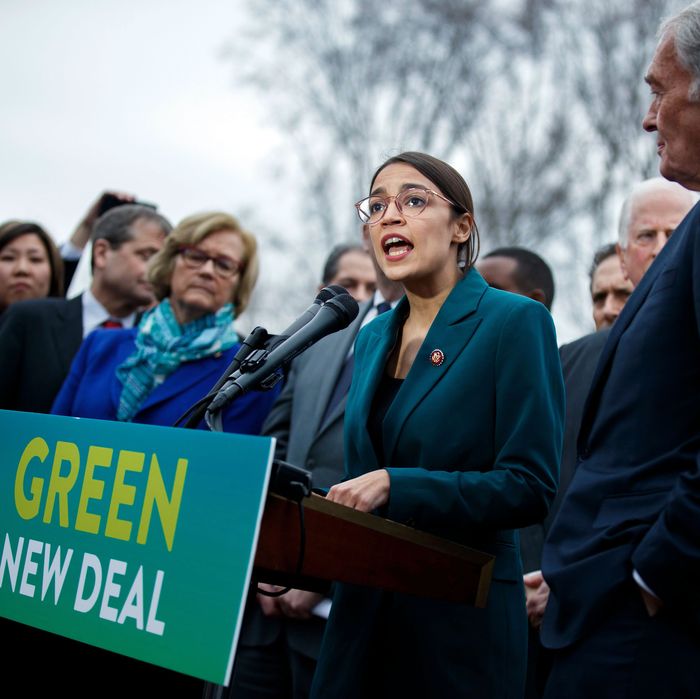
Now he won’t have to smear anyone: the Democrats have largely done that to themselves. Policy-wise the 2020 choice will be between Trump’s mostly doctrinaire conservatism, spiced with populist trade and immigration agendas, and what is a now a new Democrat orthodoxy of Bernie Sanders’ adolescent socialism and incoherent Alexandria Ocasio-Cortez’s Neverland something or other.
Trump legitimately will be able to say of a 2020 opponent, “Candidate X wants over the next 10 years to junk your present car, to scrap your combine, to stop your jet travel, to ban your cruise ship, to take away your lawn mower and snow blower, to outlaw your snowmobiles and jet skis, to shut down the fracking industry, the heavy equipment manufacturing sector (I doubt there will be a replacement battery-powered Cat D-11), the pipeline and rail business, and to make every homeowner an indebted remodeler, refitting his house while for all his green trouble and expense he still will be paying more for solar and wind-generated electricity.
Trump can legitimately also say to an independent or swing voter, “You may not like my tweets, but you will really won’t like infanticide, a 70 percent income tax, a diluted Medicare for everyone including those who have never paid a dime into the system, open borders, and guaranteed incomes for all.”
In other words, for the all the NeverTrump hysteria over Trump’s “nationalist-populist agenda,” his record so far is so far arguably more Reaganesque than either of the Bush presidencies or what was likely to come from a McCain or Romney Administration.
The Wild Bunch
In contrast, some of the Green New Deal Democrats are self-described socialists and embrace all sorts of positions antithetical to the Democratic traditional base:  anti-Israel, anti-Catholic, anti-Jewish, anti-firearms, even anti-infant. Or put another way, an independent voter is likely to have more in common policy-wise with a MAGA hat-wearing Trumper at a Midwest rally than with hooded Antifa street protestors or Alexandria Ocasio-Cortez’s latest racialist rant about “Latinos” having some sort of ethnic entitlement to cross the U.S. border illegally.
Trump will also run against real people with established records. For all practical purposes, Senator Elizabeth Warren (D-Mass.) has revealed that she was a knave, not just a dunce. For years she has insisted that while she may have been informally self-identified (albeit falsely) as a Native American, she never actively did so for official purposes. Any preference she received was supposedly due to the inferences of institutions and agencies, but not through her own solicitation. Last week we discovered that was all an abject lie—given that her Texas state bar registration card reemerged, with her own handwritten description of her race as “American Indian” (not even the politically correct “Native American”).
“Good ole Joe” Biden is often seen as the Democratic frontrunner, given his five decades in state government, the U.S. Senate and as Barack Obama’s vice president. But about the time of Warren’s meltdown, an old tape resurfaced in which Biden, in defining his opposition to federally mandated school busing, argued for the desirability of racial segregation and why it had enhanced blacks especially—a goofy statement that only emphasized his existing large corpus of past racialist stupidities, from “I mean, you got the first mainstream African-American who is articulate and bright and clean and a nice-looking guy” to “They’re going to put y’all back in chains” (The outraged are supposed to want the governor of Virginia to resign over youthful costuming in blackface, but are OK with a likely Democratic nominee for president who flat out once stated that pre-Obama African-American politicos were all but tongue-tied, dense, unkempt and homely?)
Early Biden reminds us why vintage Biden was always a motormouth who, as Obama feared in 2008, at any moment could “say something stupid.” Recall sober and judicious Joe advised George W. Bush in 2008 to go on television in the manner that he thought FDR had done during the Great Depression (FDR was not president in 1929 and there were no commercially available TVs). Lately, Biden on at least two occasions has boasted of wanting to take the sitting president of the United States behind the gym to beat him up.
Senator Kamala Harris (D-Calif.) perpetually grimaced on television in the congressional gallery as Trump said supposedly controversial things like wishing to close open borders that allow drugs and traffickers into the United States or noting that minority unemployment is at an all-time low. Harris recently went on an anti-Catholic rant while berating a nominee to the federal bench, and already has signed on to the Green New Deal without a clue what such a program would entail. She, too, had a terrible few weeks.
A group of female House members appeared at the Trump State of the Union in suffrage white, to suggest that they were on the veritable barricades as their sisters a century ago. At almost every Trump homily about racial healing, every piety about declining minority unemployment, every vignette about a heroic American, they grimaced, they frowned, they pouted—until Trump mentioned their own achievements in a positive context, at which for the first and only time they cheered. . . for themselves. One reason three-quarters of TV viewers may have approved of Trump’s address is that they no doubt concluded that, compared to such bitterness, Trump was genuinely inspirational.
Senator Cory Booker (D-N.J.) again last week reminded us of his “Spartacus moment” during the Kavanagh hearings, when incoherently cross-examining a judicial nominee and inferring she was biased or worse in not previously hiring gay clerks—while having no idea she had never been a judge in a position to hire any legal clerks at all. On cue, each time Spartacus had offered a platitude about “can’t we all just get along,” it was followed by a partisan slur or polarizing virtue signal.
Senator Bernie Sanders (I-Vt.) likewise seemed bewildered last week. He was flabbergasted at his diminishing novelty that once accrued from being Congress’s only true edgy “socialist.” That label has been considerably diluted lately by all sorts of younger, hipper “Democratic Socialists” recently elected to Congress. And when a picture just emerged of a younger, shirtless Bernie Sanders singing intoxicated Woodie Guthrie songs along with his Soviet buddies during his honeymoon in the USSR in 1988—at a time when Ronald Reagan was still trying to ensure the collapse of that “evil empire” and the liberations of hundreds of millions behind the Iron Curtain—we did not know whether to laugh or cry. Was he a proto-Beto O’Rourke, or even stupider and more dangerous?
As far as Beto O’Rourke, it is one thing to run as a pseudo-Latino against right-wing Ted Cruz, and quite another to do so in an upcoming Democratic primary with a legion of identity politics activists. In a series of bizarre statements, the former Texas congressman seems to be having a proverbial quarter-life crisis, manifested with texting out selfies at the dentist, growing a beard, driving solo across the country, and in Hamlet fashion sort of, sort of not announcing his presidential aspirations by scheduling a protest rally at the border. Like Stacey Abrams of Georgia and Andrew Gillum of Florida, Beto seems famous mainly for receiving hundreds of millions of dollars’ worth of free adulatory publicity—and then losing his 2018 race.
The Souls of Celebrities
A lot of rabid Trump haters had bad weeks too. When the Virginia blackface hysteria peaked, it almost seemed that blackface had always been a common Democratic rite of youthful passage. Late-night comedian Jimmy Kimmel, who has made a comeback career out of slamming Trump and Fox News, saw one of his earlier skits resurface. In racist fashion, he had dressed up in blackface and donned a basketball uniform in the manner of African-American NBA star Karl Malone, and then went on supposedly to emulate black patois by speaking mostly gibberish in a caricatured and cruel ungrammatical slang.
Joy Behar, infamous for admitting that fake news epidemics are to be explained by an admirable and universal desire to abort the Trump presidency, also confessed that she too dressed up in blackface in her distant past, but purportedly only as a “beautiful African-American woman”—note the arrogant and condescending subtext of suggesting that her innate beauty can make any costume proud.
Apparently wearing blackface inadvertently had become the new Freudian projectionist key that unlocks the mystery of why so many wealthy white people so loudly accuse innocent others of racism.
Robert de Niro long ago exhausted the vocabulary in which he would punch, beat up, smash, and box in Trump’s face. But after emerging irate from a divorce court hearing onto the streets of Manhattan, in front of the paparazzi he loudly on his phone screamed at his own limousine driver for not double parking for the actor’s convenience—proof again that progressive lovers of humanity in the concrete can be not so humane.
But Trump’s strangest gift came from Virginia, where its top three Democrat state officials circled off and almost blew each other up in “The Good, Bad, and the Ugly”three-way gunfire.
The Virginia Circus
Governor Ralph Norman started off justifying infanticide in clinical vocabulary, an assurance with which his radical and generous Planned Parenthood donors would be pleased. But then he was caught with college yearbook photos of a Klansman posing by a white buffoonish character in blackface. Northam at once denied, then admitted, next hedged, and finally confirmed the entire story—only to bookend it by admitting that he once upon a long time ago also dressed up in black shoe polish to emulate Michael Jackson (who usually did his best to wear white makeup).
The lying-in-wait Lt. Governor Justin Fairfax, an ascendant African-American Democrat, seemed ready to take over from the sure to be Twitter-lynched Northam. But then his own sudden fame prompted latent accusers to emerge. One, in particular, charged that 15 years ago Fairfax had coerced her, a fellow 2004 Democratic convention goer, to service him with oral intercourse.
Fairfax apparently somehow assumed in the post #MeToo, Brett-Kavanaugh age that he said/she said assault charges of years past required some sort of additional proof, or rather perhaps he thought his own minority and progressive status might trump gender victimization. In any case, he purportedly blurted out to aides on hearing the ancient sexual assault charge voiced, “F—k that bitch”—a most regressive slur.
Third-in-line attorney General Mark Herring had already raced to virtue signal his disgust with the supposedly racist governor Northam (but was apparently OK with the governor’s calm discussions of infanticide) by calling for his resignation. And then almost immediately Nemesis struck yet again, as Herring confessed that he, too, at 19-years-old had dressed up in a black caricature fashion, emulating the skin color and dress of a black rapper.
Oddly there was some indication that the press and the Democratic Party might have had or should have had, some inkling that their top three Virginia state officials respectively had trafficked either in racist caricatures, could not tell the truth, or were sexual assaulters, but in the past had passed on such rumors in hopes of flipping Virginia blue.
The larger point, however, was simple: a party that non-stop smears Trump as a sexual assaulter and racist seems incapable of dealing with alleged racists and sexual assaulters among its top state officials. Or put more cynically, is there one single liberal Democrat state official in soon to be liberal Virginia who had either not worn youthful blackface or been accused of sexual assault, or could at least tell us what were the post-Kavanaugh rules of due process?
Republicans were wise enough to let progressives play out the entire psychodrama. They allowed social justice warriors to sort out the hierarchies of progressive identity politics, whether #MeToo trumped identity politics, or whether “she must be believed” was now “he must be believed,” or whether due process and statutes of limitations had returned, or whether those who shout loudest “racist!” do so in self-doubt that they themselves suffer from what they accuse.
Donald Trump was lucky in having such a motley crew of enemies. Or were these liberal embarrassments in part due to Trump’s own political cunning in helping to rip off the thin veneer to reveal something quite ugly beneath?
And now? Donald Trump might be in the unique position of being a bit more quiet in order to let his opponents speak for, and thereby reveal even more of, themselves.

AOC: The Perfect Graduate of Today's Biased Colleges


BY ROGER L. SIMON
https://pjmedia.com/rogerlsimon/aoc-the-perfect-graduate-of-todays-biased-colleges/
February 9, 2019

Image result for green new deal

In the immediate sense, Alexandria Ocasio-Cortez may be the best thing to happen to the Republican Party since Abraham Lincoln. Her Green New Deal is as much dead in the water as it is brain dead and constitutes a fabulous talking point for the GOP to run on in 2020.
But there is a point of concern — and in the long run a more important one.

AOC represents the natural outgrowth of our extraordinarily biased higher educational system. She is its valedictorian, its Social Justice Summa Cum Laude. Give her the SJWPhD honoris causa and, while you're at it, give the United States of America to China. They won't have to fire a shot.

Think I exaggerate? Consider the level of writing and thinking in her Green Deal in whatever ever-changing iteration, with or without the banning of cow flatulence and air travel, and notwithstanding the guaranteed income for those unwilling to work. (Isn't that already the case with internet trolls — but I digress?) This document, if one can call it that, resembles nothing more than the kind of swill presented to — and highly approved by — professors in today's grievance-obsessed colleges, where Shakespeare and Milton are dismissed or rejected and actual thought (i.e., intellectual reasoning) is ridiculed as manifestations of "white privilege."

Actually, AOC is a nascent (or not-so-nascent) totalitarian. Nevertheless, she has brought along with her almost all of the declared Democratic Party candidates (Gillibrand, Harris, Warren, Booker, Sanders, etc.), a couple of whom, one would hope, might be smart enough to know her ideas are fantastical and so expensive as to bankrupt not just the USA but most of the world along with it. It would cause tremendous suffering, most of all to the poor and working classes who can't afford, or even dare to dream of, Teslas or vacations on Mustique.

These are the people the Democrats claim to be helping. Nevertheless, these candidates say nothing and go along. Either they are cowards or fellow travelers or both. But beneath it all, they are wannabe undergraduate Social Justice Warriors.

That's what I mean about the danger of our educational system. It's not global warming that's the problem, as the Green New Deal would have it (though its actual intention appears to have little to do with the environment and everything to do with promoting socialism). The real problem is our colleges (and earlier education, obviously) that are turning out the likes of AOC on an assembly line of the sort that drove Charlie Chaplin mad in Modern Times.

As I wrote elsewhere, only 20 percent of colleges have even one Republican on the faculty. Imagine the indoctrination that is going on. Imagine how much more attention is paid to Marx (and Marcuse and Gramsci, etc.) than to Adam Smith or Edmund Burke, let alone Aristotle, Aquinas, or even James Madison.

Do you think AOC has read one word of Friedrich Hayek? Do you think that she has even heard of him? What do you think she knows of history in general? We already know how informed she is about the Middle East.

This is a new form of proud Know-Nothingism. We can't even say it will come back to haunt us because it already is doing just that. Reforming our educational system is the most important mission of our time. Presidents come and go. Even media grandees come and go — after a while (too long a while). But education remains, shaping our future. Change it or everyone sitting in Congress will be AOC. (No it doesn't stand for All-Out Communist. But wait long enough and it could.)

Roger L. Simon — co-founder and CEO emeritus of PJ Media — is an award-winning author and Academy Award-nominated screenwriter.

Monday, February 11, 2019

Frank Robinson wasn't easy to get to know, but he was certainly worth the effort


By Peter Schmuck
https://www.baltimoresun.com/sports/orioles/bs-sp-frank-robinson-was-a-tough-guy-on-the-outside-20190207-story.html
February 8, 2019

Related image


Frank Robinson was one of the toughest players in the history of baseball, but the hard shell you had to break through to get to know him was just a very effective disguise.
I found that out the hard way soon after I was hired by The Sun to take over the Orioles beat in January of 1990. The team was coming off its heart-warming “Why Not?” season and I was excited to get started. I was living in Southern California at the time, so I called Frank at his home in Los Angeles, introduced myself and asked him if I could take him to lunch and get acquainted.
“I don’t want to have lunch with you,” he said brusquely. “Talk to me in Florida.”
And he hung up.

So, imagine how I felt when I finally tiptoed up to him at the Orioles’ minor league facility at Twin Lakes Park in Sarasota a few weeks later. He was sitting in a golf cart watching some of the team’s young prospects and I started to introduce myself.
“I know who you are,” he said in the same tone as before, then motioned for me to get into the cart. Within a few minutes, I knew I was in for a great ride.
“The whole thing was cracking that shell,” said former Orioles public relations director Rick Vaughn, who worked closely with Robinson throughout the 3 ½ seasons that Frank was Orioles manager. “He had that tough exterior and you had to be persistent to get through it, but what was inside was a really great person.
“There was a real big heart in there, but he didn’t always let you see it.”
When Robinson died at 83 on Thursday after battling a long illness, he was already one of baseball’s immortals. He remains among the truly elite players in the history of the sport and was the first African-American manager in both the American and National Leagues.
Though he spent less than a third of his playing career here and his managerial tenure with the Orioles also was relatively short, he will always hold a special place in the sports history of Baltimore and Baltimore always held a special place in his heart.
He spent much more time playing for the Cincinnati Reds, where he broke in as the National League Rookie of the Year in 1956, and made history when he broke the managerial color barrier in Cleveland, but he insisted on entering the National Baseball Hall of Fame as an Oriole when he gained induction in 1982.
“Today is a very sad day because I lost not only my teammate, but also a very dear friend,’’ fellow Orioles legend Brooks Robinson said in a statement released by the Orioles. “I loved Frank and got to know him so much better after we both retired. … As a player, I put Frank in a class with Willie Mays, Hank Aaron, and Mickey Mantle. He was the best player I ever played with.”
Of course, he’s revered around here because he immediately turned a pretty good Orioles team into a great one after he arrived in Baltimore for the 1966 season. He won his second MVP award that year and led the O’s to their first World Series championship. During his six seasons hammering baseballs all over Memorial Stadium, the Orioles reached the World Series four times. They’ve been back only two times since.
“He brought a new attitude to the Orioles,” Boog Powell said. “Guys would be standing around before a game, talking to players on the other team. Frank said, ‘Cut that crap out — they’re not your friends until we’re done.’ ”
Robinson made many long-standing friendships during those years, so he felt right at home when he returned to Baltimore during the 1980s to coach, manage and serve as front office executive. He is the only former player ever to serve in all those post-playing roles for the Orioles.
“He was like a brother to me,” said teammate Don Buford, who had stayed in close contact during Robinson’s long illness. “I saw him a week ago. He didn’t complain, just took it one day at a time. Frank was a strong-charactered individual and was prepared for [death]. In life, he gave back to his fellow man in every way that he could — a trailblazer in his own right.”
Image result for frank robinson statue baltimore
Frank Robinson statue at Camden Yards
He was a fierce competitor who tolerated nothing less from the players he coached and managed, which might explain how an Orioles team that lost 107 games in 1988 reached the final weekend of the 1989 season still in contention for a playoff berth.
Why not, indeed. Robinson had to stare down the racism that confronted all of the African-American players of his day. He even faced resistance in Baltimore when he tried to buy a home here during the turbulent civil rights era.
Still, he enjoyed a long love affair with Baltimore and you didn’t have to crack through that hard shell to figure that out.
He also had a sharp sense of humor that became obvious during his time way back when he was the chief judge of the famous Orioles “Kangaroo Court.” Decades later, he clearly enjoyed calling me only by my last name and I could tell by his intonation whether he approved of one of my questions or had an issue with one of my game stories.
Still, I never had much luck with Frank on the telephone. During his time managing the Montreal Expos, I called the team’s public relations director and asked him to set up a phone interview for me, but didn’t hear back.
I called again and the Expos PR guy said that Frank did not want to talk to me, which made no sense to me since I thought I had a very good professional relationship with him. So, I showed up the next time the Expos passed through Philadelphia and asked him why he wouldn’t take my call.
“Because I wanted to see if you’d fly all the way to Canada to talk to me,” he said.
Frank had a very good memory, but I seriously doubt that was a sarcastic reference to our first phone call 14 years earlier.
Wish I could call him and ask.
Read more from columnist Peter Schmuck on his blog, "The Schmuck Stops Here," at baltimoresun.com/schmuckblog.

Frank Robinson knew how to seize the moment and never gave up the fight


By Paul Hoynes
https://www.cleveland.com/tribe/2019/02/frank-robinson-knew-how-to-seize-the-moment-and-never-gave-up-the-fight.html
February 7, 2019

Image result for frank robinson statue cleveland
Former Cleveland Indians manager and player Frank Robinson stands with his new statue commemorating his career. (Jason Miller/Getty Images)

CLEVELAND, Ohio – When Frank Robinson was 81, the Indians unveiled a statue of him at Heritage Park behind the center field wall at Progressive Field. It was located in the middle of the team’s Hall of Fame with Robinson holding a lineup card as the first African American to manage a major league team.
The date was May 27, 2017. Robinson, an MVP in both leagues who played like a clenched fist, had mellowed with age. He was thin and his hair was white, but the embers inside were still smoldering.
Manager Terry Francona, his coaching staff and players, were seated behind him for the unveiling. Robinson, a Hall of Famer, thanked Francona and his players. “I’m sure you guys would rather be sitting in the air conditioning in the locker room getting ready for your game,” he said.
He spoke about what the statue meant to him and his days in Cleveland. Mostly he talked about how baseball still needed to do a better job of bringing people of color into management, coaching and front office positions.
Robinson, who had spent his life in the game as a player, manager, and an MLB executive, was still trying to clear the way for others.
“There are people out there in the minor leagues and at the big-league level as coaches, and they have earned their way up,” said Robinson. “But they just don’t seem to be able to break that barrier as often. All I can tell them – don’t give up. Do not give up. If you want to manage one day in the big leagues, continue to do it. Continue to do it.”
Of all the things that were said by and about Robinson that day, that is the what I remember the most. Robinson, who died on Thursday at 83, was still fighting the fight for equality long after Jackie Robinson and Larry Doby broke baseball’s color barrier.
“That was a passion of his and he fought for it until the day he died,” said Indians announcer Rick Manning, who played center field for Robinson’s Indians. “It was a passion because he experienced (racism and prejudice) as a player when he came up.”
The Indians formally announced the hiring of Robinson as player-manager on Oct. 3, 1974. Ken Aspromonte, who managed the team the three previous seasons, was fired the day before.
The late Plain Dealer baseball writer Russell Schneider, in his history of the team, quoted then Commissioner Bowie Kuhn as saying, “Now that it has happened, I’m not going to get up and shout that this is something for baseball to be exceptionally proud of, because it is so long overdue.”
Schneider credited Ted Bonda, Indians CEO, and GM Phil Seghi for hiring Robinson.
“He managed like he played,” said Manning. “He was a hardnosed player and a great player. I watched him growing up on TV playing with Baltimore and Cincinnati. I idolized the guy. When they called me up in May, he told me I was there to play. I was just thrilled to be in the big leagues.”
In those days the Indians would play an exhibition game against their Class AAA team during the regular season. The top minor league club was in Toledo. Bullet Bob Reynolds, who had failed to make the Tribe out of spring training, was pitching for Toledo in 1975. He apparently was upset with Robinson and threw a pitch over his head.
Robinson popped out and after that went to the mound and knocked out Reynolds. The next day the Indians players hung a pair of boxing gloves on the manager’s door at the Municipal Stadium.
“I’m up in there for the first time and watching this stuff go on and thinking, ‘Holy smokes, is this what the big leagues is like? There’s something new every day,’” said Manning.
Manning wasn’t kidding.
In Robinson’s first at-bat as player-manager, against the Yankees on opening day, he homered. It was one of nine homers he hit that year and one of 586 during his career.
Robinson was a 14-time All-Star, a Triple Crown winner, Rookie of the Year, World Series MVP, batting champion, the judge in Baltimore’s famous Kangaroo Kourt, manager of the year, a Gold Glove winner and a man who knew how to seize the moment and never give up the fight.

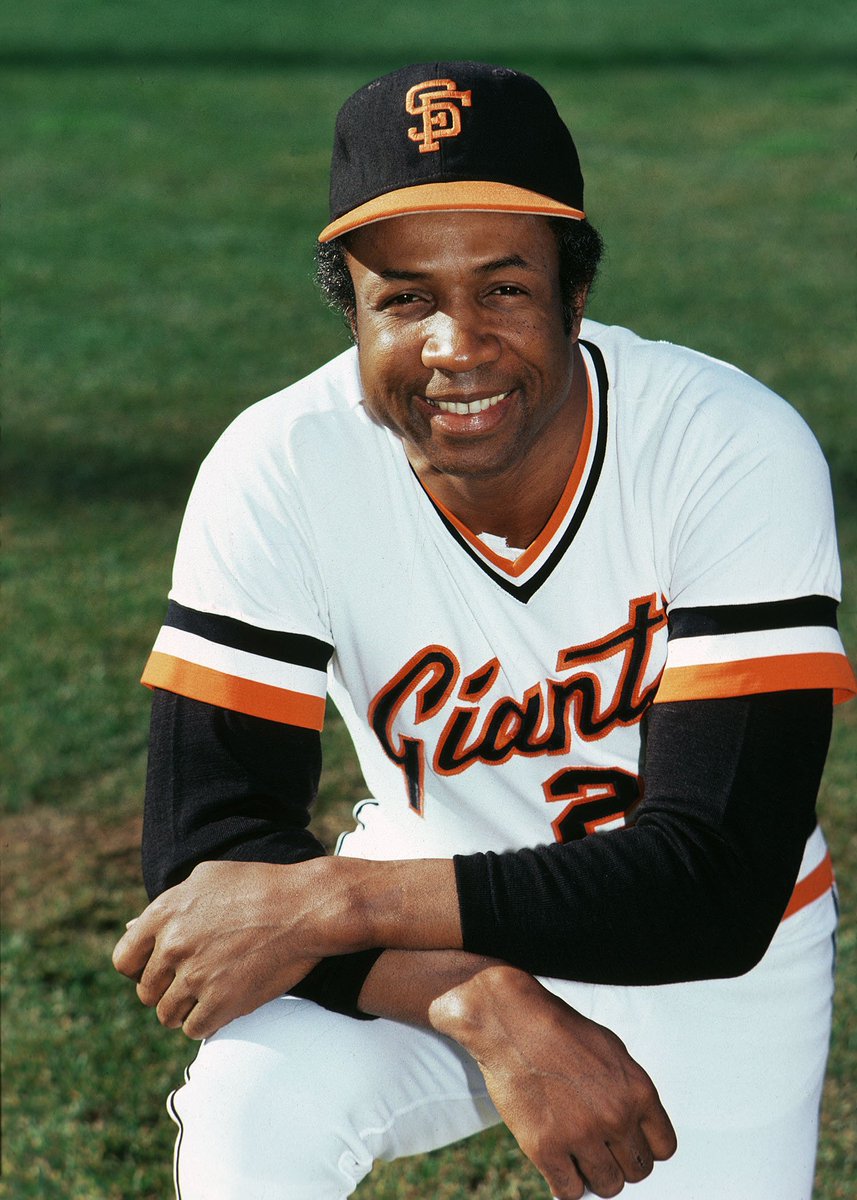
Remembering Frank Robinson, as a player and man


By Bruce Jenkins
https://www.sfchronicle.com/giants/jenkins/article/Remembering-Frank-Robinson-as-a-player-and-man-13598576.php
February 7, 2019

Related image

Everything about Frank Robinson was distinctive. His batting stance, his home run trot, even the way he stepped into a batter’s box as if he owned it, grabbing a handful of dirt and rubbing it vigorously between his hands.
So many things came to mind when we learned of Robinson’s passing Thursday morning, at the age of 83. It was an immeasurable loss for baseball, Robinson having ably served as a player, manager and executive. As always, with the great ones, mourning comes joined by celebration — and in Robinson’s case, more than a little nostalgia.
Robinson grew up in the thriving 1950s atmosphere of East Bay sports, joining Willie Stargell, Joe Morgan, Curt Flood and Vada Pinson among the African American players who either grew up in Oakland or frequented its ball fields. Robinson had some basketball talent, as well — he was briefly a teammate of Bill Russell’s at McClymonds High School — but in those days, baseball marked a clear path to prominence among the major sports.
The expression “born ready” fit Robinson like a glove. At a time when tactics of intimidation were common, pitchers were appalled to see the Reds’ 20-year-old rookie standing so close to the plate, daring them to challenge him inside. He was hit by a pitch 20 times that ’56 season, leading the league. But he understood the breadth of his talent and where it would take him. He was smart, fearless and aggressive on the bases, someone to fear as he bore down on infielders to break up a double play. (And he would lead his league in hit-by-pitch six more times.)
The steroid era took a dreadful toll on home run records. The all-time career list includes some names and numbers that, in the eyes of many, cannot be fully trusted. It’s a bit more heartwarming to recall those vintage years when Robinson’s 586 lifetime homers ranked him fourth — behind Aaron, Babe Ruth and Mays.
Over the years, Robinson won two MVP awards — one in each league — and in 1966, the season after the Reds’ lamentable trade with Baltimore (for Milt Pappas, Jack Baldschun and Dick Simpson), Robinson won the Triple Crown. To me, though, his best year was 1962: .342 average, 39 homers, 136 RBIs and just two errors in the outfield, while leading the league with 51 doubles, 134 runs scored, .421 on-base percentage, .624 slugging percentage and 1.045 OPS — without missing a single game. That’s true mastery of the art.
The 1966 World Series is generally remembered for Baltimore’s pitching — consecutive shutouts by Jim Palmer, Dave McNally and Wally Bunker to close out the Orioles’ four-game sweep of the Dodgers — but Robinson was the heart and soul of that Series. He set an immediate tone with a first-inning homer off Don Drysdale in the opener, tripled to right-center off Sandy Koufax and scored a run in Game 2, then homered off Drysdale’s wicked, sidewinding fastball again — a 410-foot shot to left — for the Orioles’ only run in Game 4.
As much as the 1971 Series belonged to the Pirates’ Roberto Clemente, Robinson will be remembered for getting the Orioles to the brink. In the bottom of the 10th inning of Game 6 in Baltimore, he drew a one-out walk from Bob Miller, then boldly took third on Merv Rettenmund’s single to center, barely ahead of a strong throw from Vic Davalillo.
Brooks Robinson followed with a flyball to shallow center, and again Robinson bucked the odds, racing home to score the winning run as another bullet throw took a high hop, enabling Robinson to slide under the tag of catcher Manny Sanguillen. Such brilliance: Robinson was 36 years old, deciding a World Series game in the manner of a young Rickey Henderson.
There couldn’t have been a better choice to become the major leagues’ first African American manager than Robinson, with the 1975 Cleveland Indians. Was he ready? He’d soon find out, with a wildly eclectic cast of characters. There was star power — Gaylord Perry, Buddy Bell, Dennis Eckersley, Boog Powell and the young Duane Kuiper — but also a heavy dose of craziness with Oscar Gamble, Rico Carty, John Lowenstein, Fritz Peterson (as a member of the Yankees, he and fellow pitcher Mike Kekich legally swapped wives) and Rick Manning, who had an affair with Eckersley’s wife, Denise, in 1978 and later married her.
Robinson still considered himself an athlete and took that job as a player-manager. On the morning of Opening Day, he was pulled aside by Indians general manager Phil Seghi, who told him, “Why don’t you hit a homer the first time you go to the plate?”
“You’ve got to be kidding!” Robinson recalled saying. But that’s exactly what he did, ripping a 2-2 fastball from the Yankees’ Doc Medich over the left-field wall for a first-inning homer, thrilling a crowd of 56,715 at Cleveland Municipal Stadium.
Robinson was managing the Giants, in 1983, when I had my first consistent contact with him. The Chronicle had switched me from the A’s beat to the Giants in midseason, and talk about a contrast in the manager’s office: I went from mild-mannered Steve Boros, who didn’t seem to ever get upset about anything, to the gruff, no-nonsense Robinson, who had a habit of sizing you up, humbling you with a few incisive comments and then writing you off unless you stood up for yourself.
I can’t remember exactly when I crossed that line, or how, but it became a distinct privilege to talk baseball with Robinson, sometimes off the record, throwing the occasional barb his way and enjoying his honest response. I’d run into him occasionally after he left the Giants, and our relationship remained pure, invaluable, usually with a bit of laughter involved. That’s how I’ll remember one of the most distinguished men ever to grace the game.
Bruce Jenkins is a San Francisco Chronicle columnist. Email: bjenkins@sfchronicle.com Twitter: @Bruce_Jenkins1

The Frank Robinson I knew: The proudest, orneriest, most competitive man in baseball


By Thomas Boswell
https://www.washingtonpost.com/sports/nationals/the-frank-robinson-i-knew-the-proudest-orneriest-most-competitive-man-in-baseball/2019/02/07/83d6c464-2305-11e9-81fd-b7b05d5bed90_story.html?utm_term=.b7e700d4b5ea
February 7, 2019

Related image
(Tony Triolo)
For several days, the death of Frank Robinson had been expected. Editors called reporters to prepare appreciations. But Frank, no respecter of deadlines or demise, didn’t depart on schedule. Some of us who covered him for years enjoyed the thought of Death trying to cope with Frank.
Robinson was the proudest, orneriest, most competitive man in baseball from his arrival in 1956 — as a rookie who hit 38 homers at age 20 — until 2006, when, in his 16th year as a manager, his old fierce eyes still made his Nats players seem tame.
“You know you can’t beat me,” the Grim Reaper says. Frank, silent, just glares and digs in. Robinson didn’t just crowd the plate; he crowded life.
On Thursday, Robinson died at 83. Many will recall his Triple Crown season leading the Baltimore Orioles to a World Series title in 1966. Others will find the most lasting value in his dignified barrier-breaking work as the first African American manager in 1975 with Cleveland and then as manager of the year back with the Orioles in 1989.
Washington fans will remember Robinson’s fiery leadership of the 2005 Nationals, D.C.’s first team after a 33-year wait. They were supposed to be awful. Robinson refused to allow it. They were in first place at the all-star break and in contention in September and weren’t losers — they finished 81-81. Once, Robinson, almost 70, pushed through a melee trying to punch tough-guy Angels manager Mike Scioscia. With big fists and an upper body that recalled a ­541-foot homer he hit out of Memorial Stadium, Robinson truly wanted a piece of Scioscia.
But Robinson had other sides beyond the need to intimidate opponents or drive teammates to their competitive limits or respond to any challenge with flashing eyes; a smart, quick tongue; and, if necessary, his fists.
In 1988, after the Orioles started the season 0-6, Robinson replaced Cal Ripken Sr. as manager. When their record reached 0-20, the whole sports nation watched, aghast and empathetic. Long before the 21st game, Frank sat alone in his office. I handed him a lapel button that read, “It’s Been Lovely, but I Have to Scream Now.”
He burst out laughing. And put the button in his top drawer.
A few years earlier, Frank and I had broken the ice when he was a coach on Earl Weaver’s staff. One day, I wrote that the Nos. 1-3 hitters in the Orioles’ order should all be benched.
“Firemen go into burning buildings for $10,000 a year,” I said. “For $1 million, Fred Lynn won’t pinch-hit with the bases loaded in Yankee Stadium if he has a cold.”
The next day, Lynn stopped talking to the media but also immediately got red-hot and won the American League player of the week award. A few days later, Robinson said, “Could you rip Freddie again next week?”
These days, the notion that a manager can lead a team, and add to its win total, through the force of a scary-intense personality, through anger as well as inspiration, through stop-being-a-dog criticism, is treated as a silly, irrational anachronism. Do they do that in middle-management at Apple?
That’s wrong. I covered two Robinson teams that finished 20 to 30 games better than MLB experts thought they should. There were many reasons, but none bigger than Frank’s back-of-the-plane to top-step-of-the-dugout leadership.
The 1988 Orioles started 0-21 and ended 54-107. But they improved the next season by 32 ½ games and missed the postseason only on the last weekend of the season. They were a six-month national story. At that time, just two teams had ever improved by more games: the 1903 Giants and the 1946 Red Sox (who warrant an asterisk because they got Ted Williams and other stars back from World War II).
Baltimore kept Robinson in charge while subtracting unhappy talent, such as Eddie Murray, and adding kids or nobodies who were happy to be in the show. The Orioles added no top players. I predicted they might lose 121 games. They won 87.
Robinson’s leadership — nobody can define it or measure it, which is why few currently value it — was essential. He believed in players who, objectively, did not merit it. So they believed in themselves. Some, such as Steve Finley, panned out as stars. Others, such as Curt Schilling — who tried out purple hair, looked like Billy Idol and when called in from the bullpen once said, “So, who’s up?” — weren’t Frank’s guys.
They crashed into walls, stole bases and threw strikes. But most of all, they loved the endless details of the game, studied them, revered them as Robinson did and believed that demanding unfailing fundamentals from one another would win.
Another link between those 1989 Orioles and the 2005 Nats was that most were either young-and-eager or old-and-holdin’-on — so they listened. Which Frank loved.
“I’ve always enjoyed working with young people, reaching them and talking baseball. It’s a pleasure to watch someone get better and better until he’s a bona fide big leaguer,” he said. “All a teacher wants is for them to listen and try.”
The flip side is that Robinson had teams that underperformed because, when it came to modern thinking, he was a defiant, “gut instinct” dinosaur. When his teams were out of the hunt, he lost some interest and held court in his office.
Perhaps the lesson should be: Analytics are great, but leadership is real, too. Ask the military academies whether they believe it’s all just numbers.
Sometimes, when he managed the Nats, we had rambling talks. He despised the PED cheaters who broke the records of him and his friends, especially Hank Aaron, who had faced death threats while chasing Babe Ruth’s homer mark.
Because he could be so cantankerous and didn’t care what you thought, Robinson was exciting to cover. He grasped the concept of an “adversarial relationship” with the press. That didn’t mean he liked it. Once, after I criticized his managing, he made a sweeping gesture of stabbing himself in the back as he passed me. And he wasn’t smiling.
Put all those qualities together, and it may be easier to understand why teammates loved him, foes feared him, umpires and writers respected him but his colleagues in the sometimes-devious world of front-office politics did not.
Robinson and the Nats, for example, ended with a bitter split. The Nats weren’t generous; Frank — shock — didn’t leave quietly. “He’s not a guy who endears himself,” a Nats exec said, missing his own half-compliment.
Frank always evoked strong feelings. As a teen, I detested him. When I watched my Senators play the Orioles in D.C., he hit a three-run homer in the first inning to end the game before it began — every time, it seemed. He was the ferocious five-tool superstar my team never had.
Then, as I grew up, all that flipped. Bill Russell of the Boston Celtics became the first African American coach in any major U.S. pro sport. Eight years later, Robinson, who was Russell’s basketball teammate at McClymonds High in Oakland, broke the managerial color barrier in Major League Baseball. That two close friends could face challenges so similar with such dignity and honesty was impressive. But that they did it so uncompromisingly, never turning away from the firsthand hard truths they had learned about race in America, made them two of my heroes.
For me, Russell and Frank Robinson were the next step after Jackie Robinson. Because he had laid the groundwork, they didn’t have to turn the other cheek. They could be their entire selves — or close to it. Remembering what social progress looked like then is a reminder of why it’s worth battling to keep and extend now.
Frank Robinson always had the severe comportment, the hard eye for enemies, the basic sense of right and wrong of a pioneer. He walked into a room, and others stood up straighter, heads higher. Now, we bow our heads in respect.