Wednesday, January 09, 2019

The Scientific Experts Who Hate Science


By Ben Shapiro
https://townhall.com/columnists/benshapiro/2019/01/09/the-scientific-experts-who-hate-science-n2538727
January 9, 2019


Related image
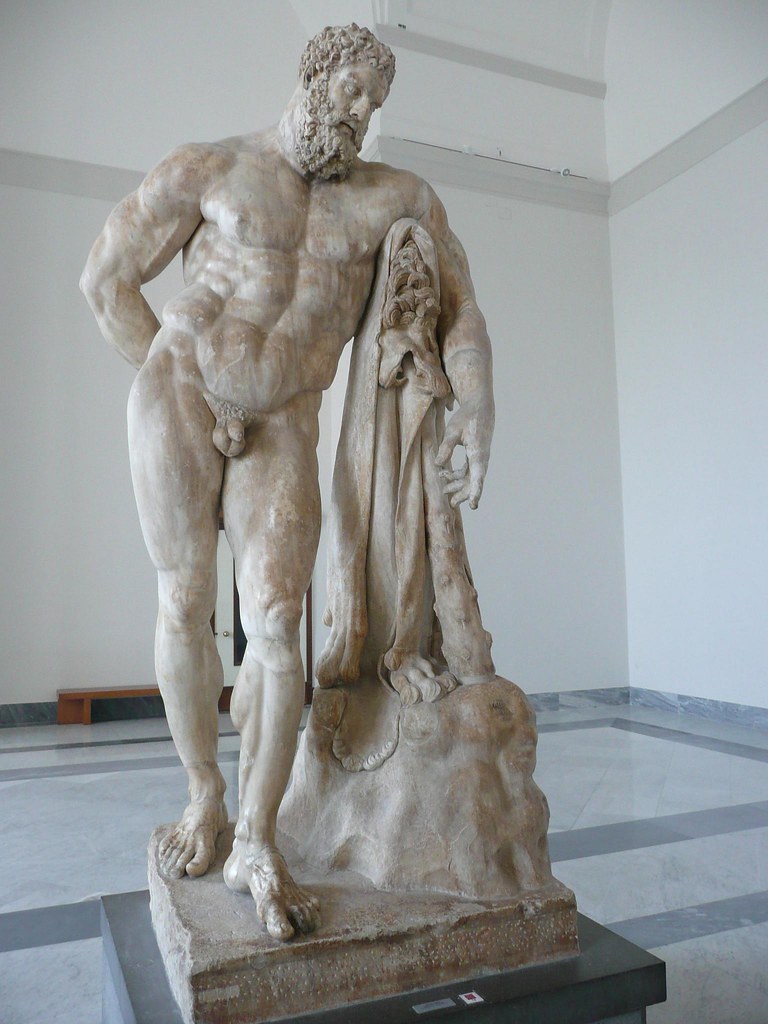
Farnese Hercules, Museo Archeologico Nazionale in Naples

This week, the American Psychological Association proved once again that it is a political body rather than a scientific one. It has done it before -- in 2013, it reclassified "gender identity disorder" in the Diagnostic and Statistical Manual of Mental Disorders, calling it "gender dysphoria" and then explaining that living with the delusion that you are a member of the opposite sex is not actually a mental disorder at all. That ruling was based on zero scientific evidence -- much like the original DSM-5 classification of pedophilia as a "sexual orientation" before it was renamed "pedophilic disorder" under public pressure.

The latest example of the APA's political hackery concerns the topic of "traditional masculinity." In the APA journal, it announced that it had released new guidelines to "help psychologists work with men and boys." Those guidelines suggest that "40 years of research" show that "traditional masculinity is psychologically harmful and that socializing boys to suppress their emotions causes damage that echoes both inwardly and outwardly." The APA explains that "traditional masculinity -- marked by stoicism, competitiveness, dominance and aggression -- is, on the whole, harmful. Men socialized in this way are less likely to engage in healthy behaviors."

Never mind that traditional masculinity -- a masculinity geared toward channeling masculine instincts of building and protecting, rather than tearing down -- built Western civilization and protected it from the brutalities of other civilizational forces. Never mind that traditional masculinity protected femininity and elevated women to equal status in public policy. Traditional masculinity is actually just men sitting around and eating burgers while grunting at one another about football, all the while crying on the inside because they have been prohibited by society from showing their feelings.

And it's worse than that. According to the APA, traditional masculinity bumps up "against issues of race, class and sexuality," maximizing both interior and exterior conflict. Dr. Ryon McDermott, a psychologist from the University of South Alabama who helped draft the new APA guidelines, suggested that gender is "no longer just this male-female binary." Rather, gender is a mere social construct that can be destroyed without consequence. Here's the APA making the extraordinarily dishonest statement that gender differences aren't biological at all, in contravention of all known social science research: "Indeed, when researchers strip away stereotypes and expectations, there isn't much difference in the basic behaviors of men and women."

Destroy masculinity in order to destroy discrimination and depression. Feminize men, and indoctrinate boys.

In order to reach this conclusion, the APA has to define traditional masculinity in the narrowest, most negative terms possible -- and then other those who disagree as part of the patriarchy. But as a political body, the APA has little problem doing this.

All of this is not only nonsense; it's wildly counterproductive nonsense. Buried beneath the reams of nonsense in the APA report is this rather telling gem: "It's also important to encourage pro-social aspects of masculinity. ... In certain circumstances, traits like stoicism and self-sacrifice can be absolutely crucial." But we must never suggest that such traits ought to be included as part of a "traditional masculinity," because that would make some people feel excluded.

Here's the truth: Men are looking for meaning in a world that tells them they are perpetuators of discrimination and rape culture; that they are beneficiaries of an overarching, nasty patriarchy; that they are, at best, disposable partners to women, rather than protectors of them. Giving men purpose requires us to give them purpose as men, not merely as genderless beings. There's a lot to be said for the idea that our culture has ignored the necessity for men to become gentlemen. But that's a result of a left-wing culture that denigrates men, not a traditional masculinity built on the idea that men were born to defend, protect and build.

One thing is certainly true, though: The APA has destroyed itself on the shoals of politics. And there's no reason for honest-thinking people to take its anti-scientific pronouncements seriously simply because it masquerades as scientists while ignoring facts in favor of political correctness.

Ben Shapiro, 34, is a graduate of UCLA and Harvard Law School, host of "The Ben Shapiro Show" and editor-in-chief of DailyWire.com. He is The New York Times best-selling author of "Bullies." He lives with his wife and two children in Los Angeles.

Tuesday, January 08, 2019

Today's Tune: Elvis Presley - That's All Right ('68 Comeback Special 50th Anniversary HD Remaster)

Welcome to national champion Clemson QB Trevor Lawrence's world


By Ryan McGee
http://www.espn.com/college-football/story/_/id/25711845/gonna-legend-welcome-trevor-lawrence-world
January 8, 2019

Trevor Lawrence drops back to pass for the Clemson Tigers.
Ezra Shaw/Getty Images

SANTA CLARA, Calif -- They tried to tell us about Clemson quarterback Trevor Lawrence. The people of East Tennessee and Northwest Georgia and upstate South Carolina, they tried to tell us during this incredible college football Year of the Quarterback, when Oklahoma's Kyler Murray won the Heisman Trophy and Ohio State's Dwayne Haskins was breaking Big Ten passing records and Washington State's Gardner Minshew was doing the same in the Pac-12 and, oh, Alabama's Tua Tagovailoa was being showered with talk of "Is he the greatest college QB ever?"
They tried to tell us that while we were watching those other guys, they had been watching this long-haired, even-keeled kid at Clemson. And they tried to tell us that he might damn well be better than all those others.

On Monday night, on the biggest football stage not called the Super Bowl, Lawrence made that statement for them. It came with 28 seconds remaining in the third quarter. Actually, the statement was made all night. The period -- no, the exclamation point emoji -- placed at the end of the statement came with 28 seconds remaining in the third quarter of the College Football Playoff National Championship against top-ranked Alabama.
That's when Lawrence planted his back foot at the Alabama 15-yard line, eased into a standing-in-the-saddle stance that looked more than a little like Peyton Manning, the man Lawrence pays tribute to by wearing No. 16, and cocked his right arm. With Crimson Tide linebacker Anfernee Jennings bearing down to knock him down, the 19-year-old true freshman fired off a throw that had a hook-shot motion but was delivered with so much velocity that the ball rose along a frozen rope, skimming the tops of the helmets of the linemen scrumming in front of him, sailed over the goal line and through two sets of defenders' raised gloves, and snapped its way into the waiting fingers of receiver Tee Higgins.
"That play was run as it was drawn up, but if we've got anyone else back there, it's probably breaking down. Not with Trevor. He dug in and threw a dart," Clemson co-offensive coordinator Jeff Scott said while holding his young daughter as the confetti drifted down into his hair. "People have asked us nonstop about, 'When is Trevor going to have his freshman moment?' Well, I know that's not what those people meant, but that was a pretty good freshman moment, wasn't it?"
The score was 44-16. There was more than a quarter left to play. But the game was over.
The legend of Trevor Lawrence has only just begun.
"I guess I should be used to this by now, right? Everything I did, he goes and does it, too," Houston Texans quarterback Deshaun Watson said while standing amid the celebration. He led Clemson to a win over Alabama in 2016 for the school's first national title in three and a half decades. Before that, he was a record-setting high school quarterback in Georgia. Lawrence, who broke all of Watson's high school passing marks, now also has a Clemson national championship.
"My man is a true freshman," Watson said. "He's got at least two more years to do work. He's gonna be a legend. He already is. People know that now."
That brings us back to the people who always knew. The people of Clemson, South Carolina; Cartersville, Georgia; and East Tennessee. Those are the places where Lawrence plays now, where he played in high school and where he was born and played youth football as a scrawny, hyper preteen. In Tennessee, where he was raised through the seventh grade, they tell tales of the arm that broke the hearts of Volunteers fans when the family moved away (an occasional orange "you're a traitor" letter still finds its way into the Lawrence mailbox). In Cartersville, they tell tales of the kid who loves Jesus and grew his hair out to the point that he kind of looks like Jesus, and after two state championships and nearly 14,000 yards passing, many in Hurricanes country believe he could also probably walk on water.
On Monday night, the rest of the nation was baptized in the football gospel that the folks in those three areas had been trying to deliver to us all along.
"There aren't a lot of guys who, just by walking in the building, are an automatic tipping point guy, the guy who put you over the top," Clemson head coach Dabo Swinney said of Lawrence. Not so long ago -- Week 5 to be exact -- Lawrence was named the starter, supplanting veteran Kelly Bryant, a senior who'd lost only twice as the starter and led the team to the College Football Playoff one year ago (a semifinal loss to Alabama). At the time, it was described nationally as a risky roll of the season dice.
"That was never the conversation in the building," Swinney recalled Monday night. "From the time he walked into that building in January, just a couple of weeks removed from eating in the high school cafeteria, we knew he was the real deal. He was a leader, day one. And, oh, by the way, he can sling that dang football around, too, can't he?"
Yes, he can. Lawrence threw for 347 yards and three touchdowns against an Alabama defense that has achieved its own legendary status over the past decade and a half. One week ago, in the CFP semifinal against Notre Dame, Lawrence threw for 327 and another three TDs. He is the leader of the first college football team since 1897 to win 15 games. He is the first true freshman starter to win a national title since 1985. That year, Oklahoma's Jamelle Holieway was pressed into service after starter Troy Aikman was injured in the Sooners' fourth game. This team has been Lawrence's since late September.
"Look at him right now. This is his team. That's the leader of this team," Clemson senior receiver Hunter Renfrow said as he left the Levi's Stadium field and entered the tunnel toward the locker room. Himself a living Tiger legend, Renfrow shook his head and smiled as he motioned toward the freshman signal-caller, who was positioned where every single teammate would have to walk by and grabbed each and every one of them into an embrace or a handshake. "And look at his face. You couldn't tell if he's just won the national championship or if he's just headed down to Chick-Fil-A to eat. He's ice, man."
He does love Chick-Fil-A. Back in Cartersville, that's where Lawrence would hide out, ducking the crush of being a local celebrity to watch film of upcoming opponents in a corner booth on his laptop. In Clemson, they say he does the same, poring over Notre Dame and Alabama defensive cut-ups while snacking on Chick-n-Minis. After his last teammate handshake of the night, he finally turned and started walking toward the waiting explosion inside the Clemson locker room. But he paused when he caught a glimpse of the postgame meal boxes stacked up on a table in the concourse.
"Now we're getting Chick-Fil-A, too?" college football's best quarterback exclaimed as he brushed his long, golden locks from his face. "We can't lose tonight."

The ‘Green New Deal’ isn’t just ambitious — it’s insane


January 7, 2019
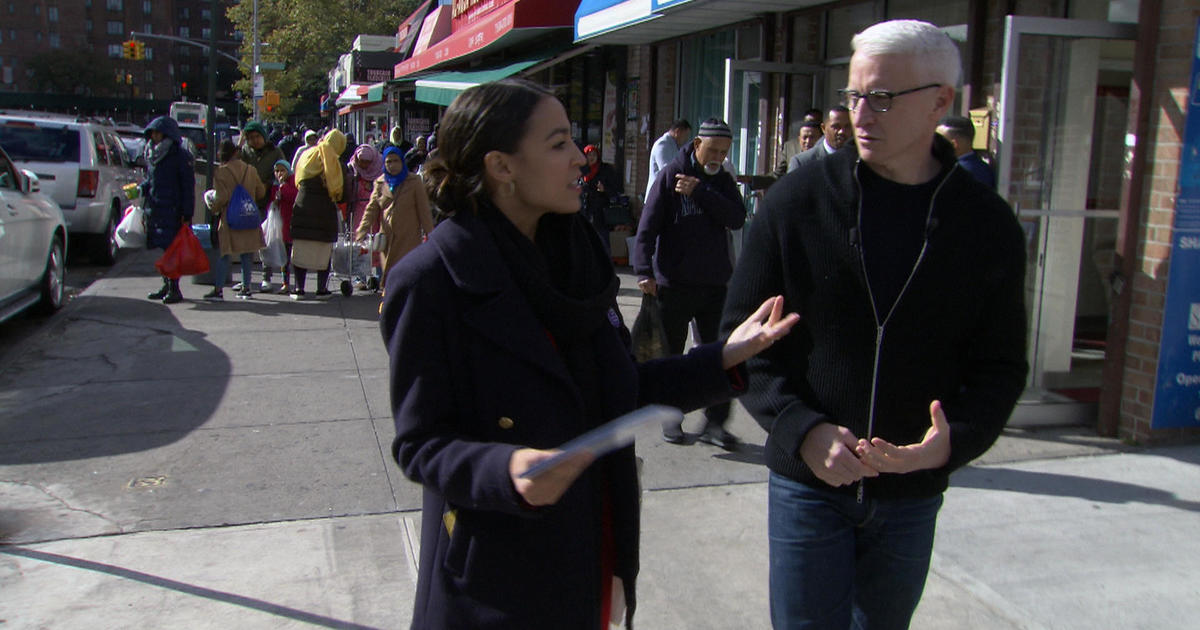
Image result for aoc 60 minutesAlexandria Ocasio-Cortez and Anderson Cooper on '60 Minutes'
Alexandria Ocasio-Cortez’s so-called Green New Deal makes the obligatory nod to the original New Deal, but FDR’s handiwork is much too modest an antecedent.
The Green New Deal calls for a top-down revolution in the ­operation of American society so sweeping that it would be disturbing if it weren’t so wholly ridiculous. It shows all the thoughtfulness of a college sophomore pulling an all-nighter to write a term paper for his Millennial Socialism 101 class.
The Green New Deal, as explained in draft legislation to create a congressional committee to pursue it, would transition to 100 percent ­renewable sources of national power in 10 years.
Since renewables only account for 17 percent of US power now — 7.5 from hydropower, which might not pass muster under the Green New Deal — the plan would ­require shuttering more than 80 percent of current sources of American power.
This isn’t like a European country adopting an ambitious goal for renewables (Denmark wants to be at 50 percent by 2030); it is a country with more recoverable oil reserves than Saudi Arabia and Russia spurning a stupendous source of national wealth to take a flyer on a lunatic experiment.
The architects of the Green New Deal apparently believe once you have lost touch with reality with one proposal you might as well pile on as many wild-eyed schemes as possible.
It would build a new energy-efficient grid, itself a massive proposition.
It would upgrade every — not just many, not even most, but every — residential and industrial building for energy efficiency. There are 136 million homes in the US.
It would eliminate emissions from industry, including farming, offering instead a vision of investment “in local-scale agriculture.”
It would eliminate emissions from transportation, which sounds like mandatory electric cars and hydrogen-powered planes.
Because the Green New Deal ­aspires to achieve all of socialism in one energy plan, it includes a federal job guarantee with a living wage and perhaps “basic income programs” and “universal health care.”
There’s nothing the Green New Deal can’t do. It would “mitigate deeply entrenched racial, regional and gender-based inequalities in income and wealth” — and, oh, yeah, “virtually eliminate poverty.”
All of this would be so tremendously costly that it is hard to fathom, not to mention technologically infeasible. Since wind and solar energy aren’t continuously available if we relied on them ­entirely, we’d either have to have regular blackouts or deploy ­unimaginable amounts of storage relying on technologies that ­haven’t been proved at scale.
The Green Energy Plan would take one of the country’s unadulterated policy triumphs of the last 20 years — the revolution in oil and gas drilling — and trash it for no good reason. It would throw hundreds of thousands of employees in this industry out of work. But don’t worry — they could get a federally guaranteed job and perhaps grow fruits and vegetables in their backyards.
The case for the Green Energy Plan is based on the alleged climate crisis being so dire that it must overwhelm all cost-benefit analysis. Actually, we have ­already been making incremental progress in reducing emissions, thanks largely to natural gas which the Green Energy Plan can’t abide. Global emissions have increased by 26 percent since 2005, while US emissions declined 14 percent.
Even if we were to kneecap ourselves with the Green Energy Plan, the world’s biggest emitter wouldn’t follow suit. According to research by the green group CoalSwarm, China is now developing as much new coal capacity as currently exists in the US.
Pressed on the plausibility of the Green New Deal by Anderson Cooper on “60 Minutes,” Ocasio-Cortez said we must pursue change we don’t conceive as possible. The Green New Deal certainly meets that standard. It’s the perfect program for a movement that has no idea of how to make means meet ends and doesn’t even care to try.

The Party of Abortion Thinks Republicans Are Satanic


January 7, 2019
Image result for bale vice
Christian Bale rightly won the Golden Globe for his stellar performance in the mostly fictional biopic, “Vice.” As the Welshman accepted his award, though, he thanked Satan for inspiring his performance, calling Cheney, along with Republican Senate Majority Mitch McConnell, “charisma-free assholes.”
refuse to defend Mitch McConnell.
The claim that Dick Cheney is in any way inspired by satanic impulses is absurd, of course. Say what you will about the many mistakes Cheney made during his controversial tenure as vice president, he wasn’t the dark lord his critics claimed (though he wasn’t above some self-deprecating humor in that vein). In fact, Cheney is a loving grandfather, a wonderful father, and has a distinguished record as a stalwart public servant. That he erred as vice-president is human. That he was some kind of demonic force operating within the White House is leftist fantasy.
It’s also laughable coming from a lunatic like Bale, who was charged with assaulting his wife and sister in 2008.
And Satanic? Please. The one thing we know about the former vice-president was that he was a staunch pro-lifer, whereas the Democratic Party is the party of death.
According to a 2018 National Right to Life survey, since abortion was legalized in the United States in 1973, an estimated 60,069,971 abortions have been performed. Read that again. That’s more innocent lives killed by a government (your taxpayer dollars fund Planned Parenthood, after all) than those killed by the Nazis during the Holocaust.
Today’s Left is engaged in an endless morality play against the generally Right-leaning ordinary citizens of America. Every elected Republican is evil and his motives for doing anything are to be questioned and lampooned, as we saw in “Vice.” But why? Why do people purportedly devoted to the notion of moral relativism, where right and wrong do not actually exist, cling to notions of evil?
Because they are a convenient apparatus whereby to assert one’s own rights to power.
Yet, oddly enough, the Democrats in media are always portrayed as underdogs and heroes fighting against an unjust system run by corrupt, evil, and ignorant Republicans (both the elected GOP members as well as their voters). Anything a Democrat does—even when factually wrong—is judged as coming from the “right place” morally, whereas anything the Republicans say or do is judged as being inherently evil.
Most Republicans disapprove of abortion. Even if Republicans are “charisma-free assholes” as Bale and his Hollywood friends would have it, they at least don’t have the blood of 60 million babies on their hands.
What’s more, the Left preaches to the American people with the kind of fervor that moved Billy Graham while promoting a thoroughly secular and charisma-free ideology..
In fact, most Democrats have a quasi-religious commitment to the secular sacrament of abortion. By what moral standard is the mass slaughter of children acceptable? And how do the same people who support this simultaneously find the gall to chide President Donald Trump for attempting remove American forces from Syria on the pretext that many children will die?
As for religious fervor and morality, Jesus Christ, as the Christian song goes, commands his flock to love the children for all “are precious in His sight.” The Church has made much out of protecting children from the consequences of the sin that Satan brought to the world in Adam and Eve’s fall from grace. It is Satan who inspires psychopaths the world over to harm and kill children, because children are innocent and remind us of our potential for redemption.
Go beyond Christianity and look at most popular fictional narratives. The most villains in fiction have always been those who’ve sought to harm children. Conversely, those who protect children are the heroes.
In one of Bale’s recent films, “The Flowers of War,” the actor plays a heroic Westerner who pretends to be a priest in Japanese-occupied China, in order to save young girls from being made into comfort women for the Japanese occupiers. Bale’s character has the girls pretend to be nuns, in the hope that the Japanese will be more lenient toward them.
Why was Bale’s character a hero? Because he was protecting innocent children from the satanic wiles of the marauding Japanese!
Flash forward to the Golden Globes this year as the Left presents us  a narrative that Dick Cheney is evil because he was wrong about a set of policies as vice president. Mention the systematic, decades-long infanticide of unborn American children, thanks to the Democratic Party, and the Left shrugs.
Which do you think is the real party of Satan? Hint: it’s not the party of Dick Cheney.

Monday, January 07, 2019

Sixty Years Of Keeping Maciel’s Secrets


By ROD DREHER
https://www.theamericanconservative.com/dreher/vatican-sixty-years-of-keeping-marcial-maciel-secrets/
January 4, 2019

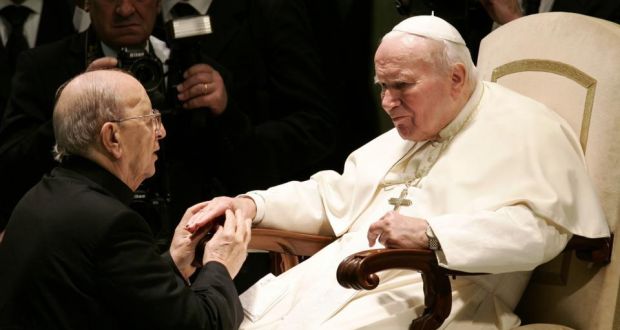
Pope John Paul II  blesses Father Marcial Maciel, founder of the Legionaries of Christ, during a special audience in2004. Photograph: Tony Gentile/Reuters
Pope John Paul II blesses Father Marcial Maciel, founder of the Legionaries of Christ, during a special audience in2004. Photograph: Tony Gentile/Reuters

Cardinal João Bráz de Aviz, prefect of the Congregation for Institutes of Consecrated Life and Societies of Apostolic Life, has disclosed that the Vatican had documents on the abusive conduct of the disgraced founder of the Legionaries of Christ, Father Marcial Maciel, from as long ago as 1943.
The Brazilian cardinal told the Spanish Catholic online magazine Vida Nueva that “those who covered it up were a mafia, they were not the Church.”
Maciel was publicly accused of sexual abuse by nine men in 1997, but the order denounced them vigorously as liars and opportunists. Members of the order and its lay auxiliary, Regnum Christi, used to phone me regularly at National Review in 2002 to urge me to write pieces condemning the persecution of Father Maciel. I didn’t do it. I didn’t know for sure that Maciel was guilty, but I knew I was being spun.
Maciel was a favorite of John Paul II, who loved him for his orthodoxy; it surely didn’t hurt that Maciel always brought lots of money to Rome to spread around. The Congregation of the Doctrine of the Faith, then run by Cardinal Ratzinger, announced in 1999 that it was not going to investigate the allegations from the nine. Some blamed Ratzinger, but others said that he was following John Paul’s orders. I believe the latter, given that a few days before John Paul died, when he was totally incapacitated, Cardinal Ratzinger ordered Maciel to leave the order. Ratzinger re-opened the investigation, and then ordered Maciel removed from ministry. It came out that Maciel had also had several “wives” and had fathered several children. He died in 2008, unrepentant. An exorcist was present in the hospital room.
In 2010, a lawsuit filed by Maciel’s secret sons alleged that their father had sexually abused them too. Yes, the all-holy founder of a militantly conservative Catholic religious order not only secretly had wives and children, but also allegedly molested those children.
“[Marcial Macial, his father] told me that his uncle sometimes made him masturbate him and basically the idea of my dad was to transmit that idea to me,” said Gonzalez.
His father also instructed him to take photographs with a Polaroid camera.
“My feeling is those photos maybe were passing to other people, like pornography,” Gonzalez recounted during the interview in which he broke down and cried when describing the abuse by his father.
“He would always tell us how to kiss, and we had to kiss him because that was the way we were going to learn how to kiss a girl when we grew up,” Gonzalez said.
Gonzalez says that over nearly a decade of repeated abuse, he never confronted his father about the sex acts or the revelation that he was a prominent priest.
He said his father, even after acts of abuse, always told him, “‘Go to mass, don’t smoke, don’t drink.'”
Jesus, Joseph, and Mary, have mercy.
Think about this new revelation: the Vatican had compromising material on Macielfor over 60 years, and let him do his thing. This cardinal saying those who covered it up were “a mafia … not the Church” is lying, to others and probably to himself. Yes, they were a mafia … and they were also leaders of the Church.
The traditionalist Catholic blogger Steve Skojec notes that on the same day that Pentin’s report appeared, Legionaries of Christ worldwide openly celebrated the founding of their order.  Skojec is unsparing of the LCs, because he was once part of Regnum Christi. He writes now:
I am not, I must admit, unbiased when it comes to the Legionaries of Christ. I have a long history with them. They were a profoundly formative influence on me – and they almost cost me my faith. I am fortunate inasmuch as I was never a victim of the sexual abuse that finally brought down their founder. But he created a fiction – an organization designed to give him power, money, and access to victims – dressed up in a superficial veneer of Catholic orthodoxy that drew in countless good men and women wanting to live their faith in a difficult time in the Church. It used up many of them and tossed them out, hurting and lost. It was essentially a spiritual bait and switch, with loud papal approval, and it has damaged countless souls.
I was one of them.
Skojec talks about how, as a teenager and young man, he lived with the Legionaries, went on mission trips with them, and was being groomed for the priesthood by them. But something was wrong. He finally talked to a parish priest about it, and the priest urged him to get away from the Legion for his own good. And then:
The Legionaries didn’t do amicable separations. It was a cult operation, and you were either all in or all out. They deployed Saul Alinsky’s thirteenth rule against me so fast it made my head spin: “‘Pick the target, freeze it, personalize it, and polarize it.’ Cut off the support network and isolate the target from sympathy.”
The Legionaries contacted my friends around the country in other assignments. They contacted my acquaintances. They called my girlfriend’s mother and sister – and I had never even met her sister. They began telling everyone who knew me that I had left because I “wasn’t generous” and that they should not get involved with “what happened between Steve and the Legion.” One friend was told by a couple of seminarians that he didn’t really know the “whole story” of what I had done. Another had it explained to him as follows: “You have to look at it like you and Steve were marching into battle together up a mountain. On the way up the mountain, Steve was shot and fell back down the hill. But you have to leave him behind. The war must be fought. You have to press on. There’s no time to look back.” When my friend laughed in the priest’s face about this, the priest insisted, “He’s a fallen comrade. You have to leave him behind.”
Many of these friends stayed with me. Eventually, many of them came to also see the truth and left. Some are now the godparents of my children, twenty years later. At the time, though, the damage these betrayals did to me, and to my faith, was incalculable. The Legionaries were not just something a person could be loosely associated with. They became my identity. They became my way of relating to God. They became my surrogate family and, in a way, my surrogate Church. They had so long acted as though the Legionary way was superior, that the standard institutions of the Church were so inferior, that they had created in me an active dislike of any manifestation of “normal Catholicism” as something beneath us. They would go on and on about the poor formation of diocesan priests and bishops, make hostile comments about other religious orders, and constantly hold themselves up as the foot soldiers of Christ in this grand battle for the soul of the world.
Maciel was at the heart of all of it, being deified as a living saint who never said no to Christ.
I was a member of a cult, and the cult subverted the good of the individual to the good of the enterprise – which existed to serve the cult leader. Even though I never had a conversation with Maciel, my entire life was dominated by the culture he created. And even these outward rings were incredibly damaging.
Please read the rest of Skojec’s account of how the Legion worked (works?), and his stories about trying to fight their recruiting on his Catholic campus (Franciscan University of Steubenville). Incredibly, given the satanic evil at the heart of the order, the Vatican did not suppress and disband it. Skojec speculates that this is because the Legionaries had a well-deserved reputation for cultivating wealthy Catholic donors. Skojec:
Doesn’t it always come down to this? Every time the Vatican allows corruption to go unchecked, follow the money. It was the story with McCarrick, arguably the Church’s most prolific fundraiser, and it has always been rumored to be the story with the Legionaries. It is an awful thing to consider that such a base motivation can be used to allow evil to flourish by men who are supposed to be entirely devoted to God.
But how can anyone take the Catholic Church seriously on the sex abuse crisis, when the Legionaries of Christ are a textbook case study of the Church’s failure to act on information it had for decades? As long as they continue to exist – no matter how many times their constitutions are changed and they attempt to rebrand themselves – they stand as a black mark against the credibility of the Holy See in dealing with the corruption of clergy and predation on those in their spiritual care.
So, Pope Francis has just released an eight-page letter to US bishops, now meeting privately at Mundelein Seminary. I just read it, looking for parts to comment on, and excerpt. It’s just talk. Somewhat encouraging talk, but just talk. Why won’t the Pope answer the Vigano accusations directly? It’s because Archbishop Vigano perfectly well knows about the “mafia” in the Vatican responsible for these things.

Sunday, January 06, 2019

France in Free Fall


January 6, 2019

Image result for france protests 2018
A demonstrator waves the French flag on a burning barricade on Paris’s Champs-Élysées avenue during a demonstration against the raising of fuel taxes on Novermber 24, 2018.(Michel Euler/AP)

Strasbourg, France. Christmas market. December 11th, 8pm. A man shouting, "Allahu Akbar" ("Allah is the greatest") shoots at passersby, then wounds several with a knife. He murders three people on the spot and wounds a dozen others, some severely. Two will later die of their wounds. The murderer escapes. Two days later, the police shoot him dead.

He was known to the police. When members of the General Directorate of Internal Security and some gendarmes came to his home a few hours earlier, he had escaped. Although they knew he was an armed and dangerous Islamist ready to act, and that Christmas markets had been, and could be, likely targets, no surveillance was in place.
The murderer, Cherif Chekatt, should, in fact, have been kept off the streets. He was 29 years old, his name was on the list of people reported for terrorist radicalization (FSPRT), and he and had already been sentenced for crimes 27 times. He was nevertheless roaming around free, with no police oversight.

His case is similar to that of many jihadi terrorists in France in the last decade. Others include Mohamed Merah, who murdered Jewish children in Toulouse in 2012; Cherif and Said Kouachi, who murdered most of the staff at the satirical magazine Charlie Hebdo in 2015, and Amedy Coulibaly, who murdered people at a kosher supermarket few days later.

Successive governments have done exactly nothing to remedy the situation. Instead, they delivered speeches and stationed soldiers about the streets. "Young French people must get used to living with the threat of attacks", then-Prime Minister Manuel Valls said in 2015. Two years later, just before the first round of the presidential elections, Emmanuel Macron, still a candidate, used almost the same words. Terrorism, he said, is "imponderable" and will constitute a "threat that will be part of the daily life of the French for the years to come".

French laws are extremely lax. Even serial killers and terrorists are not sentenced to long prison terms. Most prisons have become jihadist recruiting stations. Currently, more than 600 no-go zones are under the control of imams and Muslim gangs. Islamists, apparently "ready to act", number in the thousands. The police simply do not have the personnel or material resources to monitor all of them.

The only political leaders who have proposed tougher laws against terrorism, or who have said that exceptional measures were needed -- such as a wider use of electronic ankle-bracelets -- to counter increasing threats, come from parties considered "right-wing". The mainstream media immediately branded these leaders as "extremists" and their proposals were dismissed.

Macron and his government continue their unfortunate tradition of submitting to political correctness. It seems they prefer to appease extremists rather than confront them.

These politicians are undoubtedly aware that more riots could take place. In 2016, the head of the French General Directorate for internal Security, Patrick Calvar, spoke of a high risk of "clashes between communities", perhaps even civil war.

These officials evidently understand that the terrorists are engaged in a long war and that it will be difficult to stop them; so they seem to have given in. These officials are no doubt aware that young French Muslims are being radicalized in increasing numbers. The response, however, has been to strengthen Muslim institutions in France.

Although these officials also presumably see that Muslim immigration into France continues, and that hundreds of thousands of illegal Muslim migrants are creating increased security concerns, they do nothing to reverse the trend. The number of deportations is rising, but are still rare: slightly more than 26,000 persons were deported in 2017. Meanwhile, more than 150,000 illegal immigrants live in Seine Saint Denis, near Paris. Macron, since becoming President, has repeatedly said that those who call on him to expel illegal immigrants are "xenophobic".

Macron and the current government, in fact, have been encouraging more migration: all illegal immigrants in France receive financial assistance if they ask for it, as well as free health care; and they run almost no risk of being deported.

Click on the link below to read the rest of the article:

Saturday, January 05, 2019

The Character That Matters


By 
https://amgreatness.com/2019/01/04/the-character-that-matters/
January 4, 2019

Related image
Aristotle

A few days ago, American Greatness published some thoughts of mine about Jonah Goldberg’s contention that “President Trump is not a man of good character” and that, consequently, his administration “will end poorly.”

“Character,” Jonah says, “is destiny.” Trump’s character is bad. Therefore his destiny is grim.
While acknowledging that the president is an imperfect man (but at whom can that criticism not be leveled?), I also defended Trump’s character. Quoting Cardinal Newman, I noted that character was a multifaceted attribute. A man, said Newman, “may be great in one aspect of his character, and little-minded in another. . . . A good man may make a bad king; profligates have been great statesmen, or magnanimous political leaders.” I believe President Trump has been astonishingly successful during his first two years. I believe further that his success is a testament to the strength of his character.
Jonah disagrees with me absolutely about Trump’s character and, in a more qualified way, about my assessment of Trump’s successes. I am pleased that his explanation of those disagreements provides me an opportunity to expand on and clarify a couple of points.
To start with a clarification. Jonah says that in my earlier column I seemed determined “to minimize, dispute, divert, and debunk the contention that Donald Trump is a person of bad character, while never actually denying it. The goal seems to be less to rebut my argument than to confuse the issue.”
I apologize for my lack of clarity. Let me rectify that by stating baldly I do believe Donald Trump is, in the ways that matter for a president, a man of good character.
I hasten to acknowledge that Jonah takes me and other supporters of the president to task for qualifications like “in the ways that matter for a president.” He thinks all such admissions are obfuscating rhetorical window dressing designed to conceal “a new and wholly instrumental definition of good character. Not only is Trump doing things conservatives want, but because Trump is doing what conservatives want, he clears a definition of good character.”
I would answer that, first, the idea of character I have in mind is not a new one. One might trace it back to James Madison’s thoughts, in Federalist 51, about the relationship between private imperfection and the public good. Indeed, one might trace it back to Aristotle’s discussion of the good at the beginning of the Nicomachean Ethics.
I think it is also worth pondering the work that Jonah wants the adverb “wholly” to do in the deflationary phrase “wholly instrumental.” Any meaningful definition of good character has to involve an instrumental element. Otherwise the character in question would be impotent. This is part of what Aristotle meant, I think, when he observed that “it is our choice of good or evil that determines our character, not our opinion about good or evil.” In dismissing the connection between character and potency as “wholly instrumental” Jonah flirts with an idea of character that is unanchored to the realities of life.
In a related criticism, Jonah complains that some of the president’s supporters defend him by comparing his behavior to the behavior of other politicians. This he calls “Whataboutism.” Donald Trump is alleged to have had an extramarital affair with Stormy Daniels. OK, but Bill Clinton did icky things with Monica Lewinsky. (I am not sure the cases are really comparable, but you see the strategy.)
Tu quoque objections are generally unconvincing and are certainly not, as your mother will have told you, exculpatory. But Jonah misses the larger point here. Many people were surprised when Peter Thiel declared his support for Donald Trump. He was just about the only Silicon Valley entrepreneur who did. One interlocutor, citing something unpalatable that Trump had done or said, asked Thiel how he could support Trump given his outré behavior. I don’t support him because of the things he does that I don’t like, Thiel said, but because of things that he does that I do like.
I think that is a mature and politically potent attitude. And it brings me to the two elephants that loiter about the room whenever the discussion turns to Trump’s character and fitness for office. The first elephant is named Hillary Clinton. Jonah has been a staunch critic of Hillary Clinton. Bravo for that. But I believe I am correct in saying that confronted with the choice between Hillary Clinton and Donald Trump he abstained from voting for either. To me, although I too live in a place where Republican votes do not count, the choice between Hillary Clinton and Donald Trump was an existential, a moral choice—a choice, if you like, that turned upon the character of the two candidates.
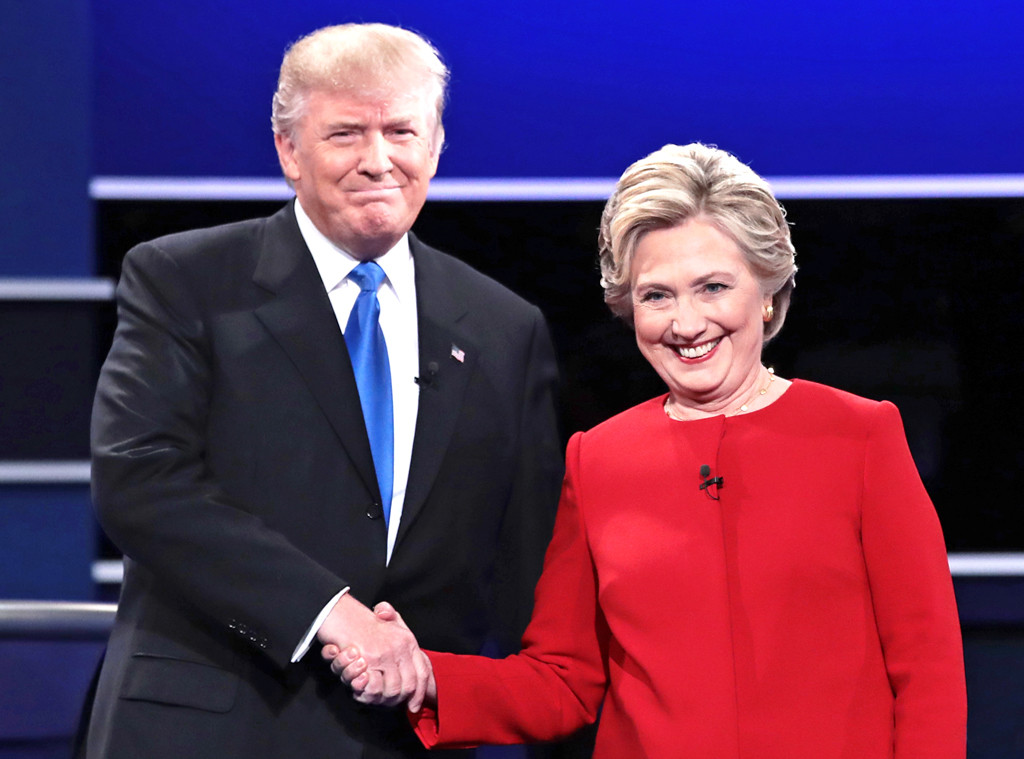
Image result for donald trump hillary clinton
I submit that anyone possessed of even a smidgen of what Henry James called “the imagination of disaster” will shudder that the prospect of what a Clinton presidency would have entailed. Who knows whom she would have nominated to the Supreme Court and other federal courts, what she would have done about taxes, about energy, about the plague of political correctness on college campuses, about military spending, about border security, about North Korea’s nuclear ambitions, about religious freedom, about militant Islamism, about American manufacturing, about the size of government and the burdens of the regulatory state.
I say “Who knows,” but of course we all know. Hillary Clinton was the most corrupt serious candidate for the presidency in history, and her corruption was evident not merely in her lying to Congress and the the FBI, her pay-to-play schemes while secretary of state, and her handling of the Benghazi attack. It was evident, too, in her fealty to the dictates of the administrative state, to the unaccountable elite that 63 million voters elected Donald Trump to combat. And who knows what she would not have done, such as prime the economy to ensure near record peacetime unemployment and strong economic growth—which are moral acts in themselves given the millions whose live have already been changed.
Which brings me to the other pachyderm in the vicinity. The most important pro-Trump essay to have been published on the run-up to the 2016 election undoubtedly was “The Flight 93 Election” by Michael Anton (writing then under the pseudonym Publius Decius Mus). The most famous bit of that essay—an essay Jonah took to task when it appeared—is the arresting comparison of the election to the doomed United Flight 93. The airliner was commandeered by murderous al-Qaeda fanatics. The only chance the passengers had was to storm the cockpit and try to retake control of the plane. The United States, Anton argued, faced an analogous peril. Its controls had been commandeered by people who would ruin us unless stopped. There was no guarantee that storming the “cockpit” of government by electing Donald Trump would save us. But it was our only hope.
That idea, as I say, was the most famous part of Anton’s essay. But perhaps even more telling in the context of this discussion about character was what he had to say about the conservative establishment.
If conservatives are right about the importance of virtue, morality, religious faith, stability, character and so on in the individual; if they are right about sexual morality or what came to be termed “family values”; if they are right about the importance of education to inculcate good character and to teach the fundamentals that have defined knowledge in the West for millennia; if they are right about societal norms and public order; if they are right about the centrality of initiative, enterprise, industry, and thrift to a sound economy and a healthy society; if they are right about the soul-sapping effects of paternalistic Big Government and its cannibalization of civil society and religious institutions; if they are right about the necessity of a strong defense and prudent statesmanship in the international sphere—if they are right about the importance of all this to national health and even survival, then they must believe—mustn’t they?—that we are headed off a cliff.
Alas, as Anton goes on to observe, “it’s quite obvious that conservatives don’t believe any such thing, that they feel no such sense of urgency, of an immediate necessity to change course and avoid the cliff.” The status quo is the nutrient jelly in which they live. They may criticize it. But they would not dream of changing it.
In is in this context—the context of Hillary Clinton as the only alternative to Donald Trump and the existential peril that Anton outlined—that we must place any meaningful discussion of Trump’s character. James Piereson makes an illuminating point about this aspect of the issue. “The problem with Trump,” he writes, “is that it is hard to say what his character is, or where his unusual style ends and his character begins, or whether or not the various things he does actually reveal his character.”
If Trump’s character is his destiny, then it is hard to understand how he managed to come as far as he has through the ups and downs of a business career and now election to the highest office in the land. If we take his critics at their word, then Trump’s bad character should have taken him out of the business world and certainly out of the presidential race a long time ago. Bad character leads to a bad ending. His success up until now, far surpassing the achievements of most mortals, contradicts the proposition that “character is destiny,” unless one is prepared to say that there are important aspects of Trump’s character that produced his success—a proposition that is worth pondering.
And this brings me to another thing that has struck me about much anti-Trump rhetoric: its astringent but unidirectional moralism. By “unidirectional” I mean directed exclusively at Donald Trump when there are many other suitable objects of moral obloquy parading about. Just yesterday, Bill Kristol, primus inter paresof the NeverTrump fraternity, provided a good example of the sort of moralism I have in mind. “Trump,” Kristol wrote on Twitter, “is in fact losing to the left and destroying a decent and elevated conservatism as he does so.”
What is this “decent and elevated conservatism” of which Kristol speaks? It is, of course, the conservatism that he and his friends represent—the conservatism Michael Anton anatomized in his remarkable essay, a conservatism, alas, that may have the right opinion about morality but is too feckless actually to choose it.
The reason I am happy to say that Donald Trump, despite his imperfections, is a man of good characteris that he has again and again shown himself to be willing to storm the cockpit of our corrupt, sclerotic, and increasingly unaccountable governmental apparatus. He has worked tirelessly on behalf of the American people and by implication (and it was part of his genius to make this connection) on behalf of people everywhere. He understands that his job is to put America first, but that by so doing he benefits everyone with whom we deal. Those things, I think, are marks of good character.
One codicil. I have deliberately avoided engaging with most of the particulars of Jonah’s indictment of president, mostly because many of the items he mentions are subject to vastly different interpretations. For example, he cites “Trump’s inability to hold onto cabinet secretaries of quality” as a reflection of his bad character, but has Trump been unable to hold onto “cabinet secretaries of quality”? I can imagine someone arguing that Trump’s cabinet, that his team in general, is stronger now than it ever was. But I understand that opinions differ.
I did, however, want to say a word about Jonah’s comment about the president’s attitude toward the First Amendment. In my original column, I responded to Jonah’s earlier criticism of the president’s “rants against the First Amendment” by saying that I couldn’t recall any such rants. Jonah responded to this by observing,
on numerous occasions the president has talked about “opening up” libel laws and revoking FCC licenses of certain news outlets, endorsed physical assaults on protestors, wanted to ban adherents of an entire religion from entering the country, celebrated the physical assault of a reporter, said (while in Canada) that it is “frankly disgusting the way the press is able to write whatever they want to write,” and so on. I don’t think his rants about “fake news,” “the enemy of the people,” etc. are necessarily anti-First Amendment. But given the larger context of his views, I think it’s reasonable to see them that way.
I will pass over the more contentious items in this list. I do not think, for example, it is accurate to say the president “wanted to ban adherents of an entire religion from entering the country.” But I did want to comment on Jonah’s point about “opening up” libel laws. The case in question was the landmark 1964 decision in New York Times v. Sullivan, which made it almost impossible for any “public figure” to win a libel action. The press loved this decision. But, as the legal scholar Glenn Reynolds noted in The Judiciary’s Class War, the decision was in effect “a subsidy to media companies, whose libel risks (and insurance premiums) were drastically reduced. It also meant that juries . . . had far less power in libel cases. Perhaps coincidentally (but perhaps not), trust in the press has fallen steadily since the Sullivan ruling freed media organizations from previously existing legal accountability.”
This was a point that the lawyer Gregory J. Sullivan dilated on in Jonah’s magazine, National Review, on the 50th anniversary of the decision in 2014. Although the press celebrated the anniversary as a triumph for free speech, Sullivan wrote, for “those committed to the text and history of the Constitution, and a judiciary tethered to them, there is nothing at all to celebrate.”
Even by the imperial-judiciary standards of the Warren Court, this case stands out as something of a classic effusion in that Court’s project of remaking American society to conform with its far-Left preferences. There is no question that the case is a watershed: Before New York Times v. Sullivan, the first amendment protected a free press that was responsible in law for its errors; after and because of this case, the press has anything-goes immunity from almost any mistakes, no matter how damaging. As a policy matter, this may or may not be a prudent development. Constitutionally, the decision is an infamous failure and a disgrace to the judicial role.
When one surveys the extraordinarily vituperative, monolithic, and unfair coverage under which the president and anyone associated him struggle it is easy to see why he castigates “fake news” and thinks about revisiting decisions like New York Times v. Sullivan. Far from being an assault on the First Amendment, I’d say it was an effort to protect it by limiting its abuse.