Monday, December 24, 2018


Sunday, December 23, 2018
How terror changed Europe’s Christmas markets

The traditional Christmas market is one of the great sights in any European capital at this time of year. But as with all traditions it evolves over time. A few evenings ago, I went to visit the Duomo in Milan and walked through the beautiful Christmas market in the square surrounding it. It was all there: the Christmas lights, the chalet-like huts selling warm food and drink, the fake snow. And, of course, the crash barriers. For since December 2016, when Anis Amri hijacked a truck in Berlin, shot the driver and then ploughed the vehicle into the local Christmas market (killing eleven more people) crash barriers have become a necessary feature of any European Christmas market.
I was in Milan two days after Cherif Chekatt shouted ‘Allahu Akbar’ and started shooting at people enjoying the Christmas market in the city of Strasbourg. And so Milan’s Christmas market, like every other in similar cities, was on high alert. Which furthers yet another new tradition at Europe’s Christmas markets, which is the presence of army vehicles and police and military standing around with heavy duty weapons at the ready.
It all brought to mind a point that Mark Steyn has made a number of times in recent years, which is the phenomenon one might call the ‘bollard-isation’ of public life. Earlier this year in Norway I noticed that even Oslo has a strange set of massive steel devices on both sides of the street on the popular thoroughfare of cafes, restaurants and hotels that leads up to the country’s Parliament. They began to sprout one day and after a dose of negative public comment the local authorities decided to plant flowers on the devices, making them probably the world’s most ungainly flower-pots. What could have made these huge flower-carrying vessels so necessary? Who is to say.
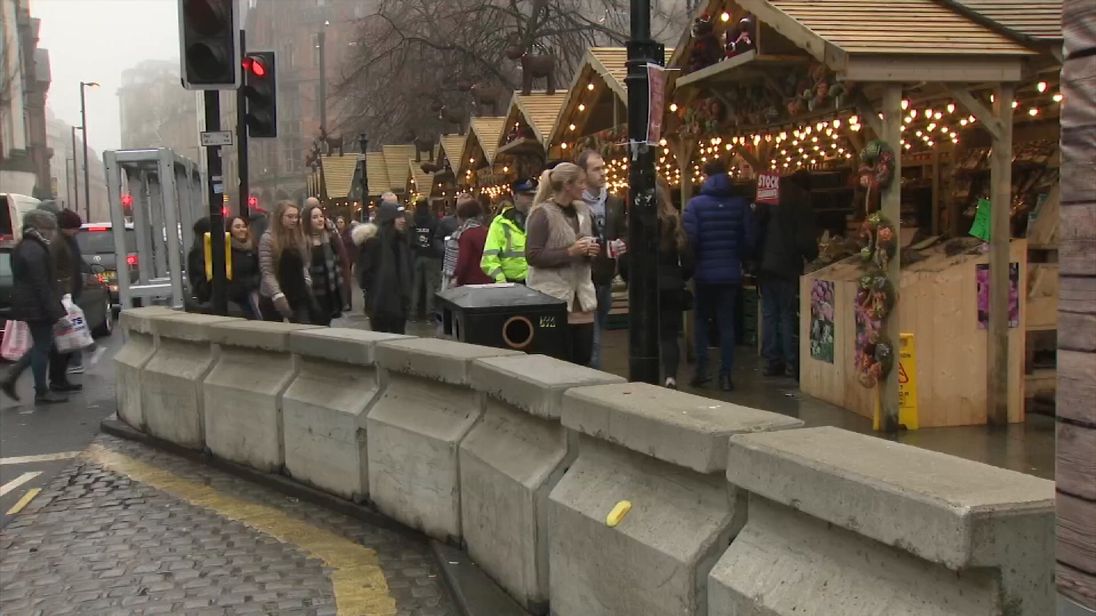
Barriers are in place at Manchester's Christmas market last year.
But as Steyn has also pointed out in his observations about ‘bollard-isation’, there is a strange paradox at work here. Whichever European city you go to these days (Britain included) all of its public buildings and major infrastructure are positively surrounded by bollards and steel barriers. Yet at the same time the governments of these countries have never taken a more lax attitude to the place where bollards or similar security might be more usefully deployed. That is along what we used to call ‘a border’.
As was demonstrated yet again last week, with most of the world’s states signing up to the disastrously loosely worded ‘Marrakech Migration pact’, most European countries are content to allow the world to arrive in their countries and only then start to work out who the arrivals might be. Or pretend to start working it out and then give up. Or go through a long and costly process at the end of which it’s all relative because the person stays anyway. That story – as I have described at length – is one of the biggest stories of our time. But it presents a challenge which Europe remains unwilling to face up to.
Goodbye and good riddance to 'Springsteen on Broadway,' a low point for The Boss
{A contrarian's point of view...jtf}
By Bobby Olivier
December 16, 2018

(Theo Wargo/Getty Images)
"Maybe I was wrong," I thought as I entered the screening room in Manhattan last week, to watch a newly filmed recording of "Springsteen On Broadway" -- a pop-culture phenomenon whose universal acclaim has mystified me for the last 14 months.
Outside the small theater hung a Netflix-branded poster of The Boss in all his one-man-show glory, strumming an acoustic guitar, a silver harmonica clasped around his neck just as it's been for all 236 sold-out performances at the Walter Kerr Theatre, a few blocks south on 48th Street. The final curtain for this record-breaking run fell on Saturday.
Perhaps I was, in fact, too harsh in my initial review, which labeled Springsteen's choice to play director for his thrice-extended, "this is my life" residency -- without the assistance of a proven theater vet -- as "cavalier and foolish." Maybe I'd even prefer the Netflix version, considering it was filmed across two July 2018 performances, by which time Bruce would have surely settled into the rhythm of the show, with less propensity for "uh" and "um" between his acoustic numbers.
And then the lights dimmed in the theater and the recording began. Akin to the Broadway performance, the streaming rendition -- which premiered Sunday morning and was filmed and directed by longtime collaborator Thom Zimny -- begins with a cold open of Springsteen speaking, wearing a dark gray t-shirt.
"DNA," Springsteen starts with a sigh. "Natural ability. Study of craft. Development of and devotion to an aesthetic philosophy. Balls."
So much for second-guessing myself. It's just as dull as I remember.
For those who chose not to spend a month's rent on tickets for the live show -- or never got off the waiting list -- rest assured that what you watch on Netflix is almost exactly what fans who sat in the room saw: It's the same rumble through 15 staple-songs on acoustic guitar and piano, and the same drab, disjointed storytelling weaving it all together.
I stand by what I wrote last fall, now more than ever after watching this new, two-and-a-half-hour special, which only underscores my issues with the show. The arc of this laborious production is rescued only by its music and the exclusivity of its venue -- a 947-seat hall that provides well-off superfans the opportunity to see Springsteen, 69, jam a while and spin his folksy Jersey yarns in closer proximity than ever before.
The Walter Kerr comprises the smallest venue The Boss has played with any regularity in the last 40 years. For the 223,000 or so bodies that have occupied those worn velvet chairs since October 2017 -- a list that includes the Obamas, the Clintons, Oprah Winfrey, Andrew Lloyd Webber, Howard Stern and droves more celebrities -- that privilege alone may have been worth the exorbitant ticket costs and months spent in lotteries, hoping to be the next one in to see the show.

(Rob DeMartin)
Though to consider the full impact of "Springsteen On Broadway," we must also dive into the mammoth financials that surround this show, which exalt this project as the single most lucrative live run of Springsteen's career -- likely more so than any E Street Band stadium tour -- and, in terms of genre, notch it as the most successful one-man show in Broadway's history (and it's not even close).
According to Playbill, "Springsteen On Broadway" has raked in more than $2 million each week on average in box office revenue; retail tickets have averaged about $500 each, while secondary market prices have soared many times higher -- tickets on Stubhub for Saturday's final night began at $2,100 a pop. Multiply that by the 52 weeks of total runtime and that's well over $100 million in gross ticket revenue.
Assuming Springsteen takes home half the pot -- he is, after all, the only star as well as director -- and that's a cool $50 million for Bruce, plus a limousine waiting to drive him back home to Colts Neck every night. No travel, no hotels, no fuss. And lest we forget the sales totals for "Springsteen on Broadway" merchandise, the official "Springsteen On Broadway" soundtrack that was released Friday, or the reported $20 million Netflix paidthe Springsteen camp for licensing rights to the show.
All of this for what? A well-aged rock star reshaping a handful of stories from his best-selling 2016 autobiography -- for which he was granted a $10 million advance -- and wistfully staring into the void as he wrestles with the irony of having "never held an honest job in my entire life" yet spending his career representing his ostensible blue-collar brethren in song? Springsteen refers to this as his "magic trick," and man-oh-man it's been a good one: 14 months of Mr. Man of the Working Class corralling his music into an ossified luxury brand, where tickets are absurdly expensive -- even the once-in-a-decade blockbuster "Hamilton" pales in comparison -- and the vibrant improvisation of his revered live performances is replaced by something so cloying and precious in its design.
Further, the "Springsteen On Broadway" sensation has in effect created a whole new channel for cross-branding indulgence, wherein iconic musicians can (and will) try their hands at a new art form and wring out their fans for a few more bucks. Of course, not every Rock and Roll Hall Of Famer possesses the proper panache nor the physical and emotional endurance to fuel a run of this magnitude. That being said, couldn't we all imagine Billy Joel or Neil Young or even Madonna or Bono saying "hey, I want a Tony, too!" and giving it a go for a few months?
When I read Springsteen's admission in The Dec. 2 Sunday Times (U.K.), that "it's time to get back to my day job," my immediate response was "no truer words, Bruce." While it's certainly been an interesting 14 months, it's time we let this sleeping dog of a show lie for good and prepare for the something that isn't simply a masked retread of well-worn stories and songs: 2019 is likely to deliver a new solo album that Springsteen has reportedly had finished since 2016. The so-far unnamed LP would be his first true release since 2014's "High Hopes" and, for me at least, a much-desired palate cleanser.
That "day job" line also reminded me of something I saw in late spring of this year and will never forget. Asbury Lanes, the beloved Jersey Shore punk-rock haunt and bowling alley, was preparing to reopen in Asbury Park after two years of renovations. Springsteen, on his night off from Broadway, attended the June 19 grand opening and sat in with the Tangiers Blues Band for a few songs (the group includes his longtime photographer Danny Clinch). Bruce rocked four covers with the band -- the best of which were crunchy renditions of Huey Smith's "Rockin' Pneumonia and the Boogie Woogie Flu" and the Rolling Stones' "Down The Road Apiece" -- and in that 30-minute clip, Springsteen was again that man on fire, slamming chords on his worn Telecaster, dancing in time, finally unbound from the measured stage presence and manicured script to which he'd been tethered for the previous eight months to that point. In these moments he appeared years younger, and overjoyed to be performing without the prerequisite of mentally investing in his own rock-god mythos.
And who can blame him? He has to be sick of himself by now.
Bobby Olivier may be reached at bolivier@njadvancemedia.com. Follow him on Twitter @BobbyOlivier and Facebook. Find NJ.com on Facebook.
The Wall is Trump’s ‘Read My Lips’ Moment
By Roger Kimball
https://amgreatness.com/2018/12/22/the-wall-is-trumps-read-my-lips-moment/
December 22, 2018
A major reason that George H. W. Bush was elected in 1988 was his pledge, dramatically enunciated at the Republican National Convention in August of that year, not to raise taxes. Congress will push me to raise taxes, said Bush, and I’ll say “no”; they’ll push again, and I’ll say “no”; and they’ll push again and I’ll say to them “read my lips: no new taxes.”
It was a nice performance. The “read my lips” wheeze is of course the most famous bit. I’m sure it was scripted, as was the amusing play on “resort.” My opponent says he’ll only raise taxes as a last resort, said Bush, “but when a politician talks like that you know that’s one resort he’ll be checking in to.” Throw that speechwriter a bone!
A pledge not to raise taxes is something that is easy to check up on. You look at the weekly pay packet and count the drachmas. If there are fewer now than before, you can bet your local IRS agent that the hand of government is reaching a little deeper into your pocket than before.
The Democrats understood this. And although Dems, as a class, enjoy spending other people’s money, the more the merrier, they don’t necessarily want to be seen as the ones who are pilfering the pelf. They’d take all of your money if they could get away with it, but they wouldn’t want to be blamed for that government-sponsored larceny. Much better, from a reelection perspective, to contrive to shift the blame on to the Republicans.
Given that ambition, George H. W. Bush’s promise was an irresistible challenge. “Read my lips,” he said. OK. We read you loud and clear. And if we can browbeat you into capitulating, even as a “last resort,” to our demand that you raise taxes, then we’ll have you by the short and curlies. We’ll play that video where you made the promise on an endless loop on the lead up to the 1992 election and crush you.
And so it came to pass. It wasn’t fair. Bush didn’t want to raise taxes. The Democrats strong-armed him into it. Then they turned around and said he had broken his promise. Not nice, not nice at all. But it was just business as usual in the world of politics, especially Democratic politics.
Bush could have resisted. He could have vetoed the tax bill. He could have shut down the government. He could have been the dispenser instead of the recipient of pain. Contemporary versions of Chuck Schumer and Nancy Pelosi would have screamed bloody murder. The media would have pilloried Bush and called him mean names. People would say he was being grossly irresponsible, that he was sowing chaos, that he was hurting thousands of government workers.
George Bush was a gentleman. He didn’t like it when people called him mean names. He was offended when the media ganged up on him and said he was a terrible person. So he caved. He didn’t want to. He said he didn’t want to. He probably thought about saying he did it only as a “last resort.” Doubtless the memory of politicians checking into that resort stopped him.
There is a lesson in Bush’s pursed lips for President Trump. Bush was elected in large part because of his promise not to raise taxes. Similarly, a major reason that Donald Trump was elected was his promise to build a wall on our southern border. The wall was just a synecdoche for border security and an America-first immigration policy. But it was a vivid, concrete (no pun intended) manifestation of that determination. It was, politically, the sine qua non of that policy.
President Trump has kept an astonishing number of his campaign promises, from his Scalia-like judicial nominations to moving our Israeli embassy to Jerusalem. He has begun hacking away at the stifling regulatory environment built up by the administrative state and he has inaugurated a much-needed renovation of the United States military. He has cut taxes (though not enough) and eviscerated Obamacare. He has, just a few days ago, announced that the United States would be pulling out of Syria and there are plans, at long last, to bring our troops home from Afghanistan. Promises made, promises kept.
But there is one critical promise he has, so far, been unable to keep. The wall. He has to build the wall. It was the cornerstone of his campaign.
Again, the wall, like lines in the Constitution if you are a left-wing jurist, has plenty of emanations and penumbras. It means robust border control. It means an America-first immigration policy. It means lots of things.
But the wall is the indispensable objective correlative of those things. Donald Trump has to build the wall, and he has to be seen to have built the wall. If not, he will lose in 2020.
The Democrats know this, which is why they are moving heaven and earth—or perhaps it would be more accurate to say, with Virgil, “flectere si nequeo superos, Acheronta movebo” (“if I cannot bend the heavens, I will move hell”)—to prevent the wall.
It’s a dangerous game of chicken. Who will blink first? On Friday, we learned that the impasse on the issue had shut down some “nonessential” parts of the government. I think there are a lot more parts of the government that are “nonessential” and should be shut down—permanently—than are generally recognized, but that is another story. Senator Chuck Schumer (D-N.Y.) is adamant: Donald Trump will not get the wall. He should give it up.
If Donald Trump were George H. W. Bush, he would be thinking about checking into that resort about now. But clever readers will have noticed something important: Donald Trump is not George H. W. Bush. He does not care if Chuck Schumer says mean things about him. Wolf Blitzer’s or Don Lemon’s or Rachel Maddow’s or Anderson Cooper’s little tantrums do not disturb his sleep or his enjoyment of a Big Mac. He does not mind it when Bill Kristol or Max Boot or Jennifer Rubin tweet savage things about him. The two self-appointed pastors in the Church of NeverTrump, Pete Wehner and David French, preach their sermons from pulpits Donald Trump does not attend.
A week ago, at their reality-show like White House meeting, Trump told Nancy Pelosi and Chuck Schumer that he would take responsibility for a government shutdown if they refused to fund the wall. “I will take the mantle,” he said to Schumer, “I’m not going to blame you for it.”
Take a look at the video link above and note Schumer’s body language when he hears the president say that (at about 10 minutes). He grins and rocks back and forth. “Oh boy,” he seems to say, “Now we’ve got him. He’ll shut down the government at Christmas time and everyone will blame him. Oh boy, oh boy, oh boy.”
I am surprised at you, Chuck. Didn’t you know better?
First, most people don’t care—actually, they rather like it—if the government shuts down. Second, Donald Trump is not going to back down over this. As he just tweeted, the government will be shuttered for a “very long time” if that’s what it takes. “People don’t want open borders and crime.” And third, who is getting blamed? Not Donald Trump. As Hugh Hewitt noted, “It’s all on Chuck Schumer. Period.”
This isn’t a debate, or an argument. It’s a fact: @chuckschumer closed the government b/c he would not allow $5 billion of the $4 trillion the federal govt spends annually to be spent on border barriers. It’s an absurd, political stunt. By @chuckschumer. It is his shutdown.
It’s a Bishop Berkeley moment: to be is to be perceived. Schumer is the perceived owner of this drama, Hence he is the owner.
The border wall is Donald Trump’s “read-my-lips” trial. For a brief moment last week, he seemed to waver. But it seems now that was mere appearance, a feint, not reality. He has dug in more firmly than ever. One way or another, he will get the wall. If it were up to me, I’d take the advice of a friend and begin by mining the border, but no one has asked for my opinion. We probably won’t get the mines. We will get the wall.
Maybe Trump will order the Army Corps of Engineers to build it. I have no doubt that another friend is right that, should that happen, the Ninth Circuit or some other anti-American judicial redoubt would intervene and forbid it. Trump should then study the conflict between Lincoln and Chief Justice Roger Taney and ignore the injunction. In any event, Trump will get the wall. He has to. Therefore he will.
Saturday, December 22, 2018
The Syria Fairy Tale Lives!
Americans will no longer support Washington’s incoherent Middle East adventurism.
By Andrew C. McCarthy
December 22, 2018
(AFP)
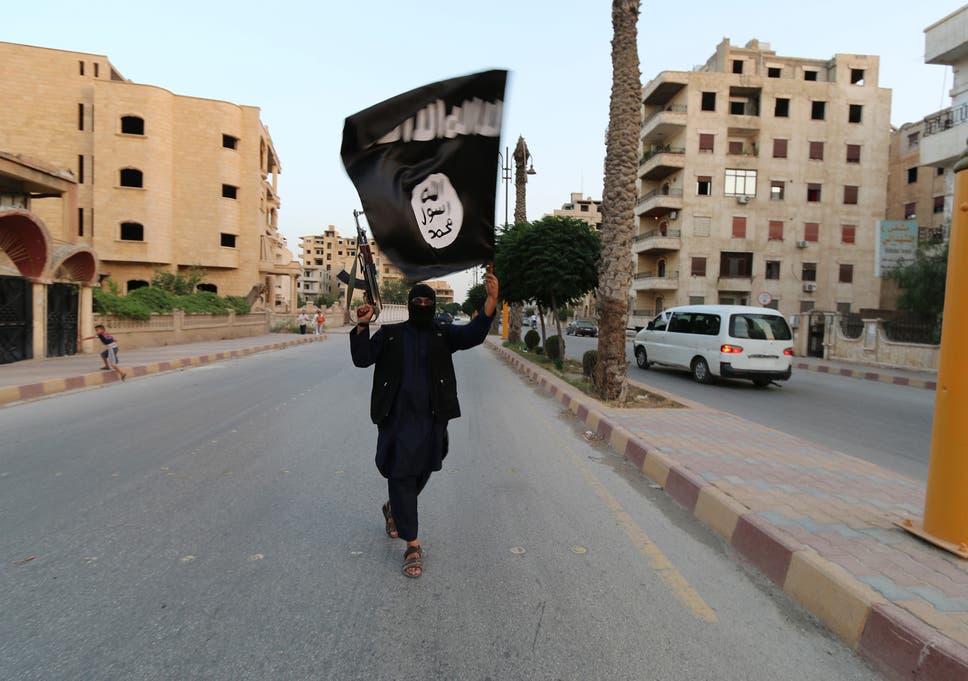
There has never been any vacuum in Syria (or Iraq). Sharia supremacism fills all voids. In focusing on ISIS, David discounts sharia supremacism as “an idea.” But it is much more than that. It is a cultural distinction — even, as Samuel Huntington argued, a civilizational one. It will always be a forcible enemy of the West. It doesn’t matter what the groups are called. You can kill ISIS, but it is already reforming as something else. In fact, it may no longer even be the strongest jihadist force in Syria: Its forebear-turned-rival al-Qaeda is ascendant — after a few name changes (the latest is Hayat Tahrir al-Sham, the Levant Liberation Organization) and some infighting with other militant upstarts. There is a better chance that ISIS will reestablish ties with the mothership than fade away.
The fact that al-Qaeda, which triggered the “War on Terror,” does not factor into American clamoring about Syria is telling. The anti-ISIS mission David describes was not always the U.S. objective in Syria. First we were going to pull an Iraq/Libya redux and help the “moderates” overthrow Assad. But the “moderates,” in the main, are Muslim Brotherhood groups that are very content to align with al-Qaeda jihadists — and our fabulous allies in Syria, the Turks and the Saudis, were only too happy to abet al-Qaeda. Syria had thus become such a conundrum that we were effectively aligning with the very enemies who had provoked us into endless regional war.
When ISIS arose and gobbled up territory, beheading some inhabitants and enslaving the rest, Obama began sending in small increments of troops to help our “moderate” allies fend them off. But the moderates are mostly impotent; they need the jihadists, whether they are fighting rival jihadists or Assad. Syria remains a multi-front conflict in which one “axis” of America’s enemies, Assad-Iran-Russia, is pitted against another cabal of America’s enemies, the Brotherhood and al-Qaeda factions; both sides flit between fighting against and attempting to co-opt ISIS, another U.S. enemy. The fighting may go on for years; the prize the winner gets is . . . Syria (if it’s the Russians, they’ll wish they were back in Afghanistan).
Degrading ISIS into irrelevance would not degrade anti-American jihadism in Syria into irrelevance. If sharia didn’t ban alcohol, I’d say the old wine would just appear in new bottles. It was, moreover, absurd for President Trump to declare victory just because ISIS has been stripped of 95 percent of the territory it once held. Caliphate aspirations notwithstanding, ISIS’s mistake was the attempt to be an open and notorious sovereign. It was always more effective as a terrorist underground, and it still has tens of thousands of operatives for that purpose.
If we stayed out of the way, America’s enemies would continue killing each other. That’s fine by me. I am not indifferent to collateral human suffering, but it is a staple of sharia-supremacist societies; we can no more prevent it in Syria than in Burkina Faso. And I am not indifferent to the challenge David rightly identifies: terrorists occupying safe havens from which they can plot against the West. But that is a global challenge, and we handle it elsewhere by vigilant intelligence-gathering and quick-strike capabilities. We should hit terrorist sanctuaries wherever we find them, but it is not necessary to have thousands of American troops on the ground everyplace such sanctuaries might take root.
The Kurds are a more complicated problem. We have had a good deal with the Kurds: We protect them from Turkey, they kill jihadists. I could not agree more with David (among others) that it is shameful to abandon them, and it is shame multiplied by cowardice if, as reporting indicates, Trump decided to pull out after a threat by Ankara.
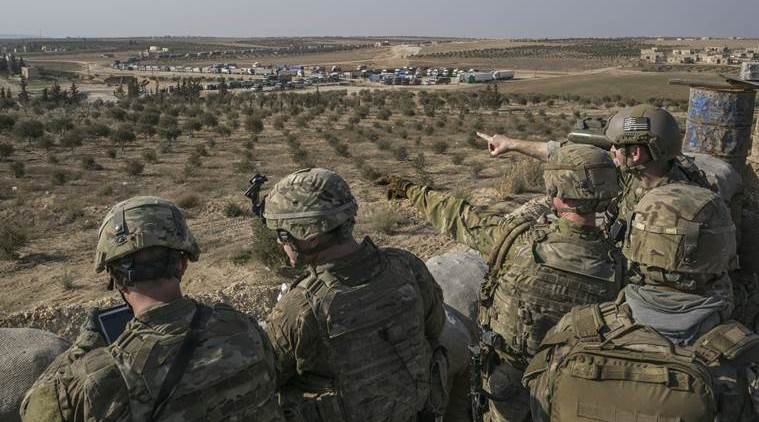
When we look a little deeper, though, we see why Americans will no longer support Washington’s incoherent Middle East adventurism. When we made our arrangements with the Kurds, we knew the backbone of their fighting forces was the PKK, which the U.S. government has designated a terrorist organization. We knew the Kurds had territorial ambitions over which the Turks (and the Iranians, for that matter) are spoiling to go to war. We knew, further, that Turkey is our purported ally in NATO — quite apart from its failure to keep its defense commitments, this Western alliance maintains as a member the regime of Recep Tayyip Erdogan, a sharia-supremacist in the Muslim Brotherhood mold who despises the West. We knew, therefore, that conflict between Turkey and the Kurds was inevitable, that we would eventually have to make an excruciating choice, and that the freight of the NATO alliance would tip the scales in Erdogan’s favor. In fact, in the very conversation in which Erdogan advised Trump to steer U.S. troops clear of Turkey’s imminent anti-Kurd operations, Trump offered Erdogan a Patriot air- and missile-defense system in order to dissuade the Turks from completing a purchase of Russia’s S-400 missile-defense system.
Could we defy Erdogan and keep — or even beef up — the U.S. military presence to protect the Kurds (including protecting the designated terrorists with whom we’ve managed to ally)? Sure we could . . .but by what authority?
(New York Times)
I felt like a lonely voice around here in April 2017, when I condemned President Trump’s airstrikes on Syria as an unconstitutional act of war and an embarrassing contradiction of Trump’s broadsides against Obama for doing the same thing. I was therefore delighted when, addressing Syria a few months later, David asserted, “The Constitution cannot be discarded when it’s inconvenient.” He elaborated:
It’s past time for a true congressional vote on American engagement in Syria. Any argument that previous use-of-force resolutions applicable to Iraq or al-Qaeda also apply to the current conflict evaporate the instant American forces find themselves holding foreign territory in hostile opposition to the foreign sovereign. There is no credible argument that any current authorization allows American forces to occupy a single square inch of Syria without the consent of its government.
Amen. The Constitution is not a suggestion; it is our law. But this week, it is somehow not even a consideration. I hold no brief for Trump on Syria (as noted above, I believe his lawless aggression risked a wider war no one wants). But I find it remarkable that, as the president was rebuked across Capitol Hill — from Senator Lindsey Graham, who is a true believer in American adventurism, to Democrats, who will exploit any pretext to attack Trump — congressional critics never paused, ever so slightly, over the fact that the troops they want the president to keep in Syria were never authorized by Congress to be in Syria.
Some commentators sensed the problem but tried to finesse it, allowing that it would be good for Congress to have a “debate” about Syria because it would give clarity to the mission. That misses the point. The clarifying debate is a residual benefit we get from the constitutional necessity of obtaining congressional authorization before committing acts of war against other countries that have not threatened us. If the mission is not authorized, its clarity is immaterial.
Which brings me back, finally, to the excellent discussion on The Editors. Here’s David again, defending the mission:
This is one of the clearer missions that I’ve seen. This is not a nation-building mission. This is a mission that is a degrade and destroy a specified enemy, and then hold a geographic line against geopolitical foes who would seek to take that geography and crush our allies. That’s a clear mission
Yes, it’s clear. But so was David’s declaration, a year ago, that there is no lawful authorization in existence that “allows American forces to occupy a single square inch of Syria.” How, then, is it permissible for our forces to be “holding a geographic line” in a foreign country? What does it matter that, rhetorically speaking, Syria, Iran, and Russia are “geopolitical foes” if Congress has never authorized the use of force against them?
We all know the answer to this. Obama did not seek congressional authorization for combat operations in Syria because Congress would have refused. And Congress does not want any president to ask for authorization because members do not want to be accountable — they want to go on cable TV and whine that whoever is president has been heedless, whether for going in or for pulling out.
Want to declare war against ISIS? I’d be up for discussing that. Or, as a matter of honor, an authorization of military force to protect the Kurds for what they’ve done on our behalf? I could be persuaded. Or even a declaration of war against Iran — it wouldn’t require us to invade, but it might be useful as part of a real “maximum pressure” strategy, rather than just making mean faces at them in Syria. I’d be open to all of that; but not to more unprovoked military interventions that don’t have congressional authorization.
There is nothing for America in Syria. We haven’t defeated ISIS by taking its territory, and it wouldn’t matter if we did because sharia-supremacist culture guarantees that a new ISIS will replace the current one. The names change, but the enemy remains the same. And if you want to fight that enemy in an elective war, the Constitution demands that the people give their consent through their representatives in Congress.
ANDREW C. MCCARTHY — Andrew C. McCarthy is a senior fellow at the National Review Institute and a contributing editor of National Review. @andrewcmccarthy
‘You Have Been in Afghanistan, I Perceive’
December 21, 2018
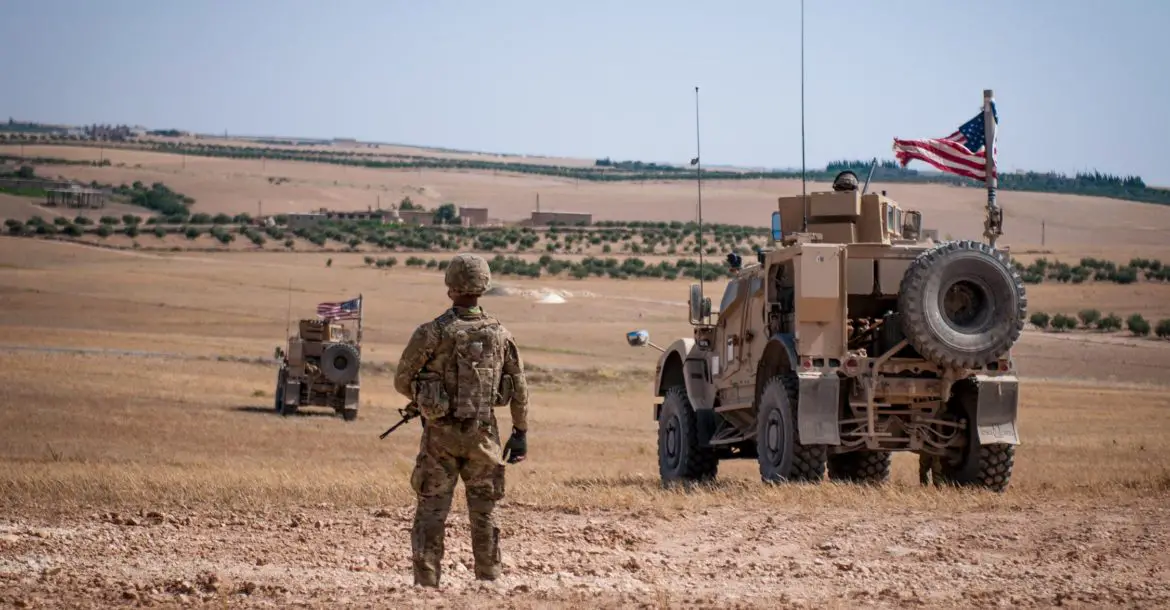
US Forces patrol Near Manbij, Syria, June 24, 2018. (US Army/Staff Sgt. Timothy R. Koster)
President Trump’s decisions to withdraw from Syria and to start drawing down the number of our troops in Afghanistan should come as welcome news to all Americans. The pointless wars in the Middle East and the Hindu Kush have been going on since 9/11—longer if you count the entirely unnecessary incursion into Iraq in 1991—and have brought only misery in their wake. If Trump does nothing else but put an end to the endless wars bequeathed to us by the house of Bush, his will have been a consequential presidency.
That these orders have seemingly resulted in the resignation of Defense Secretary James Mattis is not necessarily a bad thing. Trump is a churning force, as his track record already shows, and if his appointees disagree with his policies, then they go, not the policies. Just ask Jeff Sessions and Rex Tillerson. Like John Kelly, currently on his way out the door as White House chief of staff, Mattis is a distinguished officer in the United States Marine Corps—but no conservative. As anyone who understands the USMC knows, Marine officers are not ideologues; indeed, by training they are apolitical, owing their allegiance to the Constitution and the commander-in-chief. I’m not sure whether this is still true today, but when I was a kid growing up on various Marine duty stations, they didn’t even vote.
A great many on the Right disagree with Trump. They fear “chaos” and “instability.” But we have been living for decades with presidents (George H.W. Bush, take a bow) who made a fetish of stability and in so doing condemned the world to the very definition of insanity: doing the same thing over and over again and hoping for a different result. Thus we have had the eternal “peace process” between the Israelis and the Palestinians for the simple reason that no one seriously desires a definitive solution.
Nonetheless, a solution is only a solution when it is dispositive. This is something our current generation of politicians and warfighters do not wish to acknowledge: hence, the endless war that Bush I began against Saddam Hussein for no particular reason (did or does anyone really care about Kuwait?); was left unfinished; was restarted in the wake of 9/11 by Bush II—again, for no particular reason, since Saddam had little or nothing to do with the attacks on New York City and Washington, D.C. Here we are, 18 years later, with only dead and maimed American soldiers to show for it. Neither Iraq, if it survives, nor Afghanistan will ever be Jacksonian democracies, nor do their inhabitants wish them to be.
This is not to denigrate the heroism of our troops, nor their skills. They may well be, as many say, the best warriors we’ve ever put in the field. But, just as in Vietnam, they’ve been allowed to fight, but not to win. Essentially, they’ve been told to play to an eternal draw, just enough to keep the lid on things over there, but not to materially affect the political structures in place. Thus, by mouthing the liberal pieties in Bush II’s second inaugural address about how the desire for freedom is the natural human condition (it plainly is not) and that America’s duty is to spread the gospel of liberty throughout the world (ditto), our rulers have obscured the lethal realities of our presence overseas.
These are not easy, or happy, conclusions to reach. But we must ask: what have we gotten from our misadventures?
Saddam may have been a tyrant, but he was just one of many, especially in that part of the world. Whether he abused his own people (what tyrant doesn’t?) may have been cause for editorial-page fretting, but not for bellicosity. In effect, both Bushes made the same mistake JFK and LBJ made in Vietnam: thinking that inside every foreigner was an American yearning to get out, when even a cursory glance at the history of Southeast Asia or the Islamic ummah should instantly have disabused them of that notion.
Meanwhile, in Afghanistan, nothing has changed and nothing ever will change. The last outsider to have any effect on the region was Alexander the Great, and he did so at the point of his sword. Since then, Islam has come and gone and come again, the British fought two wars there, and the Soviets first signaled their systemic vulnerability by not being ruthless enough in their attempt to conquer the “country.” Had they applied the same tactics they used on Hitler’s Germany to Afghanistan we might be living in a very different world today, but they did not. And so now the Soviets have vanished while the Afghans live on in their remote and savage land.
As for Syria, the last foreign occupiers to have a positive effect on that parlous place were the Crusaders, who established the Principality of Antioch, which included Aleppo, in the late 12th century; it collapsed about a century later. Since then, Syria has been the plaything of various warring Muslim factions but offers no menace to American national security, and is far too weak seriously to threaten Israel. As in Saudi Arabia and the Gulf States, we have no strategic or economic interests in those areas, especially as the United States has emerged once again as the world’s leading energy producer.
The way to deal with these places, therefore, is to withdraw and leave them to their own devices. Sure, the Russians will fiddle around the edges if only to keep their hands in the game and to create an object lesson for their own restive Muslim minorities. So what? The “kingdom” of Saudi Arabia in all likelihood won’t last much longer than Bohemond’s did. As for the religious clash between Sunni and Shi’a Islam, represented on the chessboard by the Saudis and the Iranians, we can only hope that they both lose, and lose badly.
The first words uttered by Sherlock Holmes to Dr. John H. Watson, M.D. are: “You have been in Afghanistan, I perceive.” This startling deduction was made on the detective’s assessment of his future amanuensis’s physical condition: a wounded war veteran recently returned from the battle of Maiwand during the Second Afghan War. This Holmes can see at a glance, including the good doctor’s enervation from enteric fever.
But it doesn’t take Sherlock Holmes to see that the endless war has been bad for America, and the sooner it’s ended, the better for all of us. Only then can the tremendous damage to American foreign policy brought on by the Bush-Clinton-Bush-Obama succession of insufficient presidents be remedied, and the nation start to heal.
Friday, December 21, 2018
Hush Now and Listen for the Better Angels
{The Devil's Pleasure Palace and The Fiery Angel are both brilliant, essential reads...jtf}
By NR Interview
https://www.nationalreview.com/2018/12/michael-walsh-book-the-fiery-angel-defends-western-civilization/
December 20, 2018

Art ought to be “the wellsprings of our politics…help[ing] shape our public-policy debates,” Michael Walsh argues in his book The Fiery Angel: Art, Culture, Sex, Politics, and the Struggle for the Soul of the West. But it will require a rediscovery –and embrace — of the treasures of our civilization first. Walsh talks about the book and the need with nationalreview.com. — Kathryn Jean Lopez
Kathryn Jean Lopez: Who is the “Fiery Angel”?
Michael Walsh: First, what: It’s an opera by Sergei Prokofiev. I chose the title as a symbol of Western culture, something akin to the phoenix. For 3,500 years, our shared patrimony has been unbroken from the Greeks to the present, and yet has constantly reinvented itself as well. This process of continual rebirth is what has made Western culture the dynamic engine of world progress that it is, far superior to the static nature of other societies.
Lopez: How and why is Western culture under assault and why is it crucial to preserving?
Walsh: It’s under assault from both within and without. In the aftermath of World War I, the cultural Marxists launched their attack upon it, which I chronicled in my book’s earlier companion volume, The Devil’s Pleasure Palace. But a far older existential enemy is Islam, which arose in direct opposition to Judeo-Christianity and has remained an implacable foe that can neither be reasoned with nor appeased. We ignore these threats at our peril, since both the Marxist and the Islamic roads lead to fascism, totalitarianism, and death. Both are, in short, satanic.
Lopez: What’s so important about the Heroic Narrative, and what is unique to the West?
Walsh: The Heroic Narrative distinguishes our myths and legends – and thus our forms of storytelling – from other cultures. Western man is a not a cog in a machine, or a clerk in an endless bureau, or an ant in an ant heap. Rather he – Jesus of Nazareth, Tarzan of the Apes, and just about every hero in between – is the central character of his own movie: someone forced to face his destiny and who chooses (often reluctantly, and at great pain) to embrace it, no matter the cost.
Lopez: Is there a way to begin again and renew our understanding of freedom itself?
Walsh: Freedom is freedom. Diabolically, the cultural Marxists introduced the idea of “real” freedom – which is to say no freedom at all – and have hammered away at it for so long that half the country now seems to see freedom as a threat instead of a promise. For Muslims, freedom means conformance to the will of Allah, which we rightly regard as superstitious slavery. Freedom of religion, under which Islam flies its false flag, will quickly evaporate should Muslims ever become dominant in the West.
Lopez: Is there any way to renew Western civilization and appreciate what freedom truly is without Christianity? (Would there be any point to that, anyway?)
Walsh: No. I don’t mean that the world should convert to Christianity en masse. But Western civilization is unthinkable without Christianity. Its artistic symbols are almost entirely Christian (go to any national art gallery if you need proof) and it was Christian philosophers such as Abelard and Aquinas who were instrumental in the rebirth of classical studies – Plato and Aristotle – at the early universities, such as Paris, Bologna, Padua, Naples, Oxford and Cambridge. The Marxist-Islamic attacks on Christianity serve a double purpose and seek to eliminate two enemies with one blow.
Lopez: Where does that leave atheists and everyone else?
Walsh: Atheists are free to choose. What they’re not free to do is attack the very culture/religion that guarantees them that freedom. They plead for “tolerance” until they feel strong enough to dispense with it (see Marcuse’s essay, “Repressive Tolerance” for their ideological justification.) Tolerance is not an abstract virtue, but rather a situational exercise.
Lopez: “Far from being museum pieces, vestal virgins, or hothouse flowers, segregated from the practical world, the arts ought to be seen instead as the wellsprings of our politics, and therefore should help shape our public-policy debates.” With the short attention spans we have today, how is that at all possible?
Walsh: I address this in The Fiery Angel: “And yet, as we often hear, there is no time. The pace of modern life, it is said, is too fast in order to give up an hour to a Bruckner symphony, two hours to Rififi or Rashomon, or several weeks to The Magic Mountain. Bollocks. We flatter ourselves if we think we have any less time to devote to the pursuits of the mind and the spirit than did, say, the ancient Greeks. The hoplite class of Athens could rely on a deadly, nearly annual war against either their fellow Greeks or the invading Persians as surely as they could count on the seasons or the tides. Many of them would die. And yet they produced Aeschylus, Sophocles, and Aristophanes; Aeschylus’s epitaph mentions that he fought at Marathon, and says nothing about his plays or poetry.
“The pace of life, in any case, is relative. No doubt future generations will think we had it easy, with nothing to do except work desultorily at a nine-to-five government job, take annual leave, enjoy weekends and holidays off, and spend the evenings in front of giant flat-screen televisions half-watching network, cable, or satellite programming while eating take-out food delivered right to our doors. Such luxury! Such indolence!
“What is meant is: we have no attention span. An attention span demands several things: native intelligence, an ability to discriminate among choices, an ability to follow along, a keen anticipation of the outcome, and, most important, a willingness to learn so that the moral is earned rather than delivered. This is precisely the opposite of what cultural Marxism wishes from its audiences…”
The attention-span problem, therefore, is not a matter of time but of will power.
Lopez: Is there a danger of romanticizing our politics, where we’re expecting more from it than it can or should deliver?
Walsh: Yes. The man on the white horse causes as much, if not more, trouble than he solves. And yet we are now so obsessed with Washington politics and, thanks to the media, the presidency, that we have no room for anything other than man-on-white-horse stories. The Romans had the right idea: two consuls, each elected for a year, ran the Republic on a day-to-day basis, but in times of great crisis the Romans turned to a dictator, who stayed in office exactly as long as it took to sort out the situation, then stepped down. What got Caesar killed was his assumption of that office for life – which turned out to be quite short.
Lopez: Are we, simply put, undergoing an identity crisis? What’s the best-case scenario?
Walsh: I’m suspicious of this word, “identity,” which has been wholly subsumed by the Marxist project. Simultaneously, the cultural-Marxist Left treats “identity” as something immutable and fixed, as in identity politics, and at the same time declares it to be fluid and whimsical, as in sexual politics. As usual (and especially in matters of sex) they want to have it both ways, so to speak. Rational people don’t have identity crises. Their lives may be a process of self-realization, but not of self-discovery, which is a kind of madness.
My principal argument in The Fiery Angel is that we need to return to the wellsprings of our culture in order to (re)discover who we are and how we got here. The best-case scenario is that it’s rather easy to accomplish, since the great works of Western art are still readily available – for now. But if we allow the Left to complete its orgy of iconoclastic destruction, we are out of business because where they have ideology, we have civilization.
Lopez: So, in this era of tearing down monuments if historic figures are imperfect — as we all are – how do we teach and recover and learn from history? How do we remember our achievements and mistakes and cultural memories and roots in a constructive and even beautiful way again?
Walsh: We must never accept the Left’s premise that the past deserves to be punished for today’s often freshly invented, generally ephemeral transgressions. History should never be whitewashed, and if snowflakes can’t handle it, tough.
Lopez: What it means to be a conservative is a bit of a mess today. Where would you begin and with whom?
Walsh: I think this whole notion of a “conservative movement” is a load of codswallop, in part because political “movements” are the province of the Left and their reductive, group-oriented world view. It’s been especially destructive to younger conservatives, who believe that the “conservative” position on any given issue comes down to a catechism of policy points – what I’ve termed “cheklist” conservativism in honor of the old Soviet Cheka – instead of the simple belief in the essential rightness and goodness of Western culture and the unabashed defense of the same. But this is what you get when the Leftist notion “political science” captures the hearts and minds of the Right.
Lopez: How can we inspire people to do things of beauty and virtue when we’re so overwhelmed and there is so much noise and there is so much anger?
Walsh: By encouraging them not to take their work home with them, as it were. To back away from Twitter and other social-media platforms and crack open a book, listen to a recording, visit an art gallery, go to the theater – in other words, to do the kinds of things that used to be the hallmarks of an educated man or woman. Otherwise, you’re an uncivilized savage, little better than our opponents and enemies.
Lopez: Your epilogue includes the line: “The way forward might just be backward.” Doesn’t that sound a wee bit like the caricature of conservatives: that we want to turn back the clock? Is there a dangerous temptation to nostalgia there?
Walsh: Truth is immutable. There are no “higher truths” or “new truths.” The way forward can only proceed once the rightness – or wrongness – of the path that got us here is fully understood. Otherwise, we’re simply human flotsam – which is exactly the way the totalitarian ideologies of Marxism and Islam see us.
Lopez: Should interns at the Heritage Foundation and National Review be listening to more Bach than reading about Brett Kavanaugh before the summer is through? What classic books would you have them read before they head back to school?
Walsh: The Fiery Angel includes an appendix that lists every work of art (literary, musical, plastic) mentioned in both Devil and Angel. If I were drawing up a short course for aspiring conservatives, it would include Caesar’s Commentaries, and Grant’s Memoirs; Bach’s Art of Fugue, and Mozart’s Le Nozze di Figaro, and Prokofiev’s The Fiery Angel; Dickens’s Bleak House, Willkie Collins’s The Woman in White, and Mann’s The Magic Mountain; the Oresteia, the Poetics, Sophocles’s Theban plays, and Lysistrata, plus the Aeneid. I’d also give them a ticket to a major art gallery and a copy of the Bible, so they can decode what they’re looking at. In this way, they might learn something about the human condition and thus be better equipped both to write about it and to handle it when it finally comes their way. As I often say on Twitter: I never take political advice from small children.
Lopez: How exactly do we better “listen … to the angels of our nature, for better and worse”? And isn’t it the better angels we best be listening to?
Walsh: If we would all just shut up for a moment, we would hear the angels in the still, small voices that sing in our ears. And we should listen to both better and worse angels; one-third of the Heavenly Host went to Hell along with Satan, and we’d damn well better know why, unless we want to end up there ourselves.
Subscribe to:
Posts (Atom)