Tuesday, March 14, 2017

The coming Middle East crisis after ISIS is gone


March 12, 2017
‘US gave ISIS escape route from Mosul to Syria; now civilians are paying the price’
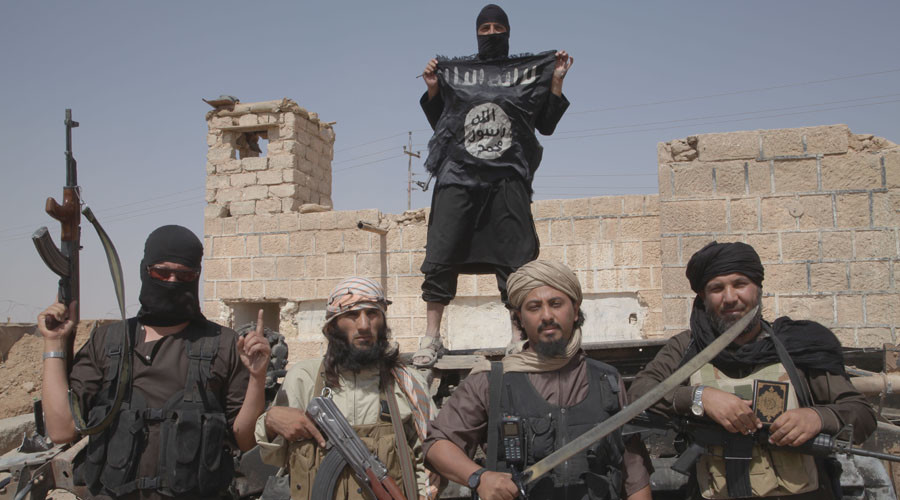
Islamic state fighters © Medyan Dairieh / ZUMAPRESS.com / www.globallookpress.com
The Islamic State caliphate is dying a well-deserved death. This spring, Mosul in Iraq and Raqqa in what used to be Syria will fall. Across the summer, remaining outposts will be purged of the Islamist movement’s remnants. Isolated terror attacks will continue, but the physical caliphate will be erased.
And after ISIS itself, the biggest loser will be the United States.
Defeating ISIS is a worthy goal, but the rivalries of blood and faith that will poison the post-caliphate landscape are emerging. Turks alternately confront and accommodate Russia. Our most-effective combat partners, the Kurds, infuriate Turkey and worry local Arabs. Arab factions fight among themselves (as do the Kurds on occasion). Alphabet-soup minorities suffer and flee.
Russians kill and watch. Iranians kill and wait. Their client, Syrian leader Bashar al-Assad, has amassed a tally of war crimes that makes his survival “unthinkable.” Yet he’s likely to retain power.
With ISIS defeated, we won’t be needed. We’ll be shown the door — except, of course, for aid money.
Uneasy coalitions will collapse. Iran — a k a Persia — will have a client state on the Mediterranean for the first time since the Classical Age. Turkey’s Islamist strongman, President Recep Tayyip Erdogan, dreams madly of a renewed Ottoman empire (which no Arab desires). And Vladimir Putin is set to reap a huge return on a minimal investment.
Fifty million Kurds, longing for independence and freedom, will be embattled on multiple fronts — and, perhaps, deserted by the United States to serve Foggy Bottom fantasies of preserving obsolete states (Iraq and Syria) that have outlived their old and unjust purposes.
Meanwhile, our military serves our enemies by applying our power against ISIS without a practical vision for the day the caliphate falls.
In the Levant and Mesopotamia, history’s the quarrelsome neighbor forever banging on the door. The Arab-populated expanse was ruled, brutally and incompetently, by the Turkish Ottomans for centuries. When that empire collapsed after World War I, control fell to British and French schemers. The British sought security for the Suez Canal, their lifeline to India. And they wanted that strategic commodity, oil.
The French wanted to keep up with the British. So the two powers split the Middle East, drawing artificial borders that ignored local demographics and old hatreds.
The Brits carved out Iraq and Jordan for their puppets and acquired the Palestine Mandate (where Israel would be reborn, a rare instance of justice). The French got control of Lebanon and Syria. The Kurds were cheated, the Armenian genocide ignored and the Shia overlooked, while lesser minorities didn’t even register.
The result was the emergence of phony states that crammed together peoples and confessions that hated each other while dividing groups (such as the Kurds) who yearned for unity, freedom and independence. And when the European empires faded, only dictators could hold the unnatural states together. By committing ourselves to the maintenance of those deadly, dysfunctional borders, the United States leapt flat-footed into the quicksand.
In 2003, in Iraq, we had the chance to begin dismantling those phony states in favor of justice and common sense, but inertia and short-term fears defined our diplomacy. We didn’t liberate Iraq — we perpetuated it. Now, 14 wretched years later, we continue to pretend that, magically, Iraq can achieve political health and that Syria should be preserved with a new head of state.
We have taken the side of dead empires and injustice.
What should we do? Discard our preconceptions for a start. Why shouldn’t dysfunctional borders change? In fact, they’re changing themselves. How many American lives is it worth to serve the vision of dead Europeans and grisly Arab dictators? We need not act to change those borders, but we shouldn’t stand in the way.
The destruction of the ISIS caliphate won’t end terrorism, but the Islamists will suffer a powerful practical and psychological blow. The terrorists eventually will adapt, but their appeal will be weakened: Angry young men want to join a winning team, not a bunch of losers.
Still, the rise of ISIS was unnecessary. Enchanted by the neocons, the George W. Bush administration made Iraq far harder than it had to be simply by not planning for the worst. Then President Barack Obama threw away our hard-won progress in Iraq and, tragically, cowered and prevaricated while the all-but-doomed Assad regime recovered its balance in Syria.
Now we face a new Iranian empire, an expansionist Russia, a treacherous Turkey, an Iraq lost to Iran and the prospect of years to come of ethnic cleansing, massacre and violent uprisings on which terrorists will again piggyback.
Can the Trump administration design and execute a Middle East strategy that actually works to our benefit and makes sense? If so, it would be the first since the Truman presidency.
Ralph Peters is Fox News’ strategic analyst.
FILED UNDER           

Monday, March 13, 2017

Holland: the Canary in the European Coal Mine


March 12, 2017

Image result for rotterdam riots march 2017

Demonstrators face Dutch riot police outside the Turkish consulate in Rotterdam CREDIT:REUTERS

Holland was the first European country I set foot in as a lad, and it continues to have a special place in my memory. But the country I encountered in the summer of 1970 is all but unrecognizable now. In a fit of cultural enervation, social ennui, and just plain suicidal stupidity, it was among the first Western countries to throw open its doors to the avant-garde of Islam, and is now paying the price. So with the Dutch elections now looming, the question is: can the tide of Muslim social conquest be reversed?

The question is precipitated by the extraordinary sight of riots in Rotterdam this weekend when the Dutch government forbade the Turkish minister of family affairs from landing in Holland in order to openly campaign among Holland's Turkish "emigrant" community on behalf of Turkish strongman Erdogan's latest power grab, which is coming up for a vote on April 16. Naturally, she simply snuck across the border from Germany into the Netherlands, but the Dutch somehow managed enough backbone to block her.
Police using water cannon, horses and dogs moved in to disperse the crowds after several hours of demonstrations on Saturday evening. Protesters hit back, throwing rocks at the police, while hundreds of cars jammed the streets blaring their horns.  
Tensions tipped over into violence after a day of fast-moving events, triggered when Turkey's family affairs minister Sayan Kaya was stopped from attending the rally by being expelled from the Netherlands. Ms Kaya could be seen in images on Dutch NOS television appearing to argue with officers about the situation.
Earlier, Dutch authorities also refused permission for foreign minister Mevlut Cavusoglu to land in the city, saying he was not welcome to campaign for the referendum. In response, Mr Erdogan accused the Dutch, who were once under Nazi occupation, of being "the vestiges of Nazis".
To which a Dutch official replied: "It is a crazy remark, of course. But I understand they are angry, but this is of course way out of line." If that's the best riposte the Dutch government can muster, they're going to need a lot more riot police.

Four planned Turkish rallies in Austria and one in Switzerland have also been cancelled in the dispute. The diplomatic row comes ahead of the Netherlands going to the polls on Wednesday for a parliamentary election, where far-right politician Geert Wilders is set to make big gains.

"Far-right" is the far-left media's redefinition of what used to be called "patriotism" or simply "cultural self-preservation." The international Left, of course, can't have that -- it interferes with the whole Frankfurt School/communist mission to destroy the West by undermining its faith in its own institutions, and then using those institutions against it. This movement has long employed "open borders" as part of its strategy, couching it in liberal pieties about "the free movement of peoples in search of a better life." A better life, perhaps -- but for how long? And at whose expense?

Naturally, it was the Germans who started this mess. Postwar Germany was poor and short of manpower, so the Federal Republic (what was then West Germany) imported Turkish "guest workers" by the carload, employing them in menial tasks, isolating them in ghettos, and making it near-impossible for them or their children to receive German citizenship. (To be fair, that was also true of European and American non-Germans as well.) They were Germany's invisible people.

Now, not so much. Once Europeans prayed to be delivered from the cruel, marauding Turk. Christian armies defeated the Turks at the gates of Vienna in 1683, the high-water mark of the previous Islamic assault on Western civilization. As the threat from Islam steadily receded, Mozart's comic opera, The Abduction from the Seraglio (1782), concerns the rescue of Christian women from a Turkish harem.

Now, it's back, disguised as a "refugee crisis." This is not to gainsay the genuine human misery resulting from the dislocations in the Middle East -- dislocations caused for the most part by Islam itself. But it is not the West's obligation to solve the Islamic ummah's problems. The Muslim attack on 9/11 succeeded beyond Osama bin Laden's fondest dreams; seized upon by the Left, it has pit the West against itself, unable to articulate what it stands for without being accused of a chimerical racism, unilaterally disarmed in the face of withering media/establishment scorn.

As I remarked in a speech last week on Capitol Hill, you can't have a foreign policy if you don't know what it is you're preserving, protecting and defending in the first place.
This will not end well. With no tradition of assimilation or integration in Europe, the restive Muslim minorities will only grow louder in their complaints, more violent in their attacks on the religio-cultural foundations of Christendom, and more driven to complete the conquest of the West their holy book demands of them. The Europeans, foolishly, swallowed the Marxist myth of "multiculturalism" whole -- not in the manner of the American melting-pot, ethnic holidays and festivals and the like, but of co-equal cultures peacefully coexisting side by side in what was once a largely mono-ethnic state like Holland or Sweden. It was a beautiful fairy tale, but one that has foundered on the rocks of reality.

Knowing and endorsing the end game, the Left would have you believe that is a failure of the host cultures, and their refusal to sit quietly while their entrails are being devoured. The backlash -- Wilders in Holland, Marine le Pen in France, perhaps even Frauke Petry in Germany -- has finally begun, as politicians now openly wonder how many Europeans will have to die in order to accommodate a dysfunctional, alien, and largely hostile culture's desire for "a better life."

Better than what, one wonders. Unless they're prepared to abandon the legal and political aspects of Islam, all they will succeed in doing is reproducing the moral and physical squalor they're allegedly fleeing. Turkish politicians openly campaigning among "Dutch" Turks for something occurring in Turkey is the sign of a culture confident it can get away with anything. Meanwhile, Erdogan plays Angela Merkel and the other Europeans for suckers as he eyes his grand project -- the final overthrow of Atatürk's secular state and the restoration of the Ottoman empire that died in World War I.

"Tomorrow belongs to me" sang the young Nazi in Cabaret. The Turks, Arabs and North Africans currently investing old Europe don't have to sing it. They just have to believe it:


Turkey? No, Holland (AP Photo/Peter Dejong)

Sunday, March 12, 2017

Film Reviews - 'Kong: Skull Island'


By


The big new film from Warner Bros., Legendary Pictures, and Tencent Pictures, “Kong: Skull Island,” is not to be confused with “Skull Island: Reign of Kong,” a trackless ride at Universal Orlando Resort, in Florida. But why not? The two of them beg to be confused. Both are designed to thrash your prefrontal cortex into submission. Both may be enhanced, for your viewing pleasure, with 3-D spectacles. Both entail—not to give the game away—a large primate who has made absolutely no effort to meet with his therapist. And neither the ride nor the film will be content until you go, in the richest sense of the phrase, ape shit.

That brief is fulfilled, pretty well, by the first forty minutes of the movie. We start with a prologue set in 1944, “somewhere over the South Pacific,” in which two pilots, a Japanese and an American, land by parachute on a deserted island—presumably after a dogfight—and duke it out with pistols and a sword before being rudely interrupted by the film’s title character. From now on, any duking will be handled by Kong.

Jump ahead to Washington, D.C., in 1973, and to a fellow named Bill Randa (John Goodman), whose job description I never quite caught. His area of interest, however, is exact: a Pacific island (guess which one) that he depicts as “a place where myth and science meet.” It has never been mapped, and now is the time. And so to an airbase, in Vietnam, where Lieutenant Colonel Packard (Samuel L. Jackson) and his men, including Major Chapman (Toby Kebbell), are preparing to ship out and head home. Instead, they are given the chance to explore the island—one last mission, which Packard accepts with suspicious alacrity. Squaring up to Mason Weaver (Brie Larson), an “antiwar photographer” who’s been cleared to come along, he declares that the Vietnam War was not lost but abandoned. You can tell he’s still spoiling for a fight.

As Packard’s helicopters near their target, punch through a “perpetual storm system” that girdles the island, and discover a paradise of unravished greenery, the movie lays out its credentials. There’s a tracker named Conrad (Tom Hiddleston) on board, who possesses “unique expertise in uncharted jungle terrain,” and, soon enough, we even encounter a Marlow (John C. Reilly). Plus, for good measure, a blaze of burning napalm. Got it? I’m frankly amazed that nobody brings along a bulldog named Kurtz. In short, what this movie yearns to be is a pop-culture “Apocalypse Now,” with the human foe removed, the political parable toned down, and the gonzo elements jacked up. The excellent news is that, for a while, that goal is met. The U.S. choppers are now in Kong’s domain, and he treats them in the way that a ravenous but slightly messy diner would approach a lobster special—wrenching them apart and cracking open the shells to get at the meat inside. The seafood motif returns a little later, as Kong grapples with a giant octopus (or, rather, by my count, a dodecapus) and slurps one of the legs down like a noodle. Yum. Heaps of fun, and you don’t have to go to Florida.

The director of “Kong: Skull Island” is Jordan Vogt-Roberts, whose calling card for the task was “The Kings of Summer” (2013), a wistful teen-age pastoral, wittily handled and, if memory serves, entirely gorilla-free. It probably cost about as much as Kong’s right paw—even less, in fact, since at one point the paw gets a crucial scene, in which a drowning Weaver is plucked from the water and laid, as gently as an infant, on the leathery palm. We are meant to recall “King Kong,” from 1933, when Fay Wray was similarly cradled, and other flickers of that film emerge: the finding of a lost tribe, and the hearty disagreements between Kong and his next-door neighbors—prehistoric monsters, which in this case pop up from underground. Nothing can supplant the charm of the original Kong, who, thanks to the film’s stop-motion process, bore a touch of the tremulous and the hesitant to go along with his chest-thumping might, and Vogt-Roberts is smart enough not to try. Instead, he turns the trip to Skull Island into precisely that: a trip.

Thus, in no particular order, we are offered the following attractions: balls of fire reflected in a soldier’s mirrored shades; another soldier transforming the bleached skull of a triceratops into a machine-gun emplacement; Conrad using a curved sword to swipe at pterodactylic assailants, releasing gouts of purple gore; and Kong, in all his majesty, proudly framed against the setting sun. Then, there are the visual rhymes: an early clip of President Nixon, announcing the cessation of the conflict on TV, is echoed by a closeup of a Nixon figurine on a pilot’s dashboard, nodding madly as the helicopter dives to its doom. Note also the use of “just as” moments: one guy, trapped on the ground, is stamped on by a foot the size of an R.V. just as he is about to be yanked free; and a tail bats a prospective hero sideways into a cliff just as he is about to pull the pin on a pair of grenades and save the day. The over-all effect is to compound the comedy of peril, and to suggest that our mortal initiatives, however brave, will usually be humbled and outwitted by the less subtle devices of the brutes. Sounds about right to me.

The thing that breaks the back of this movie, and makes the second half so much less prodigious than the first, is a simple matter of geography. Once the combatants are split up and scattered around the island (Packard here, Chapman there, Conrad and Marlow stuck in their own heart of darkness), the story loses focus and even starts to drag. As occurred with last year’s “Star Trek Beyond,” you soon get bored with one party and itch to get back to the others. The same goes for the dinosaurs and the other humongous throwbacks—creepy enough, in their skeletal fashion, but no match for Kong. To be honest, his only rival in the film is Samuel L. Jackson, who has a high old time. When it’s suggested that the remaining troops should get out and call the cavalry, Packard solemnly replies, “I am the cavalry.” More than once, the screen is completely filled with the glaring eyes of Kong, and Packard, granted the same treatment, glares right back. The sad truth is that the place ain’t big enough for the both of them, and so an opportunity is lost. If they joined forces, they could rule the world.

‘Kong: Skull Island’ revives ‘King Kong’ with 70s-era style and welcome wit

By Ann Hornaday
https://www.washingtonpost.com/
March 9, 2017


‘Mark my words. There will never be a more screwed-up time in Washington.”
Thus speaks Bill Randa (John Goodman), a scientist who at the beginning of “Kong: Skull Island” arrives at the Capitol in 1973 to secure funding for a mission to a mysterious island in the South China Sea, perpetually shrouded in thunderstorms, hitherto un-mapped and unexplored. His mission: to locate one of filmdom’s most iconic characters and make him relevant for audiences inured to the usual ho-hum of crashes, car chases and explosions of solar-level size and ferocity.
And, against all odds, he succeeds: “Kong: Skull Island” is a big, noisy B-movie infused with moments of wit and sprightly visual sophistication, anchored by what surely must be the most enormous version of King Kong since the giant ape made his screen debut in 1933. (After being on all fours in Peter Jackson’s 2005 “King Kong,” now the big ape is back up on his feet again.) Liberally borrowing imagery and story points from Francis Ford Coppola’s Vietnam War epic “Apocalypse Now,” this tale of ad­ven­ture — with a less-than-subtle subtext about the perils of heedless human interference in the natural world — doesn’t necessarily tread new ground. Nor does it revisit the original film’s famous climax atop the Empire State Building. But there’s a commendable level of artfulness to the overheated spectacle, rewarding viewers not just with the expected tableaux of the title character swatting away helicopters and bullets with irritated ferocity, but also with one or two genuinely memorable human characters and some welcome panache.

The best decision made by the team behind “Kong: Skull Island” was to set it immediately after President Richard M. Nixon’s “peace with honor” speech, when troops in Vietnam are readying to go home. Randa, having secured his funding back in Washington, is in need of a military escort to the island, meaning the presence of a ragtag group of seasoned fighters, led by the bellicose Lt. Col. Packard (Samuel L. Jackson). Also along for the ride: a photographer named Weaver (Brie Larson), a team of Trekkie-looking scientists with a NASA outfit called Landsat and a British tracker pointedly named Conrad.

That plummy gentleman is played by Tom Hiddleston, who’s always improbably and unnervingly well-groomed, no matter what the occasion. But he’s an outlier within an otherwise scruffy team of misfits who make sure to pack a reel-to-reel tape player on one of the several helicopters they take to the ­cloud-encased redoubt. The Vietnam War setting gives “Kong: Skull Island” lots of opportunities to evoke the period in pyrotechnic explosions and yellow-tinged clouds of toxic gas. It also, not incidentally, allows for choice cuts from the likes of Jefferson Airplane and Creedence Clearwater Revival; the promiscuous use of machine guns, hand grenades, flamethrowers and napalm; and snippets of macho vocab like “two clicks to our north” and “Roger that, Fox Five.”

And make no mistake: “Kong: Skull Island” is a macho enterprise all the way. Larson manages to hold her own with very little to do except take up her camera when bizarre things begin to happen, but a scientist played by Jing Tian barely makes an impact, save as a sop to the Chinese market. When the monstrously huge title character makes his first appearance to the exploratory crew, it’s both gratifying and terrifying, and as the story deepens we discover that his rage has an altruistic purpose. What’s more, he’s not the only scary creature on the island, where Our Heroes soon meet up with supersized versions of a spider, a water buffalo and, in the film’s gruesome and seemingly endless climactic scene, a screeching, slithery-tongued lizard.


Director Jordan Vogt-Roberts, whose previous film was the indie coming-of-age film “The Kings of Summer,” does a good job of doling out the requisite number of wowsers and whammies, engaging in gratuitous mayhem and destruction, but along the way creating a rich sense of atmosphere and detail. (There’s a lovely shot when a flotilla of helicopters give way to one dragonfly hovering in midair.) As most directors will tell you, casting well is easily 90 percent of the job. Vogt-Roberts has made several good decisions in that regard — the supporting cast includes the wonderful Toby Kebbell, Shea Whigham and Corey Hawkins — and one flat-out brilliant one: John C. Reilly steals the movie in his funny and poignant portrayal of a Kurtz-like figure living in an exotic redoubt, populated by an ancient tribe called the Iwi. (Reilly’s character is named Marlow, in another painfully obvious Conradian nod.)
If Reilly’s presence gives “Kong: Skull Island” its playful, gonzo edge, it’s the title character himself who gives it soul, morphing from a monster into a brooding symbol of the colossal folly of military belligerence and hegemonic hubris. With its band of interlopers destroying the island to study it, the humans of “Kong: Skull Island” quickly begin to personify the real heart of darkness, becoming far more frightening than the fearsome, regal, ultimately sympathetic figure at its center. As ape movies go, this one’s big, all right. But not necessarily dumb.
PG-13. At area theaters. Contains intense sequences of sci-fi violence and action and brief strong language. 118 minutes.

Saturday, March 11, 2017

Tucker Carlson Interview: Ann Coulter Debunks Immigration Myths (3/10/2017)

C.S. Lewis and the Hound of Heaven


March 8, 2017
Image result for c.s. lewis on stage
A new one-man play about one man's spiritual pilgrimage, C.S. Lewis on Stage: The Most Reluctant Convert, opens with a riff against a cruel, indifferent, and seemingly meaningless universe reminiscent of a Woody Allen monologue. "And what is 'life'?" the protagonist asks in defending his youthful atheism. "It is so arranged that creatures live by preying on another…Creatures are born in pain, live by inflicting pain, and mostly die in pain."
Playwright, director, and actor Max McLean achieves something rarely seen on stage or screen: a truthful, richly textured, and witty account of religious conversion. C.S. Lewis (1898-1963), the Oxford scholar renowned for works such as The Chronicles of Narnia and The Screwtape Letters, famously abandoned his atheism and became a Christian—but only after a long and tortuous struggle to reconcile his "ruthless dialectic" with the claims of the gospel. McLean traces Lewis's journey with a script informed by an intimate knowledge of his subject's thought and writings.

The play, now in its New York debut at the Acorn Theatre, is set in the 1950s in Lewis's study in Magdalen College. As Lewis recounts his journey, beginning with his childhood, we learn that his mother's death produced "a deeply ingrained pessimism." He soon stopped believing in God. His tutor, William Kirkpatrick, was a hard-nosed atheist who helped him develop "intellectual muscle," which eventually would undermine his materialist outlook. "I at least owe him in the intellectual sphere," Lewis wrote after learning of his mentor's death, "as much as one human being can owe another."
McLean's rendering draws attention to a singularly important feature of Lewis's story, often neglected by biographers: his experience of war. A hundred years ago, in 1917, Lewis arrived as a soldier on the Western Front, "the hell where youth and laughter go." He relates the grim memory of "horribly smashed men still moving about like crushed beetles…it was a ghastly interruption of rational life." It was an experience which deepened his skepticism.
Yet war also quickened Lewis's spiritual yearnings. It was during this time that he discovered the writings of George MacDonald, a nineteenth-century minister, mystic, and author of fantasy novels. When Lewis first picked upPhantastes: A Fairy Romance, nothing was further from his mind than Christianity: the cataclysm of the Great War was upending his generation's cherished beliefs in progress and religion. The book stirred a longing for beauty and goodness, an experience of joy that challenged his materialism. "My imagination was baptized," he says. "The rest of me took a bit longer."
In a smart production that uses portraits of friends and authors who helped Lewis in his quest—from W.B. Yeats to G.K. Chesterton—we overhear a fateful conversation with J.R.R Tolkien, another Oxford don and a Catholic believer. On an evening in September 1931, on Addison's Walk near Lewis's college, the two friends talked until 3 a.m. about whether Christianity was simply a myth, like the pagan stories Lewis enjoyed about dying gods sacrificing themselves for a noble cause. "Jack, the story of Christ is a myth: working on us in the same way as other myths, but with one extraordinary difference. It really happened." Lewis would regard his exchange with Tolkien as an intellectual breakthrough.
Whether moving from his armchair to his desk, or pouring himself a stiff drink, McLean delivers a performance that is worthy of its subject: learned, trenchant, wry, honest, and humane. "The Absolute had arrived, making a nuisance of itself," Lewis explains, compelling him to do a moral inventory. "What I found appalled me—depth after depth of pride and self-admiration—a zoo of lusts, a bedlam of ambitions, a nursery of fears, a harem of hatreds. My name is legion."
The play captures the complexity of Lewis's struggle to believe, yet avoids the clichés and sanctimony that usually attend religious biographies. True to Lewis's own account, McLean portrays a man almost embarrassed by his conclusions: even Lewis's decision to adopt theism rendered him "the most dejected, reluctant convert in all England." The ultimate step of faith comes unexpectedly, during a country ride with his brother in the sidecar of a motorcycle. "When we set out I did not believe that Jesus Christ is the Son of God," Lewis explains. "When we reached the zoo I did."
C.S. Lewis on Stage delivers something truly novel in modern theater: a story about an immensely creative mind, through reason and imagination, arriving at the threshold of faith. "A cleft has opened in the pitiless walls of the world, and I have been invited to follow our great Captain inside," Lewis says. "The following Him is, of course, the essential point."
Joseph Loconte is an associate professor of history at the King's College in New York City and author of A Hobbit, a Wardrobe, and a Great War: How J.R.R. Tolkien and C.S. Lewis Rediscovered Faith, Friendship, and Heroism in the Cataclysm of 1914-1918.

Friday, March 10, 2017

Today's Tune: Ryan Adams - Prisoner (Live on KCRW)

Reza Aslan, Cannibal For CNN


March 10, 2017
Image result for reza aslan cannibal
Television personality and religious scholar Reza Aslan sampled cooked human brain tissue with cannibals in India in the first episode of CNN’s new“Believer” series exploring “fascinating faith-based groups” around the world.
Take that, Andrew Zimmern! More:
Aslan, 44, plugged his experience with the Aghori, a small Hindu sect known for its extreme rituals, on Facebook on Sunday night before the show aired.
“Want to know what a dead guy’s brain tastes like? Charcoal,” Aslan wrote in a Facebook post on Sunday. “It was burnt to a crisp! #Believer.”
Outrage immediately followed. Some attacked Aslan, a Muslim who was born in Iran and grew up in the San Francisco Bay Area, for choosing to portray the most extreme form of Hinduism for shock value. Hindu leaders and groups condemned the show for focusing on a fringe form of Hinduism presenting a negative picture of the overall religion.
That doesn’t seem fair. If he went to Appalachia and profiled snake handlers, would mainstream Christian leaders go to pieces over it? I think not. Nor should they. Aslan made it clear in the show that these people are extremists in Hinduism. He was up front about it.
But the reader who put me onto this story sees the real meaning of the kerfuffle:
While with [the Aghori] he drank from a human skull and ate part of a human brain. Now he finds himself the object of criticism from his liberal fellow travelers because by doing this he has reinforced anti-Hindu stereotypes etc. etc. Vamsee Juluri, professor of media studies at the University of San Francisco, for example, has accused Aslan of being “racist, reckless, and anti-immigrant.” Aseem Shukla, of the Hindu American Foundation, says that Aslan is reinforcing “common stereotypical misconceptions.”
Yet not a word about the fact that ASLAN ATE A HUMAN BRAIN AND CNN AIRED IT.
Grist for the mill. We’re doomed.
These Indian loons are quite the eccentrics, and I don’t mean in that charming Bertie Wooster way, either. Get a load of this:
At one point [Aslan] fell out with the Aghori guru who shouted: ‘I will cut your head off if you keep talking so much.’
The guru began eating his own faeces and then hurled it at Aslan.
Aslan quipped: ‘I feel like this may have been a mistake.’
He later posted on Facebook: ‘Want to know what a dead guy’s brain tastes like? Charcoal’.
‘It was burnt to a crisp!’
You know the saying: “Sit down to eat with Hindu cannibals, get up with flung poo on your ascot.”
CNN ran a promotional commercial for this series in which Aslan described what he sees as the difference between “religion” and “faith”. I can’t find a link to it on YouTube, but I did find it on his Facebook page. On it, he says:
“Religion is just the language you use to describe your faith. Although we’re all speaking different languages, we’re all pretty much saying the same thing.”
No, we’re not. In what sense is a Sunni Muslim in Cairo who will go to weekly prayers today saying pretty much the same thing as the poo-flinging cannibal in India? How is the pious Orthodox Jew praying at the kotel in Jerusalem saying the same thing as that Hindu sectarian who smears the ashes of the dead on himself and noshes on human flesh?
Aslan’s statement takes universalism to an absurd length. In fact, his focus on religious extremists in this series proves the opposite point. The Roman Catholic monk at prayer in Norcia is not “pretty much saying the same thing” as the voodoo devotee in Haiti profiled by Aslan. One is worshiping the true God; the other is worshiping demons. That’s what I say as a Christian. You may not share my harsh judgment on voodoo, but I don’t see how it’s possible to claim that Catholicism and voodoo are nothing more than flavor variations of the same thing.
A good book to read on this is Boston University religion scholar Stephen Prothero’s God Is Not One. About the book, Prothero has written:
On my last visit to Jerusalem, I struck up a conversation with an elderly man in the Muslim Quarter. As a shopkeeper, he seemed keen to sell me jewelry. As a Sufi mystic, he seemed even keener to engage me in matters of the spirit. He told me that religions are human inventions, so we must avoid the temptation of worshipping Islam rather than Allah. What matters is opening yourself up to the mystery that goes by the word God, and that can be done in any religion. As he tempted me with more turquoise and silver, he asked me what I was doing in Jerusalem. When I told him I was researching a book on the world’s religions, he put down the jewelry, looked at me intently, and, placing a finger on my chest for emphasis, said, “Do not write false things about the religions.”
As I wrote God Is Not One, I came back repeatedly to this conversation. I never wavered from trying to write true things, but I knew that some of the things I was writing he would consider false.
Mystics often claim that the great religions differ only in the inessentials. They may be different paths but they are ascending the same mountain and they converge at the peak. Throughout this book I give voice to these mystics: the Daoist sage Laozi, who wrote his classic the Daodejing just before disappearing forever into the mountains; the Sufi poet Rumi, who instructs us to “gamble everything for love”; and the Christian mystic Julian of Norwich, who revels in the feminine aspects of God. But my focus is not on these spiritual superstars. It is on ordinary religious folk — the stories they tell, the doctrines they affirm, and the rituals they practice. And these stories, doctrines, and rituals could not be more different. Christians do not go on the hajj to Mecca; Jews do not affirm the doctrine of the Trinity; and neither Buddhists nor Hindus trouble themselves about sin or salvation.
Of course, religious differences trouble us, since they seem to portend, if not war itself, then at least rumors thereof. But as I researched and wrote this book I came to appreciate how opening our eyes to religious differences can help us appreciate the unique beauty of each of the great religions — the radical freedom of the Daoist wanderer, the contemplative way into death of the Buddhist monk, and the joy in the face of the divine life of the Sufi shopkeeper.
I plan to send my Sufi shopkeeper a copy of this book. I have no doubt he will disagree with parts of it. But I hope he will recognize my effort to avoid writing “false things,” even when I disagree with friends.
It is, of course, possible to go too far in the other direction, and deny commonality with other faiths. Of course a devout Christian has more in common with a devout Muslim than either of them do with the Aghori brain-eater. But that is not to say that the Christian and the Muslim are “pretty much saying the same thing.” Such a reductionist view, it seems to me, doesn’t respect the integrity of religions and their claims. Aslan profiles Scientology in this series. How on earth do a Scientologist and a Southern Baptist end up “pretty much saying the same thing”? To square that circle, you need to put on a pair of ideological eyeglasses that reduce sharp distinctions down to a pleasing blur.
Seems to me that Aslan’s approach to religion is a common one among liberal Westerners: that religion is primarily about what we say to God about ourselves and our desires for him. But for more conservative people, religion is primarily (but not exclusively) about what God says to us about Himself and his desires for us.
Be that as it may, the point remains: ASLAN ATE A HUMAN BRAIN AND CNN AIRED IT.
Posted in . Tagged .

Blitzed: Drugs in Nazi Germany by Norman Ohler review – a crass and dangerously inaccurate account


Ohler’s book claims not only that German soldiers and civilians commonly used methamphetamine, but that Hitler was a drug addict

16 November 2016
Image result for blitzed norman ohler uk
Nazi Germany proclaimed from the outset that it was going to break with the moral and physical degeneracy of the Weimar republic. The Hitler Youth would provide the younger generation with physical exercise, military drill and long hikes over the mountains, in place of sex, drugs, alcohol, dance-halls and the “negroid” music of jazz and swing. The contrast is vividly encapsulated in a scene in the movie Cabaret, in which the sleazy world of the singer Sally Bowles is rudely brushed aside by a uniformed troop of young Nazis who rise up in an outdoor cafe to belt out an aggressively Nazi version of the song “Tomorrow Belongs to Me”. At the apex of this self-proclaimed moral renewal was, of course, Hitler, who demonstrated his purity and self‑sacrifice for the Fatherland as a non-smoking, vegetarian teetotaler, celibate and without a personal life, as far as the public was concerned.
According to the German writer Norman Ohler, however, this public image, like so many other aspects of Nazi propaganda, was the reverse of the truth. Ohler, who has diligently researched in the German federal archives and other relevant collections, presents a picture of an entire nation high on drugs. The use of methamphetamine was common, he argues, particularly in the form of “Pervitin”. The drug, he says, was manufactured in huge quantities: 35m tablets were, for example, ordered for the western campaign in 1940. This seems an impressive figure, until you recall that more than two and a quarter million troops were involved, making an average of around 15 tablets per soldier for the entire operation. Given the concentration on supplying tank crews with the drug, this means that the vast majority of troops didn’t take any at all.
Ohler goes much further than claiming that methamphetamine was central to the German military effort, however. He claims that its use was universal among the civilian population of Germany, too. For the ordinary person, he says, Pervitin became a routine “grocery item” well before the war. “‘Germany, awake!’ the Nazis had ordered. Methamphetamine made sure that the country stayed awake.” The “doping mentality”, he writes, “spread into every corner of the Reich. Pervitin allowed the individual to function in the dictatorship.”
This sweeping generalisation about a nation of 66 to 70 million people has no basis in fact. No doubt a number of Germans took, or were even prescribed, opium derivatives for medical conditions, or took them to alleviate the growing stress of living in a country that by mid-1944 was being invaded from all sides and buckling under the strain of intense aerial bombardment. But to claim that all Germans, or even a majority of them, could only function on drugs in the Third Reich is wildly implausible.
What’s more, it is morally and politically dangerous. Germans, the author hints, were not really responsible for the support they gave to the Nazi regime, still less for their failure to rise up against it. This can only be explained by the fact that they were drugged up to the eyeballs. No wonder this book has been a bestseller in Germany. And the excuses get even more crass when it comes to explaining the behaviour of the Nazi leader.
Ohler provides much detail on the drug regime to which Hitler was subjected by his personal physician Theodor Morell, especially during the war. His medication, above all Pervitin and Eudokal, an analgesic morphine derivative, propelled Hitler into a world of delusion in which the defeats and disasters of the last two years of the war could be brushed aside as irrelevant. His “chemically induced confidence” hardened his resolve and made him reject all thoughts of compromise. Generals who wanted to stage tactical withdrawals were dismissed by Hitler, intoxicated by the “artificial euphoria” induced by the pills and injections provided by Morell. The Führer’s genocidal aggression was fuelled not only by hatred of Jews and “Slavs” but by continual methamphetamine abuse. Hitler was a drug addict who was in the end not responsible for his actions. No wonder the similarly drug-addicted German people failed to realise the scale of the disaster into which he was leading them, or the magnitude of the crimes in which he was implicating them.
Ohler is of course aware of the moral implications of this argument, and in a brief paragraph he provides a disclaimer suggesting that “this drug use did not impinge on his [Hitler’s] freedom to make decisions”, and concludes that “he was anything but insane”. But the two pages in which he makes these points are contradicted by everything he says in the other 279 pages. It’s all too reminiscent of the claims made by some old Nazis I spent an evening drinking with in Munich’s Bürgerbräukeller, the starting-point for the 1923 beer-hall putsch, in 1970: Hitler rescued Germany from ruin but went mad during the war. Here, too, is a good reason for the book’s success in Germany.
Ohler’s previous publications have been novels, and in the German edition of this book he points out that “writing history is never just science, it’s also always fiction”. So he employs a “skewed perspective” to recast our previous understanding of the Führer’s behaviour. This involves massive exaggeration based on spurious interpretations of the evidence. For example, whenever Morell notes that he had injected Hitler with an unnamed substance (marked “X” in his notebooks), Ohler assumes it was an opiate. Yet Morell, concerned to stay alive should Hitler die, always made a point of recording when he supplied the Führer with opiates. These occasions were very few, and Hitler would not have voiced his contempt for Hermann Göring’s well-known morphine addiction had he been an addict himself. Nor is there any solid evidence that the physical deterioration Albert Speer and others perceived in Hitler in the last months of his life was the result of his having to go “cold turkey” when the drug supply ceased. His tremors were the result of Parkinsonism, as many writers have concluded.
These authors have included Henrik Eberle and Hans-Joachim Neumann, in their book Was Hitler Ill?; a similar investigation has been carried out by another medically qualified investigator, Fritz Redlich. Ohler makes no attempt to deal with their arguments, which were also made on the basis of a thorough reading of Morell’s notebooks. He portrays Germany under the Nazis as a nation gone mad under the influence of powerful stimulants, but these earlier historians have shown in detail the limited extent of Hitler’s drug abuse, while there are other books, notably Werner Pieper’s Nazis on Speed, which put the military employment of methamphetamine into perspective. Ohler’s skill as a novelist makes his book far more readable than these scholarly investigations, but it’s at the expense of truth and accuracy, and that’s too high a price to pay in such a historically sensitive area.
 Richard J Evans’s books include The Third Reich in History and Memory andThe Pursuit of Power 1815-1914Blitzed: Drugs in Nazi Germany, translated by Shaun Whiteside, is published by Allen Lane. To order a copy for £16.40 (RRP £20) go to bookshop.theguardian.com or call 0330 333 6846. Free UK p&p over £10, online orders only. Phone orders min p&p of £1.99.