Monday, February 13, 2017

‘Homeland,’ Season 6 Review: A Politically Correct Carrie


Gone is the series’ original vitality, replaced with predictable politeness.


DOROTHY RABINOWITZ
January 12, 2017
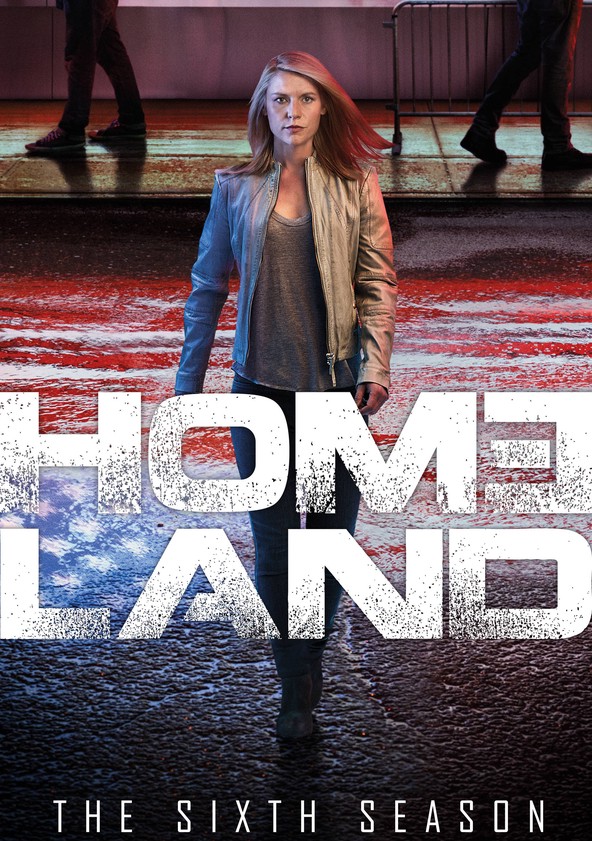
Image result for homeland season six

It’s a far from familiar Carrie, bipolar scourge of terrorists, who shows up in season 6 of “Homeland,’’ set in that destination strivers around the world dream of living in—namely, Brooklyn. She’s there having abandoned any further service to the CIA, because—she makes clear in the show’s opening episodes—she’s become increasingly dismayed by America’s policies in the Middle East. Not to mention at home, where she’s appalled to discover that the U.S government has been taking the threat of homegrown terrorism seriously and going so far as to investigate enthusiasts of jihad, creators of websites for the dissemination of messages from Islamic State, devotees of suicide bombers, and even charging some suspected of connection with terror networks abroad.

So it is that we find an even more chronically infuriated Carrie than the one of previous seasons. Instead of chasing around the capitals of the world hunting down terrorists about to set off explosions intended to take the lives of tens of thousands of unbelievers, she’s now spending her days in her Brooklyn offices devoted to legal defense of Muslim males she considers unjustly charged victims of the U.S. government. Unjustly charged in many ways, in Carrie’s view—the most remarkable aspect of which is her complaint that the government investigators aiming to prevent the next mass murder of Americans never stopped to consider the emotional factors driving these subjects, or to take into account the fact that the efforts of some of the would-be perpetrators bent on grand-scale terror assaults turned out to be ineffectual anyway. It’s around about this point in her reasoning that you begin to miss the other Carrie who used to pop pills by the handful, and to wish she’d go and find that bottle she used to keep handy.
In episode 1, awash in introductions to Carrie’s new views, she’s furious about the fate of one man convicted of trying to bring down the Brooklyn Bridge, using a blowtorch. “He’s doing 20 years essentially for being an idiot,” she broods. She goes into action in the case of a young Muslim, of Nigerian background, arrested as an online fan of jihadists and celebrator of suicide bombers, with a busy website—a possible material supporter of terror networks abroad. But in Carrie’s assessment, “just an angry kid.” In the unlikely event anybody has, within the first five minutes, not grasped the re-education mission of the series’ new season, the writers once given to obliqueness in the interest of mystery and style have Carrie hammering the messaging home. “Law enforcement,” Carrie declaims, “has to stop harassing and demonizing an entire community.”
Last month there was a preview of sorts of the “Homeland” to come in a New York Times interview with Howard Gordon, a creator and executive producer of the show, along with Joshua Safran, creator of ABC’s “Quantico,” and others concerned with the entertainment industry’s obligation to avoid creating shows involving threats from Muslim terrorists. Mr. Safran’s solution was simple: “to not ever put a Muslim terrorist on our show.” Mr. Gordon described himself as “pretty upset” about the problem, and recalled the shock of finding graffiti, spray-painted on the set in Berlin, accusing “Homeland” of being racist. He and showrunner Alex Gansa—described as “stunned” at the charge—proceeded to hold conversations that, Mr. Gordon suggests, ultimately led to this new season’s story.
And to the overwhelming sense of a work drained of vitality—of a series once rich in suspense of the most brilliantly imagined kind, especially in the past two seasons, now flattened, on the evidence of the first episodes, to a deadly predictability, all of it the inevitable result of works dedicated to sermonizing. Who can’t guess, given this story line whose turns are signaled in neon, every move Carrie is about to make, every evil that will befall innocents at the hands of police, and that Carrie’s client, the young Muslim who celebrates suicide bombers, will turn out to be the victim of an FBI informer?
There are, to be sure, side plots by way of relief. A broken Quinn (Rupert Friend) undergoes menacing changes, and Saul (Mandy Patinkin) is busy with principled concerns, foremost among them protecting the nuclear deal with Iran from being undermined by nefarious types. There’s a woman president-elect who is Carrie’s ideological soulmate. All of which will have to improve a lot to rescue this season from its mission.

Sunday, February 12, 2017

Signs of Terminal Illness


From forced marriage to alcoholic excess, Britain’s airports display the symptoms of cultural rot.
February 10, 2017
Image result for too drunk to fly airport england
Operation Disrupt has been run by Sussex Police in a bid to curb disruptive behaviour in the county, with Gatwick Airport being a key site for the programme.
My wife recently sent me a photograph of a police notice in bright red on the inside of the women’s lavatory at the provincial English airport from which she was flying to Paris. It read:  “Don’t want to fly? Tell us why. Call the police or speak to a member of the staff.”
Around the edges of the notice were given various reasons why a woman might not want to fly: “Forced marriage, Female genital mutilation.”
So that no one could say that Muslims were being discriminated against, though the notice was obviously directed mainly at them, other reasons were given: “Modern day slavery, Domestic abuse, Human trafficking, Smuggling, Child sexual exploitation.”
I was all too familiar from my medical work with the problems young women of Pakistani origin sometimes experienced at the airport. They were on their way to Pakistan to marry (voluntarily or not) their betrothed first cousin in their ancestral village, often at the age of 15 or 16. Their parents would allow them possession of their passports only to go through immigration and for identification while boarding the aircraft. These girls knew that if they did not agree to marry their intended (though not intended by them), they would face an ascending scale of emotional blackmail, imprisonment, violence, torture, and even death.
Whether the notice was effective in preventing this appalling situation may be doubted. These young ladies were probably deprived of the use of their mobile phones and not allowed on their own into the lavatory.
Another airport notice draws attention to a different behavioral problem. An imitation departure-screen has a list of flights interspersed with red bands:
LADS HOLIDAY— CANCELLED—TOO DRUNK TO FLY
DREAM HOLIDAY—CANCELLED—TOO DRUNK TO FLY
HEN DO—CANCELLED—TOO DRUNK TO FLY
At the bottom of the notice it says:
KNOW YOUR LIMITS
DRINKING TO EXCESS COULD STOP YOU FLYING
I know of no other country in the world in which such a warning notice at an airport is necessary. It is certainly not unusual in British airports, especially provincial ones, to see rowdy men drinking pint after pint of beer at seven in the morning. There are said to be bars in Europe that display “No English” notices. One can’t blame them.
Returning home after their drunken routs abroad, they (and foreigners) are greeted with notices at immigration that abuse of or assaults on immigration officers are taken extremely seriously. Taxis from English provincial airports inform passengers that they will be charged a fee for cleaning up any vomit they leave behind.
Welcome to England.

No Republicans Need Apply


Totalitarianism in the classified ads


By Kevin D. Williamson — February 12, 2017
Image result for anti-Trump classified ads
Protesters hold banners during a rally outside the CNN studio,s in opposition to President-elect Donald Trump, in the Hollywood section of Los Angeles on Sunday. (AP Photo/Damian Dovarganes)


One of the less understood criticisms of progressivism is that it is totalitarian, not in the sense that kale-eating Brooklynites want to build prison camps for political nonconformists (except for the ones who want to lock up global-warming skeptics) but in the sense that it assumes that there is no life outside of politics, that there is no separate sphere of private life, and that church, family, art, and much else properly resides within that sphere.

Earlier this week, I expressed what seemed to me an unobjectionable opinion: that politics has a place, that politics should be kept in its place, and that happy and healthy people and societies have lives that are separate from politics. The response was dispiriting but also illuminating.

Among those who directed tut-tuts in my direction was Patti Bacchus, who writes about education for the Vancouver Observer. “That’s one of the most privileged things I’ve ever heard,” she sniffed. Patti Bacchus is the daughter of Charles Balfour, a Vancouver real-estate entrepreneur, and attended school at Crofton House, a private girls’ school whose alumni include Pat (Mrs. William F.) Buckley. It is one of the most expensive private schools in Canada. I do enjoy disquisitions on “privilege” from such people. But of course her criticism is upside-down: It is exactly we privileged people with education, comfortable lives, and spare time who expend the most energy on politics. But there are other pressing priorities, like paying the rent, for poor people. If Ms. Bacchus would like to pay a visit to West Texas, I’ll introduce her to some.

Another objection came from a correspondent who demanded: “What if politics greatly impacts every facet of your life?” That would be an excellent question if it came from some poor serf living in one of the states our American progressives so admire, such as Cuba or Venezuela, where almost every aspect of life is under political discipline, where government controls whether you eat — and, indeed, whether you breathe. But if you live in the United States and politics greatly impacts every facet of your life, you have mental problems, or you are a politician.

(But I repeat myself.)

Esar’s Comic Dictionary (1943) contains two definitions of the word “fanatic,” often wrongly attributed (by me, among others) to Winston Churchill: First, “A person who redoubles his efforts after having forgotten his aims.” Second (my favorite), “One who can’t change his opinion and won’t change the subject.”

If you want to see fanaticism at work, try looking for a roommate in Washington or New York City.

From the New York Times we learn of the emergence of the “no-Trump clause” in housing ads in our liberal (which is to say, illiberal) metropolitan areas. The idea is nothing new — I saw similar “No Republicans Need Apply” ads years ago when looking for apartments in Washington and New York — but the intensity seems to have been turned up a measure or two: In 2017, the hysteria knob goes up to eleven. Katie Rogers of the Times offers an amusingly deadpan report:
In one recent ad, a couple in the area who identified themselves as “open-minded” and liberal advertised a $500 room in their home: “If you’re racist, sexist, homophobic or a Trump supporter please don’t respond. We won’t get along.”
That’s a funny kind of open-mindedness — it is in fact literal prejudice. It is also illiterate: Whatever Donald Trump’s defects, to associate him with homophobia is a stretch to the point of dishonesty, inasmuch as Trump in 2017 is well to the liberal side of Barack Obama in 2008 on gay marriage. Trump’s personal style is abrasive and confrontational, but he also is on the actual policy issues arguably the most moderate Republican president of the modern era, one who often has boasted of taking a more progressive view of such issues as abortion, gay rights, gun control, raising taxes on Wall Street, and what we used to call “industrial policy.” Given his history in and with the Democratic party, this is unsurprising.

But, as Robin Hanson put it, politics isn’t about policy.

What it is about is tribe, which is what makes all that conflation of racism and bigotry with political difference so amusing. Political prejudice is not the moral equivalent of racial prejudice, but they operate in very similar ways, as anybody who ever has spent much time around a genuine racist or anti-Semite knows. Taxes too high? Blame the blacks. Not making enough money? Blame the Mexicans. Foreign policy seem overwhelmingly complex? Blame the Jews. Whataburger gave you a full-on corn-syrup Coke instead of a Diet Coke? Blame the blacks, Mexicans, Jews, subcontinental immigrants . . . somebody. Racism and anti-Semitism are metaphysical creeds, and those who adhere to these creeds see the work of the agents of evil everywhere. For them, there is no world outside race and racism.

In this, they are very similar to the Hillary Clinton–voting Manhattan balletomanes who seethe that they must endure being seated in the David Koch theater. David Koch’s brand of libertarianism is mild and constructive, and it has about as much to do with ballet as Keith Olbermann has to do with astrophysics. But for the fanatic, even to hear the name spoken is unbearable.

Imagine being so mentally poisoned and so spiritually sick that you feel the need to organize a protest at New York–Presbyterian Hospital because the institution accepted $100 million — the largest gift in its history, being put to purely philanthropic health-care purposes — from someone whose political views are at odds with your own. Imagine what it must be like to feel that doing that is a moral imperative. Imagine sitting down to listen to a Beethoven string quartet and being filled with paralyzing anxiety that the cellist might not share your views on the Arab–Israeli conflict.

(I’ll bet Beethoven had really regressive views about gay marriage. And who knows what Bach or Bernini thought about tax policy?)

Imagine being willing to take a stranger into your home only on the condition that he did not vote for the man who won the 2016 presidential election. One of those Trump-excluding roommates mentioned in the Times insisted that this discrimination was in the interest of the Trump voters, too, who would be unhappy in a household full of “raging liberals.”

Meditate, for a moment, upon the word “raging.”

The people who believe that there can be no art, literature, culture, or life apart from politics are people who do not understand art, literature, culture, or politics, and whose lives are sad and sadly deficient.

A Buddhist writer once described two kinds of material unhappiness: the absence of what one desires and the presence of what one despises. But the Buddha was known to associate with worldly men and their unclean enthusiasms in much the same way that Jesus slummed around with prostitutes and tax collectors, instructing us by example to seek after lives that are as large as our love and not as small as our hatred. The people who close their doors against those who simply see the world in a different way, who scream profanities at Betsy DeVos or chant “You should die!” at Jewish musicians, are people who cannot rise far enough above their own pettiness to understand that the thing they fear is the thing they are.

— Kevin D. Williamson is the roving correspondent for National Review.

Saturday, February 11, 2017

Today's Tune: Future Islands - A Dream Of You And Me

Defining fame with Future Islands

http://www.smilepolitely.com/
September 23, 2016


Music can do a lot of amazing things, but one of its most magical qualities is that it can completely knock down our shields and let us feel emotion we usually don’t connect with in the mundane shuffle of daily life. This is what Future Islands goes for with every performance. Their music lives on that elevated plane, and their display of raw emotion invites you to unshackle yourself and really let it hit you. Listening to the glow of nostalgic synthesizers from Gerrit Welmers and the pulse of the picked J-bass of William Cashion melt behind captivating frontman Sam Herring singing from deep inside while jutting around the stage, don’t be surprised to find yourself having a moment. In our interview, Sam Herring opened up about reliving moments on stage and connecting with the audience on an emotional level, which is what Future Islands is all about.
When Future Islands first graced the airwaves of network television in March 2014, they put on a performance that impressed David Letterman and Paul Shaffer as much as it did the millions watching at home, and those who watched and shared as the performance went viral online. The band had recorded their most ambitious LP yet, Singles, independently on their own dime, and it paid off when they got picked up by indie powerhouse 4AD and the band gained their widest audience ever. The humble synthpop band that had spent nearly a decade steadily grinding on the DIY circuit was suddenly on everyone’s tongues, and their hit song “Seasons (Waiting on You)” was in everyone’s ear. The melancholy song about life’s changes struck a chord with people because of its real depiction of looking back at lost love. It’s sadness and hope and memories beautifully interwoven. It is the complicated feeling of remembering the good times from a life you’ve moved on from, or are trying to.
That emotional experience is Future Islands’ trademark, probably more so than their New Wave and Post-Punk inspired sound, or even Herring’s memeable dance moves. “Trying to open my emotional vulnerability on stage, it’s not about creating a performance as much as allowing people to feel like, ‘Hey this guy can cry on stage in front of a thousand people,' so I can be open. If not in my life, at least just in this moment.”  Herring’s quirky dance moves, guttural yelps, intense stares, chest pounding, and the rest of his idiosyncratic stage maneuvers could put him in a category with some of rock and roll’s great eccentrics, but Herring is no golden god - he’s more like the guy next door. “We’re all small town boys,” he explains, “If I see you on the street, I’m going to say hi, and I hope that you’ll say hi too.” The two sides are seamlessly meshed together by sheer earnestness. “I go into a place when we’re performing, but between songs I’m just a guy... We do go through things in life, and we have the intense dramatic moments. As the songs go, as we play the songs, those are those dramatic moments captured in time.”
The band’s sound was formed at the inception of their first band in college, Art Lords & The Self-Portraits. Welmers and Herring were best friends in high school, but hadn’t yet made music together, and they met William in their first semester at art school. They wanted to make a performance art piece and decided music was the best medium for their message. “Our early influences were Kraftwerk and Joy Division and New Order, so it all kind of came from those sounds... We were just using what we had at our disposal to create, and that were old Casio and Yamaha keyboards and a borrowed bass guitar, borrowed amps. We scraped together what we could to make music with, weird shakers and sound makers and stuff, and that just kind of lead us down a road. These kinds of things defined us early on and we kept with that sound, kept painting with that palette.”
After their LP Singles and the success of the song “Seasons” took them to tour longer and harder than ever before through 2014 and 2015, this year has been a big break, having played just five shows this summer, and only a few announced for this fall. When asked about what the band did over the year, Herring said, “Working on new material and relaxing a lot. Gerrit got hitched. For the guys, definitely spending a lot of time with loved ones and settling in and enjoying that. For me, I’ve been traveling a lot. Writing music on my own and for other people and just getting ready.”
All three members have released music with their side projects this year as well. Cashion and Herring are part of The Snails, a “party rock and roll band with elements of surf music, elements of reggae, [and] elements of punk and post punk,” comprised of members from several different Baltimore bands. They released their debut LP in February, titled Songs From the Shoebox. Keyboardist Welmers is in control of sound design and the programming and production side of the band's music. (Sam calls him the “backbone structure of Future Islands.") He released his 7th album as Moss of Aura, called We’ll All Collide. He brings his synth sensibilities present in Future Islands’ music to a lo-fi electronic chillwave territory that Herring describes as “the perfect beach music”. William’s side project, Peals, is a rhythmic ambient band, crafting gorgeous soundscapes made with guitars, loops, and experimental textures. Their new album, Honey, just dropped last Friday. Herring himself released a hip hop album last September with legendary producer Madlib, Trouble Knows Me, and has had a steady flow of features on other artists tracks releasing throughout the year under his hip hop moniker Hemlock Ernst. “It’s been a busy year without being a busy year.”
The hip hop side career may seem a bit surprising for a small town southern boy turned indie synth pop lead singer, but hip hop was Herring’s first musical love. His older brother introduced him to hip hop as a kid, and he became obsessed. His knowledge of underground regional hip hop from the 1990’s is very extensive.  When he was fourteen he began freestyling in cyphers with his friends and writing a few songs, but never actively pursued recording and releasing music at the time. Years later he found himself inspired by Milo, the Milwaukee based producer and rapper who he met while touring with Future Islands, and he got back into writing rap and started releasing music as Hemlock Ernst. Future Islands manager introduced him to Egon, the longtime General Manager and A&R of legendary Stones Throw Recordswho now runs his own label Now-Again Records. Egon was shocked and maybe a bit flattered that Herring was familiar with Egon’s own short foray as an artist. Sam had a copy of his only album, Curse of the Evil Badger, since high school. Egon asked to hear him rap and was blown away, and linked him up with Madlib. He’s been able to work with and meet his heroes like Busdriver, Baswan, A-Plus from Souls of Mischief, and at least a dozen other underground hip hop artists he was excited to share. “It’s basically like my 16-year-old self’s tape collection coming to life - just kicking it with these guys. It’s been really cool to have that outlet. Hip hop was my original artform. It’s what made me first write. It’s why I fell in love with writing, and that’s continued through what Art Lords became and what Future Islands became, and it’s come full circle now.
The down time for Future Islands has them itching to put out new music and hit the road hard. Specifics are unavailable yet, but Sam tells me they are in the process of making their new album and are planning to hit the road hard again next year. “We’re trying to go completely collaborative right now, and it’s proved pretty fruitful.” He explains that on the past three albums some of the songs were composed individually by Gerrit and then brought to the band at rehearsal, and some were written collaboratively. “This time we’re trying to go back to the old roots of just the three guys in a room... Something about Gerrit and William's connection as musicians has always pulled something out of me.” The few shows that Future Islands is playing this fall are the first rumblings of the waking giant, as they get ready to follow up their breakthrough album. “Every day we’re getting buzzed on social media like ‘When’s it going to come out?’ We’re ready. I’m not saying we’re ready to drop something, but we want to feed people.”

Related:

http://www.spin.com/2014/03/future-islands-singles/

American Security and Islamic Reform


The government must vet aliens for sharia-supremacist ideology.

By Andrew C. McCarthy — February 11, 2017
Image result for sharia protest
"Do you think Islam needs reform?”

Wouldn’t it be interesting, wouldn’t it get us to the crux of the immigration debate, if our best news anchors — I’m looking at you, Chris Wallace and Bret Baier — would put that question to every major politician in Washington?

Instead, the press is asking not just the wrong question but one that utterly misses the point, namely: “How many terrorist attacks have been committed by immigrants from this handful of Muslim-majority countries?” It is the same wrong question posed by the imperious federal judge in Seattle who suspended President Trump’s temporary travel ban on aliens from those countries — seven of them. It is the same wrong question that animated the incorrigible Ninth Circuit appeals court in upholding this suspension — and intimating along the way that Trump, and by implication all who fear for the future of our country, are anti-Muslim bigots crusading against religious liberty (the Ninth Circuit being notoriously selective when it comes to protecting religious traditions).

Does the Trump administration realize it’s the wrong question? I wonder. Instead of attacking the question’s premise, the administration undertakes to answer it. It seems not to grasp that the security argument is not advanced, much less won, by compiling a list of terrorist plots.

Let’s try this again.

Islam does need reform. This is critical to our national security for two reasons that bear directly on the question of which aliens should, and which should not, be allowed into our country.

First, reform is essential because the broader Islamic religion includes a significant subset of Muslims who adhere to an anti-American totalitarian political ideology that demands implementation of sharia — Islamic law. This ideology and the repressive legal code on which it rests are not religion. We are not talking about the undeniably theological tenets of Islam (e.g., the oneness of Allah, the acceptance of Mohamed as the final prophet, and the Koran as Allah’s revelation). We are talking about a framework for the political organization of the state, and about the implementation of a legal corpus that is blatantly discriminatory, hostile to liberty, and — in its prescriptions of crime and punishment — cruel.

Islam must reform so that this totalitarian political ideology, sharia supremacism (or, if you prefer, “radical Islam”), is expressly severable from Islam’s truly religious tenets. To fashion an immigration policy that serves our vital national security interests without violating our commitment to religious liberty, we must be able to exclude sharia supremacists while admitting Muslims who reject sharia supremacism and would be loyal to the Constitution.

Second, sharia supremacists are acting on a “voluntary apartheid” strategy of gradual conquest. You needn’t take my word for it. Influential sharia supremacists encourage Muslims of the Middle East and North Africa to integrate into Western societies without assimilating Western culture. The renowned Muslim Brotherhood jurist Sheikh Yusuf al-Qaradawi, who vows that “Islam will conquer Europe, conquer America,” urges Muslim migrants to demand the right to live in accordance with sharia. Turkey’s sharia-supremacist president, Recep Tayyip Erdogan, admonishes that pressuring Muslims to assimilate is “a crime against humanity.” The Organization of Islamic Cooperation, a bloc of 57 Muslim governments that purports to speak as a quasi-caliphate, promulgated its “Declaration of Human Rights in Islam” in 1990 — precisely because what the United Nations in 1948 presumptuously called the Universal Declaration of Human Rights is neither “universal” nor suitable to a sharia culture.

Voluntary apartheid does not require insinuating terrorists into migrant populations. It requires insinuating assimilation-resistant migrant populations into Western countries. Those populations form sharia-supremacist enclaves, which (a) demand the autonomy to conduct their affairs under Islamic law as a challenge to the sovereign authority of the host country, and (b) become safe havens for incitement, radicalization, paramilitary training, fundraising, and jihadist conspiracy — the prerequisites for terrorism.

The problem is not that our “See No Islam” policies may be letting some small percentage of trained terrorists into the country (although that is certainly problem). The main problem is that we are creating the conditions under which anti-American enclaves can take root, the Constitution can be undermined, and today’s young Muslim teenager becomes tomorrow’s radicalized jihadist.

We cannot grapple with these challenges if we are intimidated into silence by such questions as whether a “Muslim ban” is being proposed; whether heightened scrutiny would be tantamount to a “religion test”; how many refugees or aliens from this or that Muslim-majority country have been charged with terrorism crimes; whether Muslims would be disproportionately affected by immigration exclusions; and whether a ban on a few Muslim-majority countries can be justified if most Muslim-majority countries are exempted.

Such questions are designed to make vetting Muslims seem inconceivable. They are meant to exhaust you into conceding: “If we have to fret so mightily about the potential impact of immigration laws against Muslims, how could we possibly contemplate examining Muslims directly to sort out sharia supremacists from pro-American Muslims?” You are to pretend that there is no obvious subset of Muslims who are hostile to our country. You are to assume that screening for hostile Muslims would be illegal because to ask about Islam would offend religious liberty — but because you know there are hostile Muslims, you silently hope the authorities have figured out some sneaky, roundabout way to screen for them without appearing to screen for them.

Enough of that. We need to move beyond the “are we targeting Muslims” nonsense and get to the critical question: How do we embrace our Islamic friends while excluding our sharia-supremacist enemies?

Here’s a suggestion: Bring our Muslim friends, loud and proud, into the process.
The only people who may have more interest than we do in Islamic reform are Islamic reformers: courageous Muslims who embrace American constitutional principles of liberty and equality. And at great risk to themselves: Under the supremacist view of sharia, those who depart from Islamic-law principles set in stone a millennium ago are apostates, subject to the penalty of death. You’re not supposed to question that, though, because it’s, you know, “religion.”

How about we stop consulting with the Muslim Brotherhood and other sharia supremacists who tell us Islam is just fine as is, even as its aggressions mount? How about we bring the reformers very publicly into the vetting process, to help the administration tell the good guys from the bad guys? To help the administration show that it is not Muslims but anti-American totalitarians that we seek to exclude.

It is the reform Muslims who tell us that Islam can separate sharia from spiritual life and that pro-Western Muslims do exactly that. It is the sharia supremacists who are outraged by the very suggestion that reform is possible, let alone necessary. If we continue taking our cues from the latter, it means that their noxious political ideology is part and parcel of Islam, and therefore that screening to keep that ideology out of our country is a violation of First Amendment religious liberty.

In other words, if you’re unwilling to say that Islam needs reform, then we can’t vet . . . and we are doomed. On the other hand, if Islam does need reform, isn’t it imperative that we identify the Muslims who resist reform — the sharia supremacists who seek not to join but to radically change our free, constitutional society?

— Andrew C. McCarthy is as senior policy fellow at the National Review Institute and a contributing editor of National Review.

Friday, February 10, 2017

Today's Tune: Future Islands - Ran (Live)

Vladimir Putin and the Return of the KGB


By Michael Curtis
http://www.americanthinker.com/
February 10, 2017

Image result for putin kgb 2017

Putin at Council for Strategic Development and Priority Projects 2017-01-03

Things have come to a pretty pass, and we don't know where we're at concerning Russia and its president, Vladimir Putin.  But we can't call the whole thing off.  We can legitimately differ on whether Putin is a "killer" or not, or the father of his nation, or the noble knight saving Russia.  Few, however, will dispute the conviction that there is no moral equivalence between the Russian and American political and social systems.

Understanding of the Russian system becomes imperative with the announcement of the creation of the MGB (Ministry of State Security), combining a number of existing bodies, which is to be operative before the Russian presidential election of 2018.  It is ominous for two reasons.  One is that with its seeping powers, it will resemble the former KGB; the other is that the MGB was the name of the infamous Stalinist organization for eight years, 1946-53.

The current differences between President Donald Trump and members of the U.S. Senate over policy toward contemporary Russia exist at almost the 100th birthday of one of history's most important train rides.  In April 1917, Vladimir Lenin, accompanied by more than 30 companions, was allowed to ride from Zurich, where they were in exile, to the Finland Station in Petrograd.  Germany allowed the train to go through its country because its leaders believed, correctly, that Lenin's presence in Russia would lead to political instability and to Russia pulling out of World War I so that Germany would no longer have to fight on an Eastern front.

The train ride did lead to the end of the tsarist regime; to the dictatorship of the Communist party; to a totalitarian regime, the Soviet Union; and indirectly to the growth of Nazism as the supposed herald of anti-communism.  It is unlikely that the Bolshevik Revolution would have succeeded without Lenin, who articulated the promise of peace, bread, and land and channeled anti-war feelings and the longing for an end to the war with Germany.  At the Finland station, Lenin declared, "Long live the worldwide Socialist Revolution!"

Petrograd itself became Leningrad, which it remained until 1991, when it became St. Petersburg.  Though Lenin occupied power for a short time, his rule led to the deaths of millions.  The uprising in March 1921 against the Bolsheviks by the sailors and workers at the naval fortress at Kronstadt was crushed, with several thousand killed.

Stalin was not on the train to the Finland station, though after he came to power, hundreds of photos were doctored to make him appear beside Lenin.  There is abundant documentation of the crimes, euphemized as "mistakes," committed by the Stalinist regime.  More information on them comes out all the time.  A recent exposé is by Andrei Zhuko, who worked for years in the archives of the NKVD Soviet secret police.  In the Great Terror of 1937-38, about 1.5 million people were arrested and 700,000 killed.  Zhuko examined the records of 40,000 senior officials in the NKVD, and a database was released of his findings by the organization Memorial, which documents crimes during Stalin's rule.

Memorial lists 3.3 million names of victims.  In all, about 12 million were victims, internally deported or sentenced for political reasons.  Of the 40,000 NKVD on Zhukov's list, about 10% were executed or imprisoned.

Vladimir Putin is not a Stalinist, but he refuses to admit the criminality of the Soviet state.  To understand the present Russian system, it is helpful to trace the heritage and activities of existing Russian institutions, especially the FSB, the elite police force and spy agency, that is more than merely a security service and has immense power, including counterintelligence.

It stemmed from the Cheka, set up by Lenin, soon after the Revolution.  Under its leader, Felix Dzerzhinsky, it collected and disseminated foreign intelligence.  The Cheka then became the OGPU in 1923; the NKVD, notorious for the purges under Stalin of millions during the 1930s, in 1934; and the KGB in 1954.  The KGB was dissolved into separate bodies in 1991 after the collapse of the Soviet Union.  They included the SVR (Foreign Intelligence Service), FAPSI (Communications and Information), GUSP (Special Programs), and FPS (Federal Border Service), plus the main one, the FSK, which was renamed the FSB (Federal Security Service), representing a shift from counterintelligence to security.

Some KGB personnel became businessmen.  One is Alexander Lebedev, now owner of two London newspapers, the Evening Standard and the Independent.  The most important ex-KGB is Vladimir Putin, who joined in 1975 and worked in Leningrad and as an agent in Communist East Germany in the 1980s.  It was Colonel Putin who burned KGB files when the Berlin wall fell on November 9, 1989.

Putin headed the FSB for a year before becoming prime minister of Russia.  He was the third ex-KGB to become prime minister.  Under his rule as P.M. and then as president, the FSB became more important.  Noticeably, ex-KGB officials entered and controlled government bodies or business organizations, many engaging in corrupt activity.  For U.S. politicians, the real question is whether all elements of the Russian system are still controlled by ex-KGB.

Politically, the FSB has its own special institute, IKSI (Institute of Cryptography and Protection of Information).  The large staff works on code-breaking and now on information security and computer systems.

The FSB does not deal with foreign spies.  This is done by the SVR (Foreign Intelligence Service).  The SVR, which employs about 13,000, has been headed by individuals close to the Kremlin.  Two were prime ministers: Mikhail Fradkov, 2004-2007, once rumored as a possible successor to Putin, and Yevgeny Primakov, 1989-1989.

According to the report by a British committee headed by former High Court judge Robert Owen, almost certainly it was Putin who approved the killing by poison by an SVR agent of Alexander Litvinenko, ex-FSB and KGB operative, in London in November 2006, while other agents attacked the Greenpeace ship Arctic Sunrise in international waters in September 2013, arresting and detaining the crew.

There are rival organs and power struggles.  One is the Investigative Committee, headed by Alexander Bastrykin, classmate of Putin, which looks into high-level political murders, contra the Federal Protection Service; the FSB (Federal Security Service); and the National Guard, which is the personal security agency of the president.

Putin favors the "Petersburg family," his former ex-KGB colleagues and former Petersburg officials, who are influential in military, security, and law enforcement issues.  It is an informal group sometimes known as the siloviki.

Putin, gathering power and exerting personal authority, has said there is no such thing as a former KGB man.  No longer abiding by a system of divide and rule, Putin has been consolidating power, reshuffling personnel, trying to root out corruption, and trying to decrease costs of the different organizations, as well as to get unity.

To that end, Putin put under his personal control the National Guard.  Most important, he is setting up the MGB, the Ministry of State Security; uniting the FSB with the foreign intelligence service; and employing 250,000 people.  It is ominous that the name is that of Stalin's secret police for almost eight years in 1946-1953.  Even more disturbing is that it is a recreation of the KGB.

President Trump, beware and be prepared.


Read more: http://www.americanthinker.com/articles/2017/02/vladimir_putin_and_the_return_of_the_kgb.html#ixzz4YISgyf9M
Follow us: @AmericanThinker on Twitter | AmericanThinker on Facebook

Thursday, February 09, 2017

Hollywood Chooses Sides in 24: Legacy, and Chooses Poorly


By Kurt Schlister
http://townhall.com/columnists/kurtschlichter/
February 9, 2017

Image result for 24 legacy

Here’s a crazy idea – I know it seems kind of nuts, but if you are trying to make me watch your show or see your movie, perhaps it might be better not to disrespect patriotic Americans like me.

Wacky, huh?

Sure, it’s hard to believe that the industry that brought us virile superhunk Michael Cera and sexy ultrahottie Lena Dunham could make bad decisions. The geniuses in Hollywood clearly have their fingers on Americans’ collective pulse, if you define “Americans” as everyone in a coastal megalopolis who lives within 50 yards of a cruelty-free organic coffee shop.

Take 24: Legacy, the new Jack Bauer-free sequel to the famed post-9/11 terrorist killing show. Now, the original itself eventually went off the rails as it devolved from being a show about Americans killing evil foreigners to being about evil Americans being evil. And that evil usually took the form of some enormous and inexplicable conspiracy that somehow led to Kiefer Sutherland’s TV daughter being menaced by a mountain lion for some reason.

Like Law & Order24 succumbed to the Liberal Preferred Villain Error. In any L&E episode where you have a punk dressed like a gangbanger, you know the killer is actually going to be the suave businessman with the nice Mercedes.Always – just like in real life. And in 24, the evil radical Muslim psycho was always the unwitting catspaw for some shadowy cabal of American capitalists. It got to the point that you watched and muttered “Hey, that guy looks pro-American. He’s in on it.” And he always was – because in Hollywood, the real threat to America isn’t Islamic freaks trying to kill us but guys who seem patriotic.

You know, people like us. Hell, some of us even support President Trump, and you know that means we’re just a trumpet blast away from donning our brown shirts and hoods. The HuffPo said so, so you know it’s true.

Look, if I want to see normal Americans insulted, I can watch CNN. And I don’t watch CNN. But 24: Legacy looked kind of fun and, hoping against hope that Hollywood had learned we patriotic Americans are tired of being dissed, I watched the first episode, which ran right after Hillary lost the Super Bowl.

The show started promisingly enough, with an unflinching depiction of radical Muslim terrorists murdering innocent Americans – it was refreshing to see them willing to depict that gritty bit of realism. But then the show started circling the fake diversity drain with a bigoted leftist agenda that could have been cribbed from a social justice warrior’s rantings at an Oberlin Oppression Studies 101 seminar.

And it’s so lazy and predictable even as it’s racist and stupid. Every straight white male adult not-of-color character has to be a doofus, set up to be showed up by some diversity box-checking Mary Sue Token. How about that generic, vaguely Middle Eastern gal who just showed up at CTU? She’s instantly got the answers Boy Tech who’s been doing this for years doesn’t! And the honky hipster high school teacher? Well, a teen Chechen temptress has him wrapped around her Dracula-accented little finger. Then there’s that Aussie chick who hung out with hobbits in that elf opera? She’ll show head honcho Myron von Mayonnaise, who we know is bad since he fired an unseen Muslim guy because of reasons, some girl power with the stun gun the guards let her carry into the heart of the secure command post! I was shocked that the hero wasn’t a Buddhist lesbian Inuit with a lazy eye.

Actually, the hero was a young black actor who can’t really act but was pretty cool when he was shooting jihadis and yelling things into his cell phone like “We’re running out of time!” and “Get me the schematics of that Burger King!” I sort of wanted to see what happened to him – particularly as far as it involved shooting more jihadis. But then the producer had to go and open his mouth.

"‘I like to say the series begins as if it was written by Trump, but it ends as if it were written by Hillary,’ executive producer and co-showrunner Manny Coto” told The Hollywood Reporter. Wait, did he think that is a good thing?

What was the thought process that led to this guy sharing this insight out loud and on purpose? Is he unaware that at least half his potential audience is against Team Genital Hat? Was he thinking something along the lines of “Well, we really want to appeal to the Hillary voters who like blood-soaked shoot ‘em ups.” Good plan, dude.

But, just in case that comment failed to alienate every single person who didn’t vote for Felonia von Pantsuit, he continued his insanity in the same article:

“But here's the thing: the story of this season deliberately starts on an image that you might call jingoistic, expected and possibly inflammatory . . . The show does not come out on the same end it went in. We overturn deeper truths. There are things going on that we don't understand at first. What at first seems like a kind of straightforward jingoistic event unfolds like an onion into something much different and surprising and kind of sweeps aside the initial impressions that the season begins with. We would be worried if we didn't know where the season goes.”

Phew. I was worried there for a minute that 24: Legacy might actually show Americans as the good guys in this clash of civilizations. Wouldn’t want to be “jingoistic” about ISIS! Thank goodness the show will depict the kind of nuance that allows us to understand how we really aren’t any better than the Seventh Century savages who burn people alive in cages just because we aren’t Seventh Century savages who burn people alive in cages.

The “deeper truth” is that this is no longer a world of three networks anymore. We don’t have to accept whatever video slop you decide to serve us. And we aren’t going to. If you decide to insult us, you’re going to pay because we are going to refuse to pay for your dreck in either cash or time. We won’t watch your shows and we won’t see your movies. You can’t dictate to us anymore; we’re in charge now.

Hollywood, what the hell are you thinking?